













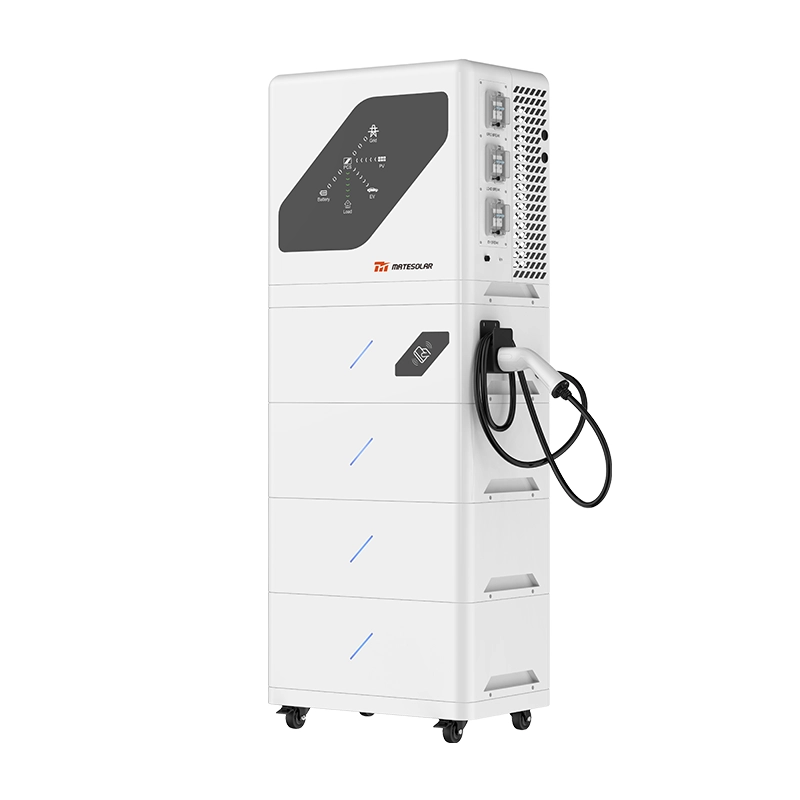
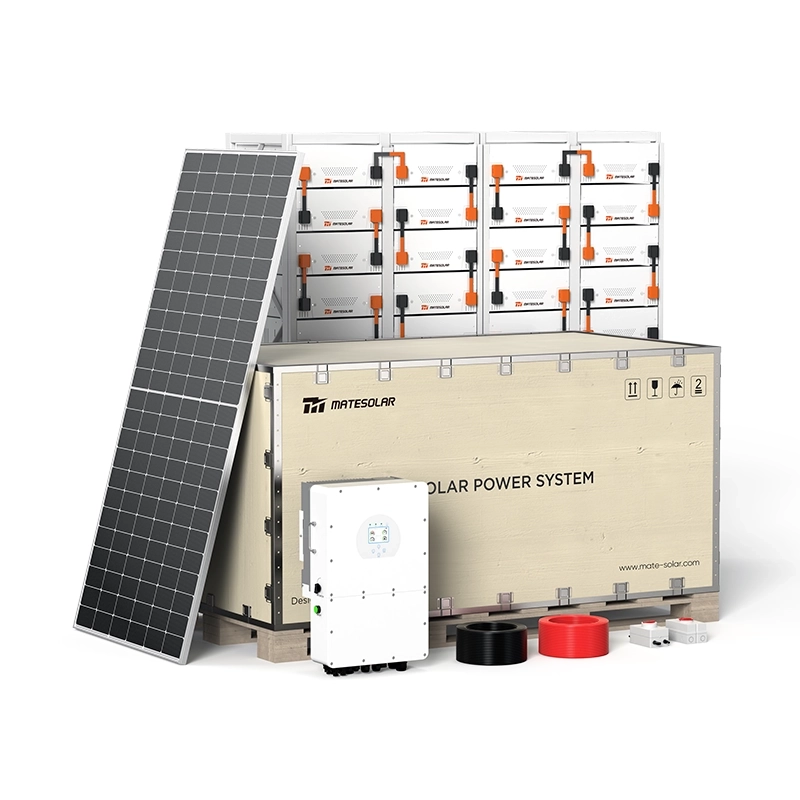
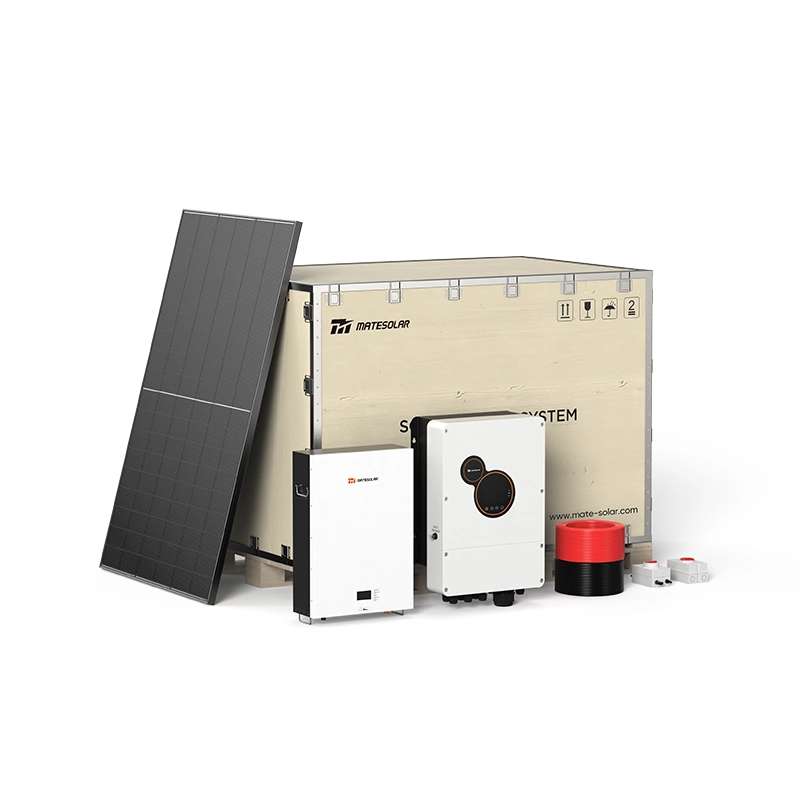




Germany's battery energy storage market has entered a defining chapter. With 2.5 GW of new capacity installed in the first half of 2026 alone — representing a 39% year-over-year surge — the country is rapidly transitioning from a residential-dominated landscape into a tripartite market where utility-scale projects and commercial & industrial (C&I) installations are accelerating in parallel with the established residential base.
Yet beneath the surface of these impressive headline numbers, the C&I segment confronts a convergence of forces that will separate prepared businesses from those left behind: a fundamental overhaul of grid connection procedures effective April 2026, unresolved regulatory ambiguity around grid fee exemptions, and a technology landscape that has decisively pivoted from air-cooled to liquid-cooled architectures. For business owners, facility managers, and energy procurement professionals, the question is no longer whether to invest in battery storage — it is how to navigate this moment without making a costly misstep.
This article provides the most comprehensive analysis available of Germany's C&I energy storage market as of July 2026. It draws on the latest official data from the German Federal Network Agency (Bundesnetzagentur), KfW financing program documentation, and verified market intelligence to deliver an authoritative resource that addresses every critical dimension — from policy interpretation and revenue modeling to technology selection and project execution.
Key takeaways for decision-makers:
- C&I storage installations reached 136 MW / 259 MWh in H1 2026, up 33% year-over-year in energy capacity terms, with cumulative installations now at 837 MW / 1,608 MWh.
- The April 2026 grid connection reform has fundamentally altered project economics, introducing a project maturity assessment framework that requires €50,000 application fees plus €1,500/MW security deposits.
- KfW's “Renewable Energies Plus” program, launched June 18, 2026, now offers up to €150 million per project in concessional loans for storage investments.
- Liquid cooling has emerged as the dominant technology pathway, extending battery cycle life by approximately 20% compared with air-cooled alternatives.
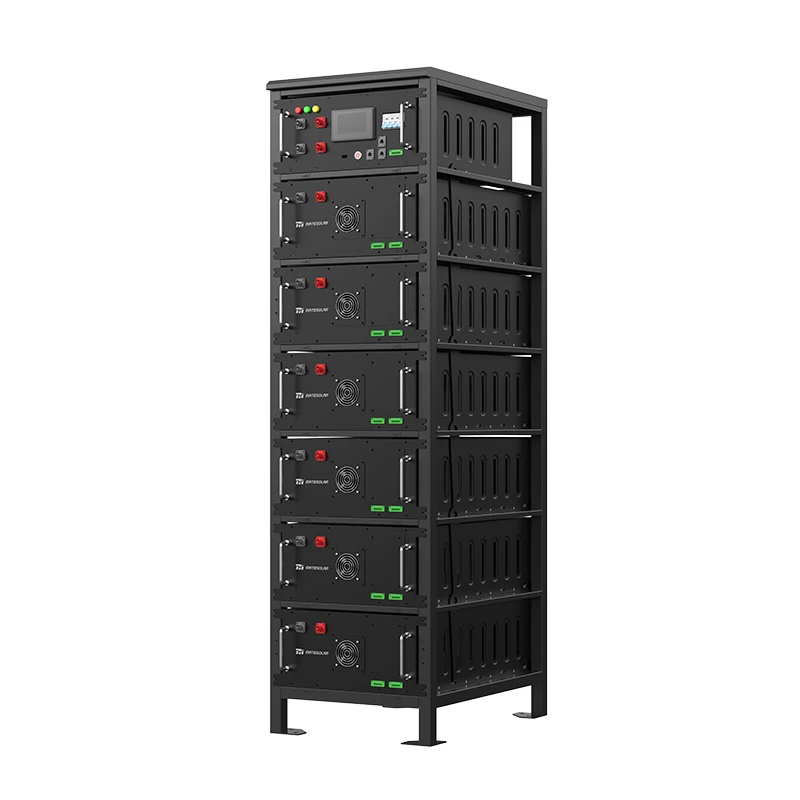
- The outdoor cabinet form factor — now reaching 233–261 kWh per unit with 314 Ah+ large-format cells — has become the industry standard for C&I applications.
- A narrow decision window exists: the AgNeS regulatory framework is expected to take effect by late 2026 or early 2027, and projects that secure grid connection commitments before that deadline may capture materially better economics.
1. Germany's Battery Storage Market: A Structural Transformation
1.1 The Numbers That Define the Moment
In the first six months of 2026, Germany's battery energy storage system (BESS) market added 2.5 GW of power capacity and 4.4 GWh of energy capacity. The 39% year-over-year growth in energy capacity terms confirms that the market is not merely expanding — it is accelerating. Total cumulative installations across all market segments have now reached 19.4 GW / 29.8 GWh, establishing Germany as the undisputed leader of Europe's stationary storage market and one of the three largest battery storage markets globally, alongside China and the United States.
The market's structural composition has shifted meaningfully. Where residential storage once accounted for the overwhelming majority of installations, the landscape in mid-2026 reveals a far more balanced architecture: residential storage contributes 49% of new capacity, utility-scale projects represent 45%, and commercial & industrial installations account for 6%. This transition from a "residential monolith" to a "three-pillar market" is one of the most consequential developments in the European energy transition, with profound implications for every stakeholder in the value chain.
Lithium-ion technology continues its near-total dominance, accounting for more than 96% of all installed capacity. While alternative chemistries — sodium-ion, redox flow, and iron-air — attract research attention and niche deployments, the cost-performance trajectory of lithium iron phosphate (LFP) and nickel manganese cobalt (NMC) chemistries remains unchallenged at commercial scale.
Table 1: Germany Battery Storage Market — H1 2026 Installation Data by Segment
| قطاع السوق | H1 2026 Additions (MW) | H1 2026 Additions (MWh) | Capacity YoY Growth | Market Share (by MWh) | Cumulative Installed (MW) | Cumulative Installed (MWh) |
| Residential (<30 kWh) | 1,310 | 2,156 | +31% | 49% | 11,250 | 17,100 |
| Utility-Scale (>1 MW) | 1,054 | 1,980 | +47% | 45% | 7,313 | 11,092 |
| التجارية والصناعية | 136 | 259 | +33% | 6% | 837 | 1,608 |
| Total Market | 2,500 | 4,395 | +39% | 100% | 19,400 | 29,800 |
Source: German Federal Network Agency (Bundesnetzagentur) Market Master Data Register (MaStR), H1 2026; MateSolar Research analysis. Data as of June 30, 2026.
1.2 The Macro Context: Why Germany's Storage Market Is Booming
To understand the trajectory of Germany's storage market, one must first appreciate the broader energy system dynamics that make storage not merely desirable but structurally necessary. Several interlocking factors drive this imperative:
Renewable penetration has crossed critical thresholds. Germany's electricity mix now routinely exceeds 60% renewable generation, with wind and solar photovoltaic (PV) contributing the lion's share. On certain sunny and windy days, renewable penetration has reached as high as 85–90% of hourly demand. This level of variable generation creates enormous intraday price volatility — precisely the condition that makes storage economically viable. Day-ahead wholesale electricity prices in Germany have exhibited spreads of €40 to €80 per MWh between peak and off-peak hours with increasing frequency, a pattern that directly rewards storage operators who can charge during low-price periods and discharge during high-price windows.
Grid infrastructure constraints are a binding limitation. Germany's transmission network was designed for a centralized generation model dominated by large thermal and nuclear plants in the south and west. The rapid build-out of wind capacity in the north and solar capacity across the country has created persistent north-to-south transmission bottlenecks. The four major transmission system operators (TSOs) — TenneT, Amprion, 50Hertz, and TransnetBW — collectively incur hundreds of millions of euros annually in redispatch and congestion management costs. Distributed storage, particularly at the C&I level, offers a pathway to alleviate these constraints by absorbing generation close to the point of production and dispatching it close to the point of consumption.
The coal and nuclear phase-outs create a flexibility gap. Germany's final three nuclear power plants were decommissioned in April 2023, and the coal phase-out is legally mandated by 2038 at the latest, with the current government coalition targeting 2030. As these baseload and dispatchable generation sources exit the system, the need for flexible resources — batteries, demand response, and hydrogen-ready gas plants — grows commensurately. The German Energy Agency (dena) estimates that the country will require approximately 100 GWh of battery storage capacity by 2030 to maintain grid stability, a figure that implies a near-quadrupling of the current installed base.
Industrial competitiveness depends on energy cost management. German industry faces some of the highest electricity prices in the world, with C&I customers typically paying €0.18–0.28 per kWh including all levies, surcharges, and network fees — a structural disadvantage that has intensified since the 2022 energy crisis. For energy-intensive sectors — chemicals, automotive manufacturing, metals processing, food and beverage, and data centers — the ability to arbitrage between low-cost and high-cost periods through behind-the-meter storage has evolved from a sustainability initiative into a core competitiveness strategy.
Did You Know?
The German stationary BESS market is projected to grow from approximately €80–100 billion in 2026 to €280–350 billion by 2035, representing a compound annual growth rate of approximately 13–15%. This makes Germany's storage sector one of the most attractive clean energy investment destinations globally.
2. The C&I Storage Segment in Focus: Market Structure and Growth Trajectory
2.1 Defining the C&I Segment
Germany's commercial and industrial storage segment encompasses battery installations with power ratings typically between 30 kW and 1 MW, serving a diverse range of end users: manufacturing facilities, logistics centers, supermarkets, office buildings, agricultural operations, hotels, hospitals, and municipal infrastructure. While the segment's 6% market share appears modest in comparison with residential and utility-scale installations, this figure understates its strategic importance. C&I storage sites are disproportionately located at nodes of high electricity consumption, often in industrial parks and commercial zones where grid congestion is most acute and where behind-the-meter storage can deliver the greatest locational value.
2.2 Installation Trends and Growth Dynamics
The C&I segment installed 136 MW / 259 MWh of new capacity during the first half of 2026 — a 33% increase in energy capacity terms compared with H1 2025. While this growth rate is healthy, it trails the 47% growth rate in the utility-scale segment, reflecting the fact that larger projects have benefited more directly from the policy tailwinds and financing innovations that characterized early 2026. The cumulative C&I installed base now stands at 837 MW / 1,608 MWh, representing approximately 5.4% of Germany's total stationary battery capacity and roughly 4.3% of total power capacity.
A noteworthy trend within the C&I segment is the gradual shift toward larger individual system sizes. Where the typical C&I installation in 2022–2023 averaged approximately 100–150 kWh of energy capacity, the average for new projects in H1 2026 has risen to approximately 180–220 kWh. This migration reflects several converging factors: declining battery cell costs, improved system integration that reduces balance-of-system expenses on a per-kWh basis, and growing customer confidence in the technology's reliability, which encourages larger upfront commitments. The rise of the outdoor cabinet form factor — discussed in detail in Section 5 — has been instrumental in enabling this scale-up.
Table 2: Germany C&I Storage Segment — Key Metrics H1 2026 vs. H1 2025
| متري | H1 2025 | H1 2026 | التغيير |
| New Installations (MW) | 102 | 136 | +33.3% |
| New Installations (MWh) | 195 | 259 | +32.8% |
| Cumulative Installed (MW) | 701 | 837 | +19.4% |
| Cumulative Installed (MWh) | 1,349 | 1,608 | +19.2% |
| Average System Size (kWh) | 165 | 192 | +16.4% |
| Market Share of Total BESS | 6.2% | 5.9% | -0.3 pp |
| Number of New Projects | ~1,180 | ~1,350 | +14.4% |
Source: Bundesnetzagentur MaStR, industry association BVES, MateSolar Research. pp = percentage points.
2.3 Geographic Distribution
C&I storage installations in Germany exhibit pronounced geographic concentration, correlating closely with industrial activity density, solar PV penetration, and grid constraint severity. The three leading federal states for C&I storage deployment are:
Bavaria (Bayern): Accounting for approximately 24% of cumulative C&I storage capacity, Bavaria's leadership reflects its large industrial base — particularly in automotive manufacturing, mechanical engineering, and electronics — combined with the highest installed solar PV capacity of any German state. The state government's aggressive renewable energy targets (100% renewable electricity by 2040) and proactive subsidy programs for commercial storage reinforce this concentration.
North Rhine-Westphalia (Nordrhein-Westfalen): As Germany's industrial heartland and most populous state, NRW accounts for approximately 21% of C&I storage. The state's dense concentration of energy-intensive industries — chemicals, steel, cement, and food processing — creates particularly strong incentives for peak-shaving applications. NRW's state development bank (NRW.BANK) offers complementary financing instruments that layer effectively with federal KfW programs.
Baden-Württemberg: Home to Germany's automotive and mechanical engineering clusters, Baden-Württemberg accounts for roughly 18% of C&I storage. The state's Mittelstand — the dense network of small and medium-sized manufacturing enterprises that forms the backbone of the German economy — has been a particularly active adopter of storage-plus-solar combinations that reduce exposure to volatile electricity prices while meeting corporate sustainability commitments.
Other states with notable C&I storage concentrations include Lower Saxony (Niedersachsen, ~9%), Hesse (Hessen, ~8%), and Rhineland-Palatinate (Rheinland-Pfalz, ~6%). The eastern German states — Brandenburg, Saxony, Saxony-Anhalt, Thuringia, and Mecklenburg-Vorpommern — collectively account for a smaller but growing share, driven by the expansion of data center capacity and logistics infrastructure in these regions.
Market Insight
The C&I segment exhibits a "clustering effect" that accelerates adoption within industrial parks and commercial zones. Once one facility in a Gewerbegebiet (commercial area) installs storage, neighboring businesses tend to follow within 12–18 months, driven by peer observation of electricity bill savings, shared contractor networks, and the demonstration effect that reduces perceived technology risk. This clustering dynamic suggests that C&I storage growth may exhibit non-linear acceleration as adoption density reaches critical mass in key regions.
3. Policy and Regulatory Landscape: What Changed in 2026
The regulatory environment for battery storage in Germany has undergone a series of consequential changes in 2026. While some developments create new opportunities for C&I storage investors, others introduce uncertainty that must be carefully navigated. This section provides a detailed examination of the four most significant policy dimensions.
3.1 KfW "Renewable Energies Plus" Financing Program
On June 18, 2026, KfW (Kreditanstalt für Wiederaufbau), Germany's state-owned development bank, launched the "Renewable Energies Plus" (Erneuerbare Energien Plus) program — potentially the most impactful financing initiative for C&I storage since the original EEG feed-in tariff framework. The program represents a structural pivot in Germany's clean energy financing architecture, explicitly recognizing battery storage as a core infrastructure investment rather than a peripheral add-on to renewable generation.
The program's key features include:
- Loan ceiling: Up to €150 million per individual project, with no aggregate portfolio cap for multi-site programs.
- Interest rates: Concessional rates substantially below commercial bank lending rates, with the exact rate determined by the borrower's credit rating and project risk profile. For investment-grade corporate borrowers, effective rates have been reported in the range of 2.5–3.8% for 10-year tenors.
- Eligible investments: Battery storage systems of all scales, including associated power electronics, control systems, and installation costs. Systems integrated with on-site renewable generation (solar PV or wind) receive preferential rate treatment.
- Repayment flexibility: Up to 3-year grace periods on principal repayment, aligning with typical construction and commissioning timelines for C&I storage projects.
- Combination with other instruments: KfW loans can be combined with state-level subsidies, BAFA grants, and EU funding instruments, enabling layered financing structures that materially reduce weighted average cost of capital. For C&I storage investors, the KfW program addresses what has historically been one of the segment's most significant barriers: the mismatch between the capital intensity of storage investments and the risk appetite of commercial lenders unfamiliar with the technology's revenue profile. By providing a state-backed lending channel with deliberately patient capital terms, KfW effectively de-risks the financing dimension of C&I storage projects.
Actionable Takeaway
Businesses considering C&I storage investments should engage with KfW or their Hausbank (primary commercial bank) immediately to begin the loan application process. KfW processing timelines for "Renewable Energies Plus" applications currently average 6–8 weeks, and securing financing commitments before the anticipated AgNeS regulatory framework takes effect (expected late 2026 / early 2027) may lock in more favorable grid connection terms.
3.2 Additional Financing and Subsidy Instruments
Beyond the KfW program, several complementary financing mechanisms are available to C&I storage investors:
State-Level Subsidies: Multiple federal states have introduced targeted storage incentive programs. Hesse's (Hessen) program for small and medium-sized enterprises offers grants of up to €500,000 per project for investments that demonstrably reduce CO² emissions, covering up to 40% of eligible investment costs. Bavaria's "Bayerisches Energieforschungsprogramm" and Baden-Württemberg's "Klimaschutz-Plus" program provide similar support, albeit with varying eligibility criteria and funding intensities.
BAFA EEW Funding: The Federal Office for Economic Affairs and Export Control (Bundesamt für Wirtschaft und Ausfuhrkontrolle, BAFA) administers the "Energy Efficiency in the Economy" (Energieeffizienz in der Wirtschaft, EEW) funding program, which is open to enterprises across all industry sectors. The program provides investment grants for energy efficiency measures, including battery storage systems that demonstrably reduce a facility's grid electricity consumption or peak load. Funding rates vary by project type and company size, with small and medium-sized enterprises generally eligible for higher subsidy ratios.
EU-Level Instruments: The European Union's Innovation Fund, Modernisation Fund, and various Horizon Europe instruments provide additional financing channels, particularly for larger or more innovative C&I storage projects. The EU's revised State Aid Guidelines on Climate, Environmental Protection and Energy (CEEAG) provide the overarching framework under which national subsidy programs operate.
Table 3: Summary of Key Financing Instruments for C&I Storage in Germany (as of July 2026)
| Instrument | Administering Body | Type | الحد الأقصى للمبلغ | الأهلية | Key Condition |
| KfW Renewable Energies Plus | KfW | Concessional Loan | €150M per project | All enterprises | Storage + renewable integration preferred |
| Hesse SME CO² Reduction | State of Hesse | Investment Grant | €500,000 | SMEs in Hesse | Demonstrable CO² reduction |
| BAFA EEW Program | BAFA | Investment Grant | Varies by module | All enterprises | Energy efficiency improvement |
| Bavarian Energy Research | State of Bavaria | Grant / Loan Mix | Project-dependent | Bavaria-based entities | Innovation component required |
| BW Klimaschutz-Plus | State of Baden-Württemberg | Investment Grant | Project-dependent | BW-based entities | Climate protection contribution |
| EU Innovation Fund | European Commission | Grant | Up to 60% of relevant costs | Large-scale projects | Innovative clean tech demonstration |
3.3 Grid Connection Reform: The Project Maturity Framework
Perhaps the single most consequential regulatory change for C&I storage in 2026 has been the fundamental restructuring of grid connection procedures for large-scale storage projects. Effective April 1, 2026, the German Federal Network Agency (Bundesnetzagentur, BNetzA) replaced the traditional "first-come, first-served" approach to grid connection applications with a comprehensive Project Maturity Assessment Framework (Projektreife-Bewertungsrahmen).
Under the previous regime, grid connection capacity was allocated chronologically: developers who submitted applications earliest secured queue positions, regardless of whether their projects were genuinely deliverable. This created a well-documented problem of "queue congestion," where speculative applications from developers with no realistic path to project completion blocked access for serious investors with shovel-ready projects. The reform addresses this structural inefficiency by introducing a multi-dimensional assessment that ranks applications according to objective criteria of project readiness.
The key elements of the new framework are as follows:
Periodic Application Rounds: Rather than accepting applications on a rolling basis, BNetzA now conducts scheduled application rounds (typically quarterly) during which all submissions within a given window are evaluated simultaneously. This eliminates the perverse incentive to submit incomplete applications early and enables a comparative assessment of all projects seeking connection in a given region and timeframe.
Multi-Criteria Assessment: Applications are evaluated against a weighted scorecard that considers: (a) project delivery probability, assessed through demonstrated progress on land rights, permitting, and technical design; (b) development maturity, measured by the specificity and credibility of project timelines; (c) grid contribution, evaluated through the project's locational value in alleviating identified grid congestion points; and (d) financial robustness, as evidenced by committed financing arrangements or balance sheet strength.
Documentation Requirements: Developers must now submit substantial supporting documentation at the application stage, including: proof of land ownership or long-term lease agreements; evidence of progress through the permitting process (at minimum, confirmation that a complete permit application has been submitted to the relevant authority); a technical concept detailing system specifications, grid connection point, and integration architecture; and a financing plan demonstrating that capital is available or committed. For projects exceeding 5 MW, an independent engineer's feasibility assessment is required.
Financial Commitments: The reform introduces two significant financial obligations at the application stage. First, a non-refundable application fee of €50,000 per project. Second, a security deposit (Sicherheitsleistung) of €1,500 per MW of applied-for grid connection capacity, which is returned upon project commissioning or forfeited if the developer fails to achieve commercial operation within the agreed timeline without valid cause.
The implications for C&I storage developers and investors are profound. The new framework effectively shifts competitive advantage toward well-capitalized, professionally managed developers who can assemble comprehensive application packages and commit the required financial resources upfront. Smaller developers and businesses pursuing storage on an opportunistic basis face materially higher barriers to entry. The framework also creates a premium on early-stage project development work — securing land rights, advancing permitting, and locking in financing — well before the grid connection application is submitted.
Strategic Warning
The €50,000 application fee and €1,500/MW security deposit represent sunk costs that are not recoverable if a project fails to reach commissioning. For a 500 kW C&I storage project, the combined upfront exposure is approximately €50,750 before a single euro of construction capital is deployed. This financial structure rewards developers who invest heavily in front-end project preparation and imposes a meaningful cost of failure on those who submit speculative or under-prepared applications.
Table 4: Grid Connection Application Requirements — Pre- and Post-Reform Comparison
| البُعد | Pre-April 2026 (Old Regime) | Post-April 2026 (New Framework) |
| Allocation Principle | First-come, first-served (chronological queue) | Project maturity assessment (competitive scoring) |
| Application Timing | Rolling (any time) | Scheduled quarterly rounds |
| Application Fee | Minimal / nominal | €50,000 (non-refundable) |
| Security Deposit | غير مطلوب | €1,500 per MW |
| Land Rights Proof | Not required at application | Required (ownership or long-term lease) |
| Permitting Progress | Not required at application | Complete application submission required |
| Technical Concept | Basic specification | Detailed technical design documentation |
| Financing Evidence | Not required at application | Committed or demonstrated capital availability |
| Independent Engineer Report | غير مطلوب | Required for projects >5 MW |
3.4 Grid Fee Exemption Uncertainty
One of the most significant regulatory uncertainties confronting the German storage market in mid-2026 concerns the future of grid fee exemptions for battery storage systems. Under Section 118(6) of the Energy Industry Act (Energiewirtschaftsgesetz, EnWG), battery storage systems that commence operation before August 4, 2029, are eligible for a 20-year exemption from grid usage fees (Netzentgelte) on the electricity they withdraw from and inject into the grid. This exemption has been a foundational element of storage project economics, effectively eliminating a cost layer that, if applied, would materially erode the arbitrage spread that underpins storage revenue models.
In early 2026, the Bundesnetzagentur raised concerns about the long-term sustainability of this exemption, arguing that as storage penetration increases, the grid fee exemption effectively shifts network cost recovery from storage operators to other grid users — a cross-subsidy that becomes progressively harder to justify as storage volumes grow. The agency's initial position suggested that the exemption might be narrowed or eliminated earlier than the statutory 2029 deadline.
Intense opposition from industry associations — including BVES (Bundesverband Energiespeicher Systeme), BDEW (Bundesverband der Energie- und Wasserwirtschaft), and VKU (Verband kommunaler Unternehmen) — led to a compromise formulation. Under the compromise, existing exemptions for projects already in operation or with binding grid connection agreements as of the compromise date are grandfathered. Projects entering operation after the compromise date but before August 4, 2029, retain the exemption but are subject to a "reasonableness review" (Angemessenheitsprüfung) that could limit the exemption's scope in specific circumstances. The precise contours of this review remain undefined as of July 2026, creating a zone of regulatory ambiguity that complicates investment decisions for projects at the planning stage.
Compounding this uncertainty is a structural problem that predates the current debate: Germany has not yet established a dedicated regulatory category for electricity storage. Under the current legal framework, storage facilities are treated as electricity consumers when charging and as electricity producers when discharging. This dual classification exposes storage to the risk of double application of grid fees, surcharges, and levies — a regulatory artifact that the EU's Electricity Market Design Reform explicitly instructs member states to eliminate by establishing a dedicated storage asset class. As of July 2026, Germany has not yet transposed this requirement into national law.
Regulatory Risk Alert
Investors evaluating C&I storage projects with projected operational dates between mid-2026 and August 2029 should explicitly model the impact of partial or full loss of grid fee exemptions in their downside scenarios. A sensitivity analysis that assumes grid fees of €0.03–0.06/kWh applied to both charging and discharging could reduce project internal rates of return by 200–400 basis points, depending on the revenue model's dependence on grid-interactive operation.
3.5 EU Electricity Market Design Reform and German Implementation
The European Union's Electricity Market Design Reform, adopted in 2024, requires all member states to establish a dedicated regulatory framework for energy storage that: (a) defines storage as a distinct asset class separate from generation and consumption; (b) eliminates double-charging of grid fees and levies; (c) enables storage participation in all electricity markets (wholesale, balancing, and ancillary services) on a non-discriminatory basis; and (d) establishes transparent and non-discriminatory grid connection procedures. The transposition deadline for member states was January 2026.
Germany's implementation has been delayed. The Federal Ministry for Economic Affairs and Climate Action (BMWK) has indicated that the transposition legislation — expected to be incorporated into a broader amendment of the EnWG — will likely be submitted to the Bundestag in the second half of 2026, with entry into force projected for late 2026 or early 2027. This legislative package, referred to internally as the AgNeS framework (Anpassung des Rechtsrahmens für Netzgekoppelte Energiespeicher), is expected to resolve many of the regulatory ambiguities discussed above, but until it is enacted, the market operates under a patchwork of transitional provisions and administrative discretion.
Table 5: Key Policy and Regulatory Timeline for German Energy Storage (2026–2027)
| Date / Period | Event | Significance for C&I Storage |
| ١ أبريل ٢٠٢٦ | Grid connection project maturity framework takes effect | Higher upfront costs; rewards well-prepared developers |
| June 18, 2026 | KfW Renewable Energies Plus program launched | Concessional financing up to €150M per project |
| H2 2026 (expected) | AgNeS legislative package submitted to Bundestag | Expected to resolve grid fee exemption ambiguity |
| Late 2026 / Early 2027 (expected) | AgNeS framework enters into force | Dedicated storage regulatory category established |
| August 4, 2029 | Section 118(6) EnWG grid fee exemption deadline | Projects commissioning after this date lose 20-year exemption |
4. The Business Case: Revenue Stack Analysis for C&I Storage
4.1 Understanding the Revenue Stack Concept
The economic value of a C&I battery storage system is rarely derived from a single revenue stream. Instead, successful projects construct a "revenue stack" — a portfolio of value sources that collectively generate a return on investment exceeding the project's weighted average cost of capital. For German C&I customers, the revenue stack typically consists of three primary layers, supplemented by secondary benefits that improve the overall business case.
4.2 Primary Revenue Layer: Peak Shaving (Lastspitzenkappung)
For the majority of German commercial and industrial electricity customers, the single largest economic driver of storage investment is peak shaving — the practice of using stored energy to reduce the facility's maximum power draw from the grid during periods of high demand. The mechanism is straightforward: German electricity tariffs for C&I customers include a demand charge (Leistungspreis) calculated based on the customer's highest 15-minute average power draw during the billing period (typically monthly or annual). By discharging a battery during these peak demand intervals, the customer reduces the measured maximum demand and consequently lowers the demand charge component of their electricity bill.
The economics of peak shaving are highly site-specific, depending on the facility's load profile, the applicable grid fee structure, and the difference between peak and average demand. For a typical German manufacturing facility with an annual peak demand of 500 kW and an average demand of 350 kW, reducing the measured peak by 150 kW can generate annual savings of €15,000–30,000 in demand charges alone, depending on the local network operator's tariff structure. For facilities with particularly "peaky" load profiles — those characterized by short, intense demand spikes superimposed on a lower baseline — the peak-shaving value proposition can be compelling enough to justify storage investment even before considering any additional revenue streams.
4.3 Primary Revenue Layer: Energy Arbitrage (Spot Market Trading)
The second major revenue source for C&I storage is energy arbitrage — charging the battery during periods of low wholesale electricity prices and discharging during high-price periods. Germany's day-ahead wholesale electricity market, operated by EPEX SPOT, provides the price signals that drive this activity. The increasing penetration of solar PV generation has created a pronounced "duck curve" in German wholesale prices, with prices routinely dipping to €0–20/MWh during midday solar peaks and rising to €80–120/MWh during evening demand peaks when solar generation declines but consumption remains high.
In H1 2026, the average day-ahead price spread between the daily minimum and maximum exceeded €60/MWh on more than 60% of trading days, with spreads above €80/MWh occurring on approximately 25% of days. For a C&I storage system with a round-trip efficiency of 90% and a usable capacity of 200 kWh, a single daily charge-discharge cycle capturing a €60/MWh spread generates approximately €10.80 in daily gross revenue, or approximately €3,940 per year — before accounting for battery degradation, which modestly reduces effective capacity over time. Systems capable of multiple daily cycles (enabled by higher-power inverters relative to storage capacity) can multiply this figure, though with incremental degradation trade-offs.
Critically, the arbitrage revenue stream is independent of the customer's own consumption — it is earned by interacting directly with wholesale electricity markets, either through a direct market access agreement with an aggregator or through a Virtual Power Plant (VPP) arrangement in which the storage asset is pooled with other distributed energy resources and dispatched algorithmically.
4.4 Primary Revenue Layer: Frequency Containment Reserve and Ancillary Services
The third primary revenue layer is participation in ancillary services markets, particularly Frequency Containment Reserve (FCR, Primärregelleistung) and automatic Frequency Restoration Reserve (aFRR, Sekundärregelleistung). These markets compensate storage operators for making capacity available to the transmission system operators to maintain grid frequency within statutory limits.
The FCR market in Germany has historically been one of the most attractive revenue sources for battery storage, with prices reaching exceptionally high levels during periods of system stress. However, market saturation has progressively compressed FCR prices as battery capacity has grown, reducing FCR from a potential standalone revenue source to a supplementary layer in the revenue stack. As of mid-2026, FCR prices in Germany have stabilized in the range of €8–15 per MW per hour, implying annual revenue of approximately €70–130 per kW of FCR-qualified capacity. For a 100 kW storage system, this translates to €7,000–13,000 per year — a meaningful but not transformative contribution to the overall business case.
The aFRR market offers somewhat higher compensation but requires more sophisticated technical capability, including automated response to TSO signals within 5 minutes. C&I storage systems equipped with appropriate control systems and communication interfaces can participate in both markets, though the technical requirements and prequalification processes add complexity.
Table 6: Illustrative Revenue Stack for a 500 kW / 1,000 kWh C&I Storage System in Germany (2026)
| Revenue Source | Annual Revenue Estimate (€) | Share of Total | الافتراضات الأساسية | Revenue Stability |
| Peak Shaving (Demand Charge Reduction) | 22,000 – 45,000 | 35–45% | 150–250 kW peak reduction; local grid fee structure | High (contractual tariff savings) |
| Spot Market Arbitrage | 15,000 – 30,000 | 25–35% | 1.0–1.5 cycles/day; avg. spread €55–70/MWh | Moderate (wholesale price dependent) |
| FCR / aFRR Ancillary Services | 7,000 – 13,000 | 10–15% | FCR price €8–15/MW/h; 100% availability | Moderate-Low (market price volatility) |
| Self-Consumption Optimization (PV-coupled) | 8,000 – 18,000 | 10–18% | On-site solar PV; avoided retail electricity cost | High (consumption-based) |
| Grid Fee Exemption Benefit | 5,000 – 12,000 | 8–12% | 20-year exemption under EnWG §118(6) | Conditional (regulatory risk) |
| إجمالي الإيرادات السنوية | €57,000 – 118,000 | 100% | / | / |
| Estimated System CAPEX | €350,000 – 500,000 | / | €350–500/kWh all-in installed cost | / |
| فترة الاسترداد البسيط | 3.0 – 8.8 years | / | Excluding financing costs and degradation | / |
Note: Revenue estimates are illustrative and vary materially based on site-specific factors including load profile, local grid tariff structure, wholesale market conditions, and system configuration. Simple payback excludes cost of capital, O&M, and battery degradation. Actual project IRRs, inclusive of all costs and degradation, typically range from 8–18% for well-structured C&I storage projects under current market conditions.
4.5 Secondary and Strategic Value Layers
Beyond the quantifiable revenue streams, C&I storage investments deliver several secondary and strategic benefits that, while harder to monetize directly, contribute meaningfully to the overall investment case:
Backup Power and Resilience: In an environment of increasing geopolitical uncertainty, grid reliability concerns have moved from theoretical risk to operational reality for many German businesses. Storage systems configured with islanding capability (Inselbetriebsfähigkeit) can provide backup power during grid outages, protecting critical loads and avoiding production downtime. For industries where even brief interruptions carry disproportionate costs — semiconductor manufacturing, pharmaceutical production, data centers, cold storage — this resilience value can dominate the investment decision.
Corporate Sustainability Commitments: Many German enterprises, particularly those subject to EU Corporate Sustainability Reporting Directive (CSRD) obligations, face growing pressure to demonstrate measurable emissions reductions. On-site battery storage integrated with renewable generation provides auditable evidence of reduced Scope 2 emissions, supporting compliance with regulatory reporting requirements and voluntary commitments such as the Science Based Targets initiative (SBTi).
Grid Connection Cost Deferral: For facilities planning capacity expansions that would otherwise require costly grid connection upgrades, behind-the-meter storage can defer or eliminate the need for network reinforcement by managing peak demand within the existing connection capacity. In some cases, the avoided grid upgrade cost alone can justify a substantial portion of the storage investment.
Electric Vehicle Fleet Integration: As German businesses electrify their vehicle fleets — driven by corporate sustainability targets, EU fleet emission standards, and operational cost considerations — the incremental demand from EV charging can create new peak load challenges. Co-located storage can absorb this incremental load without triggering demand charge increases or grid capacity exceedances, enabling fleet electrification at lower total cost.
Revenue Diversification Strategy
The most resilient C&I storage business cases are those that construct diversified revenue stacks combining multiple uncorrelated or weakly correlated revenue sources. Peak shaving savings are highly predictable (driven by the customer's own load profile and tariff structure); spot market arbitrage revenues fluctuate with wholesale market conditions but can be enhanced through algorithmic trading strategies; and ancillary service revenues provide a modest but uncorrelated income layer. The art of C&I storage project structuring lies in optimizing the mix of these revenue sources to maximize risk-adjusted returns while maintaining operational flexibility to adapt the strategy as market conditions evolve.
5. Technology Evolution: From Air-Cooled Cabinets to Liquid-Cooled High-Density Systems
5.1 The Technology Transition in Progress
The C&I storage market is undergoing a decisive technology transition that will define competitive dynamics for the remainder of the decade. The shift from first-generation air-cooled systems to second-generation liquid-cooled architectures is not merely incremental — it represents a step-change improvement across multiple performance dimensions that directly translate into superior project economics.
5.2 Liquid Cooling vs. Air Cooling: A Comprehensive Comparison
Thermal management is the single most important determinant of battery system performance, safety, and longevity. Lithium-ion cells operate optimally within a narrow temperature window (typically 20–30°C); deviations outside this range accelerate degradation, reduce usable capacity, and in extreme cases, create safety hazards. The choice between air cooling and liquid cooling therefore has first-order implications for total cost of ownership.
Air Cooling: The traditional approach uses fans to circulate ambient air across battery modules, removing heat through convection. Air cooling is simple, reliable, and has low upfront cost. However, its heat removal capacity is limited by the thermal properties of air (low specific heat capacity and thermal conductivity), resulting in larger temperature gradients within battery packs and higher maximum cell temperatures under heavy cycling. These thermal non-uniformities accelerate differential aging — the phenomenon where cells within the same pack degrade at different rates, reducing the effective lifetime of the entire system even if most cells retain adequate capacity. Air-cooled systems also require significant space for airflow channels, reducing volumetric energy density.
التبريد السائل Liquid cooling uses a coolant fluid (typically a water-glycol mixture) circulated through cold plates in direct thermal contact with battery cells, removing heat through conduction and convection with far greater efficiency than air. The higher specific heat capacity and thermal conductivity of liquids enable: (a) tighter temperature control with cell-to-cell temperature differences typically below 2–3°C, compared with 5–8°C for air cooling; (b) lower maximum cell temperatures under equivalent cycling conditions; (c) higher sustained charge/discharge rates without thermal throttling; and (d) the ability to operate reliably in higher ambient temperatures without derating — a meaningful advantage for outdoor installations in southern Germany, where summer ambient temperatures routinely exceed 35°C.
The industry consensus, supported by a growing body of field data, is that liquid cooling extends battery cycle life by approximately 20% compared with air-cooled systems operated under equivalent conditions. For a C&I storage system with a design life of 6,000 cycles at 90% depth of discharge, a 20% extension translates to an additional 1,200 cycles — representing roughly 3–4 years of additional revenue-generating operation before the battery reaches its end-of-life capacity threshold (typically 70–80% of initial capacity). When expressed in financial terms, this additional operational life can reduce the levelized cost of storage by 10–15%, a margin that decisively shifts the technology economics in favor of liquid cooling despite its modestly higher upfront cost.
Table 7: Air Cooling vs. Liquid Cooling — Technology Comparison for C&I Storage Applications
| المعلمة | أنظمة تبريد الهواء | أنظمة التبريد بالسوائل | الميزة |
| Cell Temperature Uniformity | ±5–8°C | ±2–3°C | تبريد سائل |
| Maximum Sustained C-Rate | 0.5C – 0.8C | 1.0C – 1.5C | تبريد سائل |
| Typical Cycle Life (to 80% SOH) | 5,000 – 6,000 cycles | 6,000 – 7,200 cycles | Liquid Cooling (~+20%) |
| Volumetric Energy Density | 80 – 110 kWh/m³ | 120 – 160 kWh/m³ | تبريد سائل |
| Ambient Temperature Tolerance | Up to 35°C without derating | Up to 45–50°C without derating | تبريد سائل |
| Noise Level at Full Load | 60 – 75 dB(A) | 55 – 65 dB(A) | تبريد سائل |
| System Complexity | Low (fans, simple controls) | Moderate (pump, coolant circuit, chillers) | تبريد الهواء |
| Upfront CAPEX Premium | خط الأساس | 5–12% premium | تبريد الهواء |
| Maintenance Requirement | تنظيف الفلاتر، استبدال المروحة | Coolant level checks, pump servicing | Marginally higher for liquid |
| Levelized Cost of Storage (LCOS) | خط الأساس | 10–15% lower over system life | تبريد سائل |
5.3 The Outdoor Cabinet Evolution: 215 kWh → 233–261 kWh
The form factor of C&I storage systems has undergone a parallel evolution that is equally significant for project deployment. The outdoor all-in-one cabinet (often referred to as an "outdoor cabinet ESS" or "battery cabinet") has become the definitive standard for German C&I applications, displacing earlier approaches that required separate containers for batteries, power conversion systems (PCS), and thermal management equipment. This integration delivers several advantages that align precisely with the constraints faced by German commercial and industrial sites.
The first generation of outdoor cabinets, widely deployed in 2023–2024, typically offered approximately 215 kWh of usable energy capacity per unit, utilizing 280 Ah lithium iron phosphate (LFP) cells. While these systems demonstrated the viability of the integrated cabinet concept, their energy density left room for improvement, particularly for sites where available ground space is limited — a common constraint in German industrial parks and urban commercial zones where land costs are high and unutilized space is scarce.
The current generation of outdoor cabinets, entering volume deployment in 2026, has advanced to 233–261 kWh per unit, driven by the adoption of 314 Ah and larger-format LFP cells. This 20–25% increase in per-cabinet energy capacity, achieved with minimal increase in cabinet footprint, directly addresses the space constraint that has historically been one of the most significant deployment barriers for C&I storage in Germany. For a facility requiring 1 MWh of storage capacity, four units at 261 kWh each can deliver the required capacity in a footprint as compact as 10–12 square meters — a density that makes storage feasible for sites that could not accommodate earlier-generation equipment.
The modularity of the cabinet architecture provides additional deployment flexibility. Systems can be configured from a single cabinet (suitable for small commercial operations such as retail stores, small workshops, or agricultural facilities) up to 10–20 cabinets connected in parallel (suitable for large manufacturing plants, logistics centers, or municipal infrastructure). This scalability enables a "start small, expand later" approach that reduces upfront commitment risk while preserving the option to scale storage capacity in response to evolving business needs or grid conditions.
5.4 Containerized Solutions for Larger C&I Applications
For the upper end of the C&I segment — facilities with demand exceeding 500 kW and storage requirements in the multi-megawatt-hour range — containerized energy storage systems offer a complementary form factor that maximizes energy density and simplifies logistics. Two container configurations have emerged as industry standards:
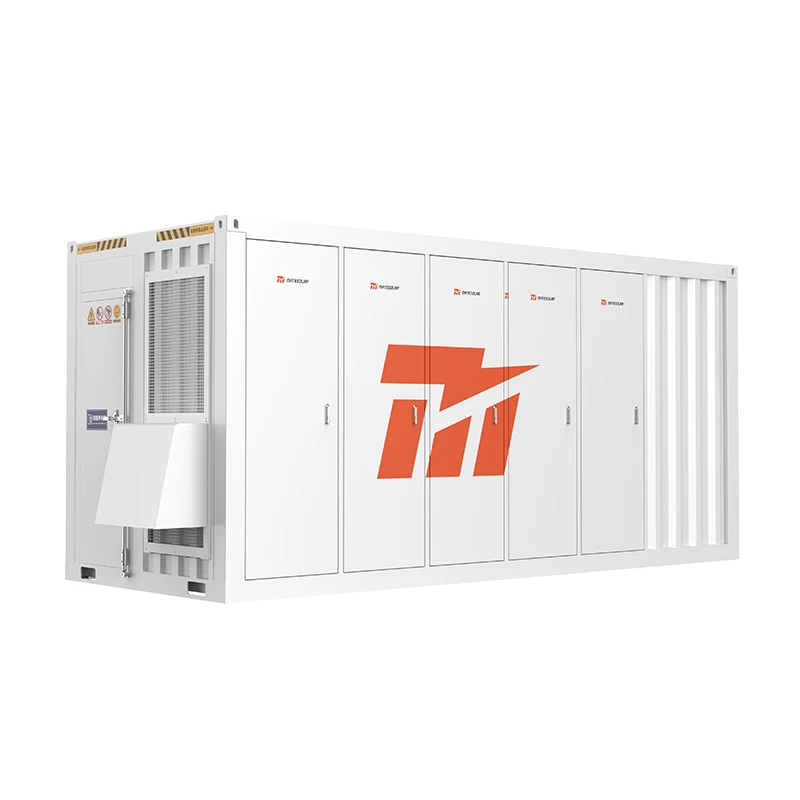
40-Foot Air-Cooled Container (1–2 MWh): The 40-foot ISO container format provides a mature, logistically straightforward platform for C&I storage at the 1–2 MWh scale. These systems leverage proven air-cooled thermal management, making them suitable for applications where ambient conditions are moderate and the cost sensitivity of the project favors the lower upfront CAPEX of air cooling. The standard ISO container dimensions ensure compatibility with global logistics infrastructure, enabling factory-integrated systems to be shipped, delivered, and commissioned with minimal on-site assembly. This form factor is particularly well-suited to brownfield industrial sites, logistics parks, and agricultural operations where adequate space is available and the moderate energy density of air-cooled containers is not a binding constraint.
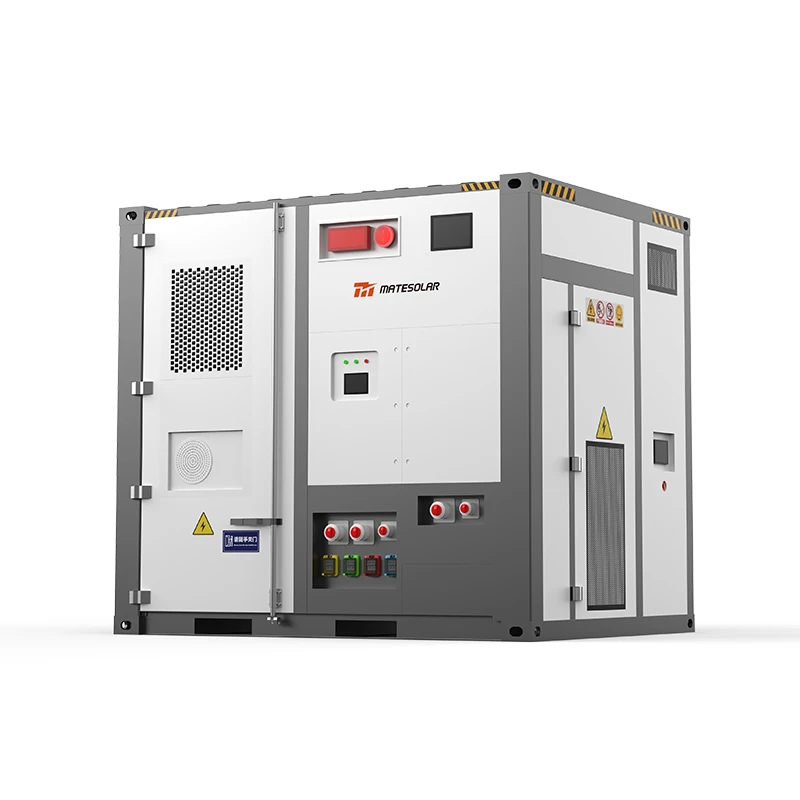
20-Foot Liquid-Cooled Container (3–5 MWh): The 20-foot high-density liquid-cooled container represents the frontier of containerized storage technology. By leveraging liquid cooling's superior thermal management to pack cells more densely and operate at higher sustained power levels, these systems achieve 3–5 MWh of energy capacity in the compact 20-foot form factor — a volumetric energy density approximately 3–4 times higher than first-generation 40-foot air-cooled containers. This dramatic improvement in space efficiency makes high-capacity storage viable for space-constrained urban and suburban commercial sites that previously could not accommodate containerized solutions. The liquid cooling architecture also enables sustained 1C charge/discharge rates, making these systems suitable for the most demanding C&I applications, including those requiring multiple daily deep cycles for energy arbitrage.
Table 8: C&I Storage Form Factor Comparison — Outdoor Cabinets vs. Containerized Systems
| المعلمة | Outdoor Cabinet (Liquid-Cooled) | 40ft Container (Air-Cooled) | 20ft Container (Liquid-Cooled) |
| نطاق السعة النموذجي | 100–261 kWh per unit | 1000-2000 كيلوواط ساعة | 3000-5000 كيلوواط ساعة |
| تصنيف الطاقة | 50–125 kW | 500–1,000 kW | 1,500–2,500 kW |
| Footprint (approx.) | 1.5–3 m² per unit | ~30 m² | ~15 m² |
| Cooling Technology | سائل | هواء | سائل |
| قابلية التوسع | 1–20+ units in parallel | Single unit or multi-unit | Single unit or multi-unit |
| Deployment Complexity | Low (forklift-placed) | Moderate (crane or truck-mounted) | Moderate (crane or truck-mounted) |
| التطبيق المثالي | Small–medium C&I; space-constrained sites | Medium–large C&I; brownfield sites | Large C&I; space-constrained urban sites |
| Cost per kWh (installed) | €380–520 | €320–420 | €350–480 |
5.5 Battery Cell Technology: The 314 Ah+ Generation
The migration from 280 Ah to 314 Ah and larger-format LFP cells represents a quiet but profound technology shift that underpins the density improvements described above. Larger cells reduce the number of individual cells required to achieve a given system capacity, which in turn reduces the number of electrical connections, the complexity of the battery management system (BMS), and the assembly labor required per kWh of capacity. These manufacturing efficiencies contribute to the ongoing decline in battery system costs, which have fallen from approximately €500–600/kWh for fully installed C&I systems in 2022 to €350–500/kWh in 2026, depending on system scale and configuration.
The larger cell format also improves thermal management efficacy. With fewer cells to monitor and manage thermally, the BMS can dedicate more computational resources to each cell's state estimation (state of charge, state of health, state of power), enabling more precise control algorithms that optimize cycle life and safety. The industry's trajectory suggests that 500 Ah+ cells will enter volume production by 2027–2028, promising another generational improvement in energy density and cost.
5.6 Safety Architecture: The Non-Negotiable Foundation
No discussion of battery storage technology would be complete without addressing safety — the dimension that, more than any other, determines whether storage systems earn the trust of business owners, insurers, fire authorities, and local communities. The German market, with its rigorous technical standards and conservative risk culture, places particularly high demands on storage system safety. The industry has responded with a multi-layered safety architecture that addresses risks at every level of the system hierarchy.
Cell-Level Safety: LFP chemistry, now dominant in the C&I segment, offers inherent safety advantages over NMC alternatives, including higher thermal runaway onset temperature (>250°C vs. ~180°C for NMC) and lower oxygen release during decomposition, which reduces the intensity of thermal runaway events. Leading manufacturers supplement this inherent safety with cell-level pressure relief vents, ceramic-coated separators that resist shrinkage at elevated temperatures, and electrolyte formulations with flame-retardant additives.
Module-Level Safety: Battery modules incorporate thermal barriers between cells, typically consisting of aerogel insulation or mica sheets, designed to contain thermal runaway within a single cell and prevent propagation to adjacent cells. Temperature sensors at multiple points within each module provide early warning of abnormal temperature rise, enabling the BMS to take protective action before conditions escalate.
System-Level Safety: At the system level, three-tier fire protection architectures are becoming standard: (1) active thermal management that maintains cells within safe operating temperature ranges under all conditions; (2) gas detection systems that monitor for off-gassing — an early indicator of cell failure — and can trigger preemptive shutdown before thermal runaway initiates; and (3) aerosol or water-mist fire suppression systems that can extinguish or contain a fire if thermal runaway does occur. For outdoor installations, physical separation between cabinets and from building structures provides an additional passive safety layer.
Digital Safety: The battery management system serves as the "brain" of the safety architecture, continuously monitoring thousands of data points — cell voltages, temperatures, currents, insulation resistance — and executing control algorithms that prevent operation outside safe limits. Advanced BMS platforms now incorporate AI-driven predictive diagnostics that analyze patterns in cell behavior to identify degradation anomalies weeks or months before they would trigger conventional threshold-based alarms. The EU Battery Regulation's requirement for a digital battery passport, which is being phased in from 2027, will further enhance transparency by providing standardized documentation of each system's safety characteristics, test results, and compliance certifications.
Safety Certification Guidance
When evaluating storage system suppliers, C&I customers should verify that products carry certifications from recognized testing bodies: IEC 62619 (safety requirements for secondary lithium cells and batteries), IEC 63056 (safety requirements for secondary lithium batteries for use in electrical energy storage systems), UL 9540 and UL 9540A (system-level safety and thermal runaway fire propagation testing, widely recognized even in the European market), and VDE-AR-E 2510-50 (German-specific stationary battery safety requirements). Systems that have undergone UL 9540A large-scale fire testing provide the strongest available evidence of safety performance.
6. Seven Critical Pain Points — and How to Solve Them
Based on extensive engagement with German C&I electricity customers, project developers, and industry stakeholders, we have identified seven critical pain points that consistently emerge as the primary barriers to storage adoption and the key concerns of businesses already committed to storage investment. For each pain point, we provide a detailed analysis of the underlying challenge and a solution framework that addresses it directly. These insights are distilled from hundreds of project interactions and reflect the real-world experience of businesses navigating Germany's evolving storage landscape.
6.1 Grid Connection Approval Barriers: How to Prove Project Maturity Under the New Framework?
The April 2026 project maturity assessment framework has fundamentally altered the risk profile of grid connection applications. Businesses now face a non-refundable €50,000 application fee plus €1,500/MW security deposits before receiving any assurance that grid connection will be granted. For a 500 kW commercial storage project, this means approximately €50,750 at risk before the first construction contract is signed. The documentation burden — land rights, permitting progress, technical design, and financing evidence — requires capabilities that many businesses do not maintain in-house.
إطار الحل The most effective approach to navigating the new grid connection regime is to partner with a supplier that can deliver a comprehensive front-end project development package, substantially reducing the burden on the customer's internal resources. This package should include: (a) a site suitability assessment that evaluates land availability, grid connection point proximity, load profile compatibility, and local permitting requirements; (b) a complete technical concept including single-line diagrams, equipment specifications, protection coordination studies, and grid impact assessment; (c) assistance with assembling the permitting documentation, including coordination with local building authorities (Bauamt) and environmental agencies where applicable; and (d) guidance on financing documentation that satisfies the Bundesnetzagentur's financial robustness criteria. Businesses that engage with suppliers offering these front-end services enter the grid connection application process with a materially higher probability of success and a shorter timeline to connection approval.
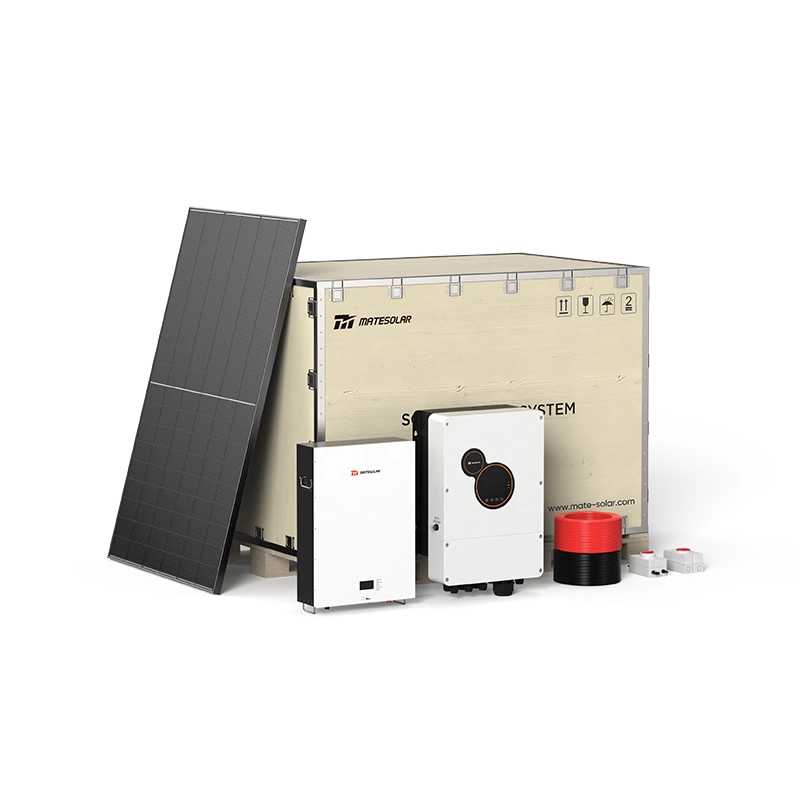
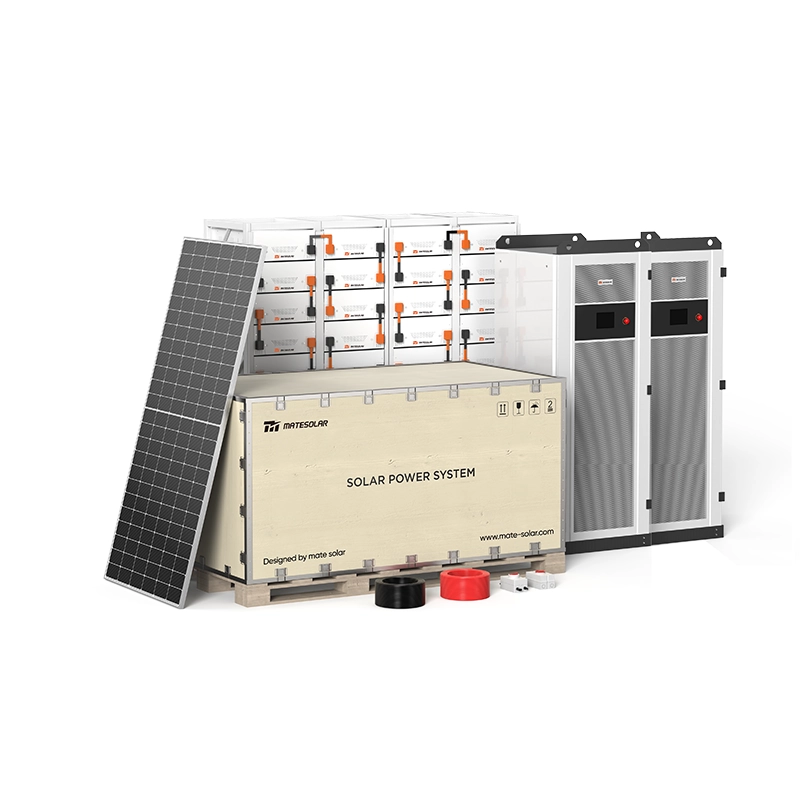
For commercial facilities requiring substantial photovoltaic integration alongside storage, a well-specified hybrid solar-plus-storage system forms the foundation of a compelling grid connection application. A product such as the نظام الطاقة الشمسية الهجين التجاري بقدرة 500 كيلوواط provides an integrated platform that combines high-efficiency solar generation with storage-ready power electronics, delivering a single-point solution that simplifies both the technical design and the grid connection documentation. The hybrid architecture enables the facility to demonstrate to the Bundesnetzagentur not only storage capability but also a complete behind-the-meter energy management strategy that reduces net grid dependency — a factor that weighs favorably in the project maturity assessment's grid contribution criterion.
6.2 Grid Fee Exemption Uncertainty: How to Protect Investment Returns Amid Regulatory Ambiguity?
The unresolved status of the Section 118(6) EnWG grid fee exemption — and the broader absence of a dedicated storage regulatory category — creates genuine uncertainty about the revenue assumptions underlying C&I storage investments. Projects that depend heavily on grid-interactive revenue streams (arbitrage and ancillary services) are particularly exposed to the risk that grid fees could be applied to storage charging and discharging, eroding the spread that makes these activities profitable.
إطار الحل The antidote to policy uncertainty is revenue diversification. Storage projects should be structured to generate a substantial portion of their economic return from behind-the-meter applications — peak shaving and PV self-consumption optimization — that are independent of grid fee treatment. These behind-the-meter value streams are driven by the customer's own electricity consumption patterns and are unaffected by changes in grid fee policy. A project that derives 50–70% of its total revenue from behind-the-meter applications can withstand even a complete loss of grid fee exemptions without becoming uneconomical, whereas a project that depends on grid-interactive revenues for 70%+ of its return would face material financial distress under the same scenario.
إن نظام تخزين الطاقة الخارجي المبرد بالسائل بقوة 100 كيلو واط / 232 كيلو واط في الساعة و 125 كيلو واط / 261 كيلو واط في الساعة exemplifies a product architecture that supports diversified revenue strategies. With its high round-trip efficiency (typically ≥90%) and intelligent energy management system (EMS) capable of executing multi-objective optimization across peak shaving, PV self-consumption, and spot market arbitrage simultaneously, this platform enables businesses to construct robust revenue stacks that are resilient to individual policy changes. The liquid cooling technology extends cycle life, ensuring that the system continues generating returns through multiple policy cycles — a durability that matters when the regulatory environment is in flux.
6.3 Maximizing Economic Returns: How to Optimize the Revenue Stack for Your Specific Load Profile?
Every C&I facility has a unique electricity consumption pattern, and the optimal storage dispatch strategy for a cold storage warehouse is fundamentally different from that of an automotive assembly plant or a data center. Generic "rule of thumb" sizing and dispatch approaches leave substantial value on the table — our analysis of actual C&I storage projects indicates that customized dispatch optimization can improve project IRR by 300–600 basis points compared with default strategies.
إطار الحل The key to maximizing storage economics is a three-step process: (1) detailed load profile analysis using at least 12 months of interval meter data (15-minute resolution) to characterize the facility's demand patterns, identify peak demand events, and quantify the variability that determines storage dispatch opportunities; (2) market-informed revenue modeling that incorporates historical and forward wholesale price curves, ancillary service market prices, and the facility's specific grid tariff structure; and (3) algorithm-based dispatch optimization that uses the results of steps (1) and (2) to determine the storage system's optimal sizing and the dispatch strategy that maximizes net revenue given the specific constraints of the facility's load, the storage system's technical parameters, and the applicable regulatory framework.
For facilities with substantial energy consumption and available space, containerized storage solutions offer the capacity and power rating to execute sophisticated multi-revenue-stream strategies at scale. The 40Ft 1MWh & 2MWh Air-Cooled Container ESS Energy Storage System provides a proven, cost-effective platform for facilities requiring megawatt-hour-scale storage. Its air-cooled architecture delivers reliable performance at a competitive installed cost, making it an attractive option for brownfield sites, logistics centers, and agricultural operations where space is not the binding constraint and the project's economic threshold prioritizes upfront CAPEX minimization. The containerized form factor enables factory-integrated quality control, reduced on-site commissioning time, and compatibility with standard logistics infrastructure.
6.4 Space Constraints and Energy Density: How to Fit Meaningful Storage Capacity onto Limited Commercial Footprints?
Space is a premium resource at the vast majority of German C&I sites. Urban commercial properties, industrial parks in dense metropolitan areas (Munich, Frankfurt, Stuttgart, Hamburg), and retrofit installations at existing facilities all contend with significant spatial constraints. The outdoor cabinet form factor has emerged as the market's answer to this challenge, but not all cabinet solutions are created equal. The difference between a 215 kWh first-generation cabinet and a 261 kWh current-generation unit can mean the difference between fitting adequate storage capacity onto an available footprint and falling short of the capacity needed for a viable business case.
إطار الحل When evaluating storage products for space-constrained sites, businesses should prioritize: (a) energy density per unit area (kWh per square meter of footprint), which determines how much capacity can be installed on the available land; (b) the ability to configure cabinets in multi-row arrangements with minimal spacing, maximizing capacity on irregularly shaped sites; (c) acoustic performance, as noise emissions from cooling systems are a frequent source of complaints and regulatory friction in mixed-use and residential-adjacent commercial zones; and (d) aesthetic integration, which, while secondary to technical performance, can influence permitting outcomes and neighbor acceptance.
The liquid-cooled outdoor cabinet referenced above — delivering 232–261 kWh in a compact footprint — directly addresses these constraints. With a typical footprint of approximately 1.8–2.5 square meters per cabinet, a 1 MWh deployment (four cabinets) can be accommodated within approximately 10–12 square meters including service clearances. This density, combined with noise levels typically below 65 dB(A) at full load, makes the system deployable at sites where space and acoustic sensitivity would preclude larger containerized alternatives. For facilities that need to scale beyond what cabinets can economically deliver, the high-density liquid-cooled container format provides the next step in the capacity ladder.
6.5 Liquid Cooling vs. Air Cooling: Which Technology Pathway Is Right for Your Application?
The industry's decisive pivot toward liquid cooling does not mean that air cooling is obsolete — but it does mean that the choice between these technologies must be made deliberately, based on a clear understanding of each technology's strengths and weaknesses in the context of the specific application. The wrong choice can result in either unnecessarily high upfront cost (selecting liquid cooling for an application that does not benefit from its advantages) or prematurely degraded performance (selecting air cooling for an application that demands the thermal management precision that only liquid cooling can deliver).
Decision Framework: Liquid cooling is the preferred choice when: (a) the application requires sustained high charge/discharge rates (0.8C or above), such as facilities pursuing aggressive multi-cycle arbitrage strategies; (b) the installation site experiences high ambient temperatures (regularly exceeding 35°C in summer), typical of unshaded outdoor installations in southern and central Germany; (c) space is severely constrained and the higher volumetric energy density of liquid-cooled systems is necessary to achieve the required capacity; or (d) noise sensitivity is high, and the lower fan speeds of liquid-cooled systems provide a meaningful acoustic advantage. Air cooling remains appropriate when: (a) the application is cost-sensitive and the project's economic threshold favors minimizing upfront CAPEX; (b) ambient conditions are moderate and sustained high C-rates are not required; (c) adequate space is available and the lower energy density of air-cooled systems is not a binding constraint; or (d) the customer's maintenance capabilities favor the simpler, more familiar technology of air cooling.
For projects where capacity requirements exceed what outdoor cabinets can efficiently deliver but space constraints preclude 40-foot container deployment, the 20Ft 3MWh & 5MWh Liquid Cooling Container Energy Storage System represents the optimal intersection of capacity density and deployment practicality. By delivering up to 5 MWh in the compact 20-foot form factor, this solution enables high-capacity storage deployment at sites that would otherwise require multiple cabinets or larger containers. The liquid cooling architecture ensures sustained performance under demanding cycling regimes — essential for facilities pursuing revenue-maximizing multi-cycle dispatch strategies — while the integrated design simplifies site preparation, reduces commissioning time, and provides a single-point interface for grid connection.
Table 9: Application-Specific Technology Selection Guide for C&I Storage
| سيناريو التطبيق | التقنية الموصى بها | الأساس المنطقي |
| Small retail / office (<100 kW demand) | Liquid-Cooled Outdoor Cabinet (100–125 kW) | Compact footprint, low noise, modular scalability |
| Medium manufacturing (100–500 kW demand) | Liquid-Cooled Outdoor Cabinet (multiple units) | Flexible configuration, high density, future-expandable |
| Large industrial (>500 kW, moderate space) | 40ft Air-Cooled Container (1–2 MWh) | Cost-effective at scale, logistically proven, reliable |
| Large industrial (>500 kW, space-constrained) | 20ft Liquid-Cooled Container (3–5 MWh) | Maximum density, sustained high C-rate, urban-deployable |
| Agricultural / food processing | 40ft Air-Cooled Container or Outdoor Cabinets | Site-specific; container for large operations, cabinets for smaller |
| Data center / critical infrastructure | 20ft Liquid-Cooled Container | High reliability, sustained performance, backup-ready |
| Logistics / cold storage | 40ft Air-Cooled Container | Large consistent load, space generally available, cost-sensitive |
| Municipal / public infrastructure | Liquid-Cooled Outdoor Cabinet | Urban space constraints, noise regulations, community acceptance |
6.6 Safety and Reliability: How to Ensure Your Storage Investment Is Protected Against Operational Failures?
For German business owners, the question of storage system safety is not abstract. Insurers increasingly require evidence of compliance with specific safety standards before underwriting policies for facilities with on-site battery storage. Local fire authorities (Brandschutzdienststellen) are developing their own requirements for storage system siting, fire suppression, and emergency access. And the reputational consequences of a battery-related incident — even one that causes no injuries or property damage beyond the storage system itself — can be severe in a business environment where trust and reliability are paramount.
إطار الحل Safety assurance for C&I storage rests on four pillars: (1) cell chemistry selection — LFP's inherent safety advantages make it the default choice for C&I applications, and customers should verify the specific cell manufacturer and model used in any system under evaluation; (2) multi-tier fire protection — systems should incorporate gas detection for early warning, thermal barriers to contain propagation, and active suppression capability as the last line of defense; (3) certification transparency — suppliers should provide full documentation of certifications (IEC 62619, IEC 63056, UL 9540A test reports, and VDE-AR-E 2510-50 compliance) without requiring the customer to request them; and (4) remote monitoring and diagnostics — continuous monitoring of system health by the supplier's technical team, with automated alerts for conditions that deviate from normal operating parameters, enables proactive intervention before minor anomalies become major problems.
On the reliability dimension, customers should evaluate: (a) the supplier's track record, including the number of systems deployed and the cumulative operating hours of the installed fleet; (b) warranty terms, particularly the guaranteed energy throughput or capacity retention over the warranty period (a 10-year warranty with a 70% end-of-warranty capacity guarantee has materially different value than a 5-year warranty with no capacity guarantee); (c) the availability of remote technical support for software issues and diagnostic troubleshooting, which can resolve the majority of operational issues without requiring on-site intervention; and (d) the supplier's spare parts logistics capability, including the geographic distribution of spare parts inventory and the guaranteed response time for parts dispatch. For hardware quality issues that require component replacement, a supplier that can rapidly ship replacement parts with detailed installation guidance — and, in the case of more serious defects, provide full unit replacement — offers a level of assurance that protects the customer's investment over the system's full operational life.
6.7 Financing and Subsidy Navigation: How to Access and Combine the Full Range of Available Funding Instruments?
The German funding landscape for energy storage is rich but fragmented. The KfW Renewable Energies Plus program (up to €150 million per project), state-level subsidies (such as Hesse's €500,000 SME grant), BAFA EEW funding, and EU-level instruments all operate with different eligibility criteria, application procedures, processing timelines, and funding conditions. For businesses without dedicated energy finance expertise, navigating this landscape and constructing an optimal funding package that combines multiple instruments without running afoul of cumulation rules (Kumulierungsverbot) represents a significant administrative burden that can delay or derail storage projects.
إطار الحل The most effective approach to financing navigation is to engage with a supplier that offers dedicated policy advisory and financing support as part of its project development services. This support should include: (a) an initial funding opportunity assessment that identifies all applicable instruments based on the project's location, the customer's company size and industry classification, and the specific characteristics of the proposed storage investment; (b) guidance on application preparation, including the technical documentation, financial projections, and emissions calculations that funding bodies typically require; (c) advice on cumulation rules to ensure that multiple funding instruments are combined in a legally compliant manner that maximizes total support without triggering clawback risk; and (d) coordination with the customer's Hausbank to integrate KfW concessional loan applications into the broader project financing structure. This advisory layer transforms the financing challenge from a barrier that delays projects into a value-add that improves project economics and accelerates time to financial close.
7. Product Solution Deep Dive: Matching Technology to Application
The preceding analysis has established the market context, policy environment, revenue drivers, technology trends, and pain points that define Germany's C&I storage landscape in mid-2026. This section connects that analysis to specific product solutions, providing the bridge between strategic understanding and procurement decision-making. Each product description addresses the key questions that informed C&I buyers should be asking: What is this solution designed to do? For which applications is it optimized? What differentiates it from alternatives? And how does it map to the specific challenges identified throughout this article?
7.1 Commercial 500KW Hybrid Solar System
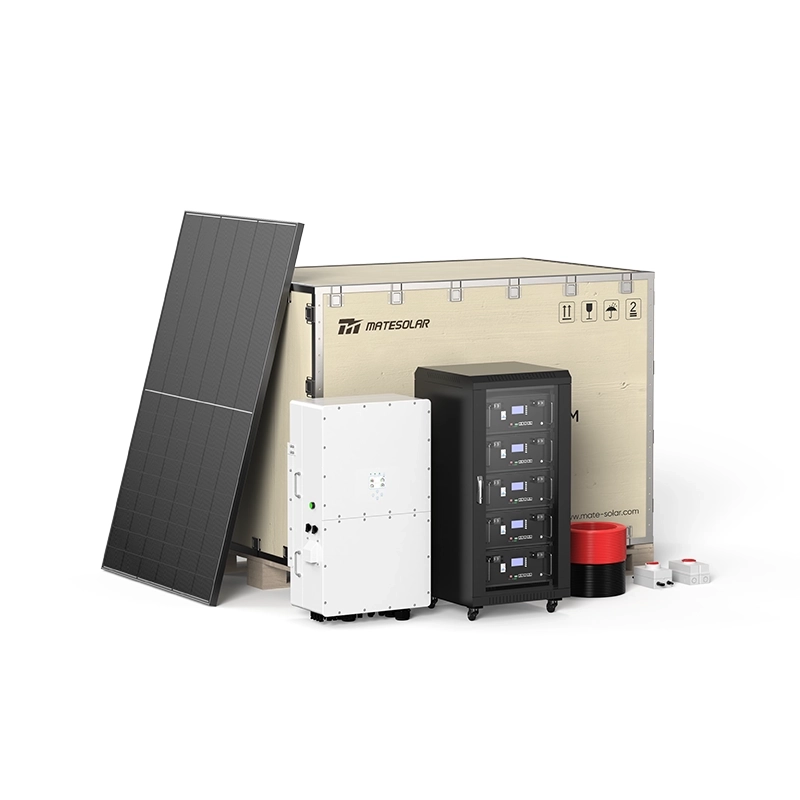
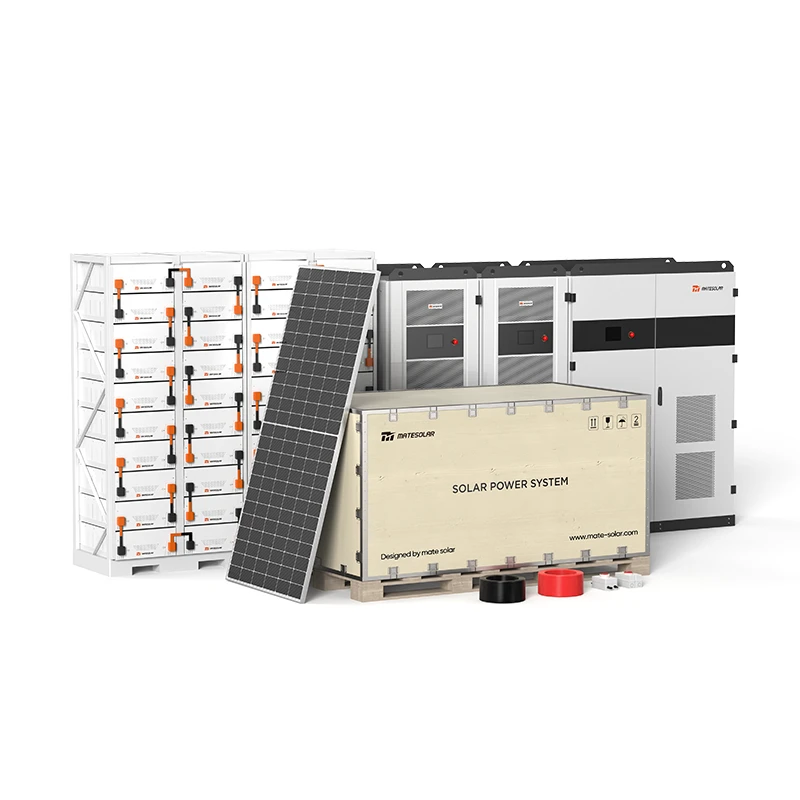
For commercial and light industrial facilities seeking a fully integrated solar-plus-storage platform that maximizes behind-the-meter energy independence, the 500 kW hybrid solar system provides a single-vendor solution that combines high-efficiency photovoltaic generation with storage-ready power conversion architecture. This system is purpose-built for facilities with annual electricity consumption in the range of 500–1,500 MWh — a bracket that encompasses a large fraction of Germany's manufacturing SMEs, logistics operations, commercial buildings, and agricultural enterprises.
The hybrid architecture eliminates the efficiency losses and control complexity that arise when separate solar inverters and battery inverters must be coordinated through external controllers. Instead, a unified power conversion platform manages both solar generation and battery charge/discharge through a common DC bus, enabling seamless transitions between operating modes — solar-to-load, solar-to-battery, battery-to-load, and grid-interactive — without the communication latency and potential conflicts that can affect multi-inverter architectures.
Key applications: Manufacturing facilities with daytime production schedules that align with solar generation; cold storage and refrigeration operations with consistent baseload; commercial buildings seeking net-zero energy certification; agricultural operations with irrigation, processing, and climate control loads; and any facility where solar self-consumption maximization is the primary economic driver of the storage investment.
500 kW AC Output / Hybrid PV + Storage Architecture / Grid-Interactive Capable / Behind-the-Meter Optimized / Integrated EMS Platform
7.2 100kW/232kWh & 125kW/261kWh Liquid-Cooled Outdoor Cabinet Energy Storage System
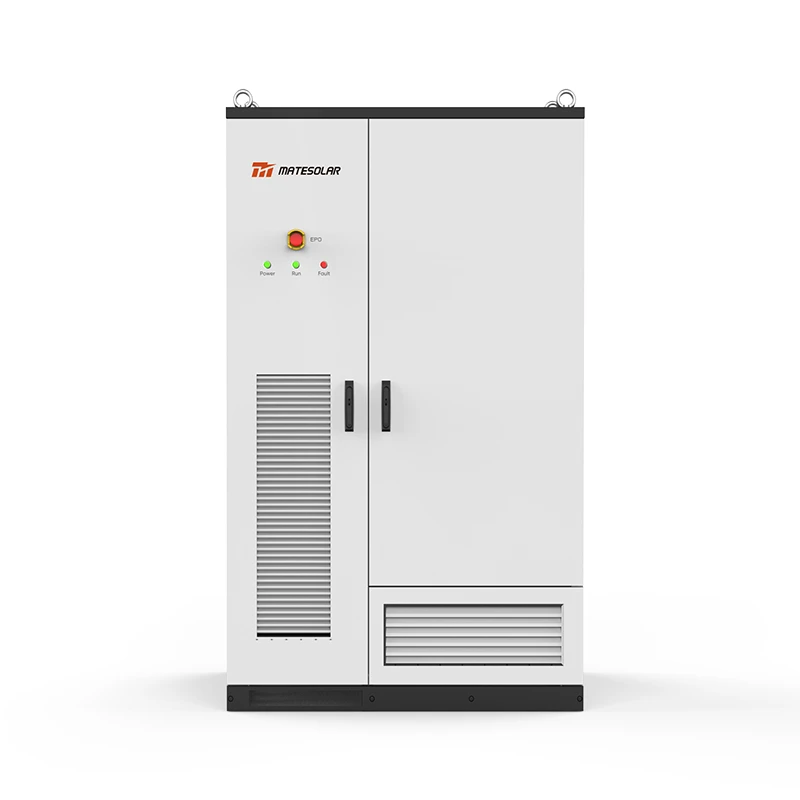
This next-generation liquid-cooled outdoor cabinet represents the state of the art in distributed C&I storage. Available in two configurations — 100 kW / 232 kWh and 125 kW / 261 kWh — the platform is designed for the operational realities of German commercial sites: constrained footprints, demanding cycling profiles, noise-sensitive surroundings, and the need for a future-proof technology platform that will remain competitive through multiple regulatory and market cycles.
The liquid cooling system maintains cell temperatures within a 2–3°C band across the entire pack, enabling sustained 1C operation without thermal throttling and extending cycle life by approximately 20% compared with air-cooled alternatives. The integrated design packages the battery modules, PCS, thermal management system, fire protection, and BMS/EMS into a single weatherproof (IP55-rated) enclosure that requires only a prepared concrete pad and grid connection point for installation — no separate equipment room, no external HVAC, and no on-site assembly of major components.
Key applications: Small-to-medium manufacturing facilities; retail and commercial buildings; municipal infrastructure (water treatment, street lighting depots, public buildings); agricultural operations; hospitality and tourism facilities; and any site where space constraints, noise regulations, or the need for modular scalability favor the cabinet form factor over containerized alternatives. Multiple cabinets can be connected in parallel to scale from ~230 kWh to multi-MWh configurations, providing a deployment pathway that grows with the customer's needs.
100–125 kW Power / 232–261 kWh Capacity / Liquid Cooling Technology / IP55 Outdoor Rated / 314Ah+ LFP Cells / Modular Parallel Up to 20+ Units / ≤65 dB(A) at Full Load / ~20% Extended Cycle Life vs. Air-Cooled
7.3 40Ft 1MWh & 2MWh Air-Cooled Container ESS Energy Storage System
For C&I applications at the megawatt-hour scale where cost-effectiveness and logistical simplicity are the primary decision drivers, the 40-foot air-cooled container ESS delivers a proven, mature platform that has been deployed at scale across global markets. Available in 1 MWh and 2 MWh configurations, this solution leverages the well-established air-cooled thermal management architecture to provide reliable performance at a competitive installed cost per kWh.
The standard 40-foot ISO container format is the universal currency of global logistics, ensuring that these systems can be manufactured under factory quality control, shipped via standard container shipping lines, delivered to site by standard container trucks, and commissioned with minimal on-site assembly. For German C&I customers, this logistical maturity translates into predictable delivery timelines, reduced transportation risk, and simplified site preparation requirements. The air-cooled architecture, while offering lower sustained C-rate capability than liquid-cooled alternatives, is more than adequate for applications where the storage system performs one full cycle per day or operates at moderate power levels relative to its energy capacity.
Key applications: Large manufacturing facilities with stable, predictable load profiles; logistics and distribution centers; agricultural and food processing operations with substantial energy consumption; brownfield industrial sites where space is available; and any application where the economics favor minimizing upfront CAPEX and the operating profile does not require sustained high C-rates or operation in extreme ambient temperatures.
1–2 MWh Capacity / 500–1,000 kW Power / 40ft ISO Standard Container / Air-Cooled Thermal Management / LFP Battery Chemistry / Factory-Integrated & Tested / Global Logistics Compatible / Cost-Optimized CAPEX
7.4 20Ft 3MWh & 5MWh Liquid Cooling Container Energy Storage System
At the frontier of containerized storage density, the 20-foot liquid-cooled container ESS delivers 3–5 MWh of energy capacity in approximately half the footprint of a 40-foot container — a volumetric energy density that fundamentally changes the deployment calculus for space-constrained urban and suburban C&I sites. This platform represents the culmination of the technology trends discussed in Section 5: large-format LFP cells, precision liquid cooling, and high-density mechanical packaging converging to create a product that was not commercially viable even two years ago.
The liquid cooling architecture enables sustained 1C operation (full charge or discharge in one hour), making the system suitable for aggressive multi-cycle trading strategies that maximize revenue from intraday wholesale price volatility. The 20-foot form factor is deployable at sites that cannot physically accommodate a 40-foot container, opening the high-capacity storage market to urban manufacturing facilities, commercial high-rises, data centers, and municipal infrastructure located in dense urban environments where land is at a premium. The integrated fire protection system, combining gas detection, aerosol suppression, and passive thermal barriers, is designed to meet the most stringent safety requirements of German insurers and fire authorities.
Key applications: Large industrial facilities with high and variable energy consumption; data centers requiring both peak shaving and backup capability; urban manufacturing sites with severe space constraints; facilities pursuing aggressive multi-cycle revenue strategies that demand sustained high C-rate operation; and any application where the combination of maximum capacity density, high power capability, and urban deployability creates value that justifies the technology's position at the premium end of the cost spectrum.
3–5 MWh Capacity / 1,500–2,500 kW Power / 20ft High-Density Container / Liquid Cooling Technology / 314Ah+ LFP Cells / Sustained 1C Charge/Discharge / Multi-Tier Fire Protection / Urban-Deployable Footprint
Table 10: Product Solution Comparison Matrix — MateSolar C&I Storage Portfolio
| منتج | Power Range | نطاق السعة | التبريد | البصمة | الأفضل لـ | Key Differentiator |
| نظام الطاقة الشمسية الهجين التجاري بقدرة 500 كيلوواط | 500 كيلوواط | Configurable (PV + Storage) | System-dependent | Site-specific (rooftop + ground) | PV + storage integration; energy independence | Unified hybrid architecture; single-vendor integration |
| 100/125kW Liquid-Cooled Outdoor Cabinet | 100–125 كيلوواط | 232–261 kWh | سائل | ~1.8–2.5 m²/unit | Small–medium C&I; space-constrained sites | Highest density per footprint; modular scalability |
| حاوية تبريد الهواء المبردة بالهواء 40 قدم ESS | 500–1,000 kW | 1–2 ميغاواط ساعة | هواء | ~30 m² | Large C&I; brownfield sites; cost-sensitive | Lowest installed cost per kWh; logistics simplicity |
| 20ft Liquid-Cooled Container ESS | 1,500–2,500 kW | 3–5 MWh | سائل | ~15 m² | Large C&I; space-constrained urban sites | Maximum energy density; sustained high C-rate |
8. الأسئلة الشائعة (FAQ)
The following FAQ section addresses the questions most frequently raised by German C&I electricity customers, facility managers, and energy procurement professionals evaluating battery storage investments. The answers reflect the market conditions, regulatory framework, and technology landscape as of July 2026.
Q1: What is the typical payback period for a C&I battery storage system in Germany in 2026?
For well-structured projects that effectively combine peak shaving, energy arbitrage, and PV self-consumption optimization, simple payback periods (excluding financing costs) typically range from 3.0 to 8.8 years, depending on system size, site-specific load profile, local grid tariff structure, and the prevailing wholesale electricity price environment. Including the cost of capital (assuming 2.5–5.0% interest on KfW-backed financing) and accounting for battery degradation over the asset's life, project internal rates of return (IRR) generally fall in the range of 8–18% for well-executed projects. Projects at the upper end of this range typically combine favorable load profiles (large peak-to-average ratios), access to low-cost financing through KfW or state subsidy programs, and sophisticated dispatch optimization. It is important to note that these figures are sensitive to the future evolution of wholesale electricity prices and grid fee policy; sensitivity analysis across a range of scenarios is essential to robust investment decision-making.
Q2: How does the new grid connection project maturity framework (effective April 2026) affect my project timeline?
The new framework introduces several timeline-related considerations. First, the move from rolling applications to scheduled quarterly assessment rounds means that projects may need to wait for the next application window rather than submitting immediately. Second, the documentation requirements — land rights, permitting progress, technical design, and financing evidence — extend the pre-application preparation period by approximately 2–4 months compared with the pre-reform process, depending on the complexity of the project and the readiness of the required documentation. Third, the assessment process itself, including potential requests for additional information from the Bundesnetzagentur, may add 1–3 months relative to the previous first-come, first-served model. In aggregate, a well-prepared project entering the process in H2 2026 can reasonably expect a grid connection commitment within 4–7 months from initial application preparation to approval, compared with 1–3 months under the pre-reform regime for projects that secured early queue positions. The key variable within the developer's control is the thoroughness of front-end preparation: projects that enter the application round with complete, high-quality documentation advance faster and with higher probability of success than those that require iterative supplementation.
Q3: Is liquid cooling worth the additional upfront cost compared with air cooling for C&I applications?
For the majority of C&I applications in Germany, the answer is increasingly yes — but the decision should be made on a project-specific basis. The 5–12% upfront cost premium for liquid cooling is more than offset by the combination of: (a) approximately 20% longer cycle life, which extends the revenue-generating period by 3–4 years and reduces the levelized cost of storage by 10–15%; (b) higher sustained C-rate capability, which enables more aggressive multi-cycle trading strategies that can increase annual revenue per kWh of installed capacity by 15–25%; (c) lower noise emissions (≤65 dB(A) vs. 60–75 dB(A) for air cooling), which reduces the risk of noise complaints and regulatory friction, particularly in mixed-use and residential-adjacent commercial zones; and (d) higher volumetric energy density, which makes the system deployable at sites where space constraints would preclude an air-cooled alternative of equivalent capacity. Air cooling remains appropriate for projects where upfront CAPEX minimization is the overriding priority, where the operating profile does not require sustained high C-rates, and where ambient conditions are moderate and adequate space is available.
Q4: What happens if the grid fee exemption under EnWG Section 118(6) is modified or eliminated before my project's operational life ends?
This is one of the most frequently asked questions from prospective C&I storage investors, and the answer depends on the specific circumstances of the modification and the structure of the project's revenue stack. Under the compromise formulation reached in early 2026, projects already in operation or with binding grid connection agreements as of the compromise date are grandfathered — meaning their existing exemption remains intact for the full 20-year period. Projects entering operation after the compromise date but before August 4, 2029, retain the exemption but are subject to a "reasonableness review" whose scope remains undefined. The most effective hedge against this uncertainty is to structure the project's revenue stack so that a substantial portion of total revenue (ideally 50–70%) is derived from behind-the-meter applications — peak shaving and PV self-consumption optimization — that are independent of grid fee treatment. Projects with this revenue structure can absorb even a complete loss of grid fee exemptions without becoming uneconomical. We recommend that all project financial models include a downside scenario in which grid fees of €0.03–0.06/kWh are applied to both charging and discharging, and that the project remain viable under this scenario.
Q5: Can I combine KfW financing with state-level subsidies like the Hesse SME program?
Yes, KfW concessional loans can generally be combined with state-level subsidies and BAFA grants, subject to compliance with EU State Aid cumulation rules. The key constraint is that the total public support (federal + state + EU) must not exceed the maximum aid intensity permitted under the applicable State Aid framework for the specific type of investment. For energy efficiency investments under the General Block Exemption Regulation (GBER), the maximum aid intensity varies by company size: 30% of eligible costs for large enterprises, 40% for medium-sized enterprises, and 50% for small enterprises, with potential bonuses for projects located in assisted areas. When combining instruments, the grant-equivalent value of concessional loans (the difference between the concessional interest rate and the market reference rate, expressed as a percentage of the loan amount) counts toward the aid intensity calculation. Professional advice on cumulation structuring is strongly recommended to ensure compliance and avoid clawback risk.
Q6: What is the expected lifetime of a C&I battery storage system, and how does degradation affect performance?
Modern LFP-based C&I storage systems are typically designed for a service life of 10–15 years, with cycle life warranties that guarantee a minimum remaining capacity (typically 70–80% of initial capacity) after a specified number of cycles or years of operation, whichever occurs first. For liquid-cooled systems, typical warranty terms guarantee 70% capacity retention after 6,000–7,200 cycles at 90% depth of discharge, or after 10 years. Capacity degradation follows a characteristic curve: an initial period of modestly faster degradation (typically 2–3% in the first year) as the solid electrolyte interphase (SEI) layer stabilizes, followed by a long period of slower, approximately linear degradation (typically 1.5–2.5% per year), and finally an acceleration phase as the cell approaches end of life. Importantly, degradation reduces energy capacity but not power capability; a system at 70% of its initial energy capacity can still deliver its rated power, just for a shorter duration. This means that the system continues to perform peak shaving and ancillary service functions effectively even as energy-intensive arbitrage capability gradually diminishes. Sophisticated BMS platforms track degradation in real time and can adjust dispatch strategies to optimize revenue as capacity evolves over the asset's life.
Q7: What fire safety certifications should I require from a storage system supplier?
For the German market, the essential certifications are: IEC 62619 (safety requirements for secondary lithium cells and batteries for use in industrial applications), which covers cell and battery system-level safety testing including overcharge, short circuit, crush, and thermal abuse; IEC 63056 (safety requirements for secondary lithium batteries for use in electrical energy storage systems), which extends the IEC 62619 framework with additional requirements specific to stationary storage applications; UL 9540A (test method for evaluating thermal runaway fire propagation in battery energy storage systems), which is the most rigorous available test for demonstrating that a thermal runaway event in a single cell will not propagate to adjacent cells or modules; and VDE-AR-E 2510-50 (stationary battery energy storage systems with lithium batteries — safety requirements), the German-specific standard that local authorities and insurers increasingly reference. Systems that carry all four certifications provide the strongest available evidence of safety performance. Additionally, the EU Battery Regulation's digital battery passport requirement, being phased in from 2027, will provide standardized, accessible documentation of safety characteristics and compliance status.
Q8: How much space do I need for a C&I storage system, and what site preparation is required?
Space requirements vary by technology and scale. A single liquid-cooled outdoor cabinet (232–261 kWh) requires approximately 1.8–2.5 square meters of footprint, with additional clearance (typically 1–1.5 meters on all sides) for ventilation, maintenance access, and fire safety separation. A 1 MWh installation (four cabinets) can be accommodated within approximately 10–12 square meters including clearances. A 40-foot containerized system (1–2 MWh) requires approximately 30 square meters for the container itself plus clearances. A 20-foot high-density container (3–5 MWh) requires approximately 15 square meters plus clearances. Site preparation requirements are relatively modest: a level, load-bearing surface (typically a reinforced concrete pad rated for the system's weight, which ranges from approximately 3 tonnes for a single cabinet to 35+ tonnes for a fully loaded container); access to the facility's electrical infrastructure at the agreed grid connection point; and a data communication link (typically Ethernet or 4G/5G cellular) for remote monitoring and control. Most installations can be completed within 2–4 weeks from site preparation to commissioning, assuming all permits and grid connection approvals are in place.
Q9: Do I need a building permit (Baugenehmigung) for a C&I battery storage system?
The permitting requirements for battery storage systems in Germany vary by federal state (Bundesland) and by the specific characteristics of the installation. As a general rule: outdoor cabinet systems with a footprint below a certain threshold (typically 10–20 square meters of built area, depending on the state's building code) may be classified as verfahrensfrei (permit-exempt) or subject only to a simplified notification procedure (Kenntnisgabeverfahren). Containerized systems, which are physically larger and heavier, more frequently require a building permit, particularly if they exceed the state-specific thresholds for permit-exempt auxiliary structures. Installations in industrial zones (Gewerbegebiete or Industriegebiete) generally face fewer restrictions than those in mixed-use or residential-adjacent areas. Fire safety review by the local fire authority (Brandschutzdienststelle) is increasingly common regardless of whether a formal building permit is required. We strongly recommend engaging with the local building authority (Bauamt) early in the project planning process to confirm the applicable permitting pathway for the specific site and system configuration.
Q10: How does the energy management system (EMS) decide when to charge and discharge the battery?
A modern C&I storage EMS uses multi-objective optimization algorithms that continuously evaluate multiple factors to determine the optimal charge/discharge schedule. These factors typically include: the facility's real-time and forecasted electricity demand (based on historical load patterns, production schedules, weather forecasts, and calendar effects); day-ahead and intraday wholesale electricity prices; the facility's grid tariff structure (including demand charge thresholds and time-of-use rate periods); on-site solar PV generation forecast; battery state of charge and state of health; ancillary service market prices and availability requirements; and user-defined constraints such as minimum state of charge reserved for backup power. The EMS solves an optimization problem — typically formulated as mixed-integer linear programming or model predictive control — that maximizes net revenue (or minimizes net electricity cost) over a rolling horizon (typically 24–48 hours), subject to the technical constraints of the battery system and the operational constraints of the facility. The dispatch schedule is recalculated at regular intervals (typically every 5–15 minutes) to incorporate updated forecasts and real-time conditions. For facilities participating in wholesale markets through an aggregator or virtual power plant, the EMS may receive dispatch instructions from the aggregator's central optimization platform, which pools multiple distributed assets to achieve scale and diversification benefits.
Q11: What happens if my storage system has a technical problem? How is after-sales support handled?
After-sales support for C&I storage systems is structured to address issues at the appropriate level of intervention, minimizing both downtime and unnecessary on-site visits. The first line of support is remote diagnostics: the system's BMS and EMS continuously transmit operational data to a cloud-based monitoring platform, enabling the supplier's technical support team to identify anomalies, diagnose root causes, and — in the majority of cases — resolve issues remotely through software configuration changes, firmware updates, or parameter adjustments. For hardware issues that cannot be resolved remotely, the supplier dispatches replacement components (modules, power electronics boards, cooling system parts) with detailed installation instructions, enabling the customer's on-site electrical technician or a local contractor to perform the replacement. This parts-plus-guidance model typically resolves hardware issues within 2–5 business days from diagnosis to operational restoration. For more serious quality defects, the supplier provides full unit replacement under warranty terms. For large-scale commercial and industrial projects where commissioning and initial operational optimization benefit from on-site expertise, the supplier can deploy technical personnel to the project site to provide hands-on commissioning guidance, system configuration, and operator training, ensuring that the system is optimized for the specific site conditions and load profile from day one of operation.
Q12: Can a C&I storage system provide backup power during grid outages?
Yes, but this capability requires specific system configuration that must be specified at the design stage. Standard grid-connected storage systems are designed to disconnect from the grid during outages (anti-islanding protection) to prevent back-feeding into a de-energized grid, which would create a safety hazard for utility workers. To provide backup power, the system must be equipped with islanding capability (Inselbetriebsfähigkeit), which includes: an automatic transfer switch that isolates the facility (or a designated critical load panel) from the grid during an outage; a grid-forming inverter capable of establishing and maintaining voltage and frequency reference without an external grid signal; and sufficient energy capacity reserved for backup duty. The backup duration depends on the system's energy capacity, the power demand of the backed-up loads, and the state of charge at the moment the outage begins. A typical C&I storage system configured for backup can sustain critical loads (lighting, IT equipment, refrigeration, essential manufacturing processes) for 2–8 hours, with longer durations achievable by reserving a larger fraction of total capacity for backup duty. It is important to note that islanding capability adds cost and complexity, and that the economic value of backup power varies enormously by industry: for a semiconductor fab or pharmaceutical plant where an hour of downtime can cost millions, backup capability may dominate the investment decision; for a warehouse or parking garage, its value is far more modest.
Q13: How do I size a C&I storage system correctly for my facility?
Correct sizing is a multi-step process that balances economic return, technical constraints, and operational requirements. The process begins with detailed analysis of interval meter data (minimum 12 months at 15-minute resolution) to characterize the facility's load profile: average and peak demand, demand variability, daily and seasonal patterns, and the magnitude and frequency of peak demand events. This load analysis identifies the peak-shaving opportunity — the reduction in measured peak demand achievable with different storage power ratings (kW). The second step evaluates the energy arbitrage opportunity by modeling storage dispatch against historical and forward wholesale price curves, accounting for round-trip efficiency losses. The third step assesses the PV self-consumption opportunity if the facility has on-site solar generation. The fourth step sizes the storage system by identifying the power (kW) and energy capacity (kWh) combination that maximizes risk-adjusted return, subject to site constraints (available space, grid connection capacity, budget). A common heuristic is that the economically optimal C&I storage system typically has a power rating of 20–40% of the facility's average demand and an energy-to-power ratio of 2–4 hours (i.e., a 100 kW system would have 200–400 kWh of energy capacity), but this rule of thumb should be validated through site-specific analysis rather than applied mechanically.
Q14: What is the difference between a hybrid solar system and a standalone storage system?
A hybrid solar system integrates photovoltaic generation and battery storage within a unified power conversion architecture, typically sharing a common DC bus and a single inverter platform. This integration eliminates the separate DC-to-AC conversion stage that would be required if the solar array and battery each used independent inverters, reducing conversion losses (and thus improving round-trip efficiency) and simplifying the control system architecture. A standalone storage system, by contrast, connects to the grid independently of any on-site generation and can be deployed at facilities with or without solar PV. The choice between the two architectures depends primarily on whether the facility has (or plans to install) on-site solar generation of sufficient scale to justify the hybrid architecture. For facilities with substantial solar PV (200 kWp or more), the hybrid architecture generally delivers superior economics by maximizing self-consumption of solar generation and reducing the equipment count and installation complexity compared with deploying separate solar and storage inverters. For facilities without solar PV, or with very small solar installations, the standalone storage architecture is the natural choice. The Commercial 500KW Hybrid Solar System product referenced in this article exemplifies a hybrid architecture optimized for commercial-scale applications where solar-plus-storage integration is a core value driver.
Q15: How does the EU Battery Regulation affect C&I storage systems purchased in 2026?
The EU Battery Regulation (Regulation 2023/1542), which entered into force in August 2023, imposes progressively phased requirements on batteries placed on the EU market. For stationary battery energy storage systems purchased in 2026, the most relevant provisions include: carbon footprint declaration requirements (applicable from February 2025 for stationary storage, with performance classes phased in subsequently); recycled content declaration requirements for cobalt, lead, lithium, and nickel (applicable from 2028); supply chain due diligence obligations for economic operators placing batteries on the market (applicable from August 2025); and the digital battery passport requirement (being phased in from February 2027), which will provide a QR-code-accessible electronic record of each battery's technical specifications, performance characteristics, safety certifications, and sustainability attributes. For C&I storage buyers, the practical implications are: (a) ensure that the supplier provides documentation demonstrating compliance with the carbon footprint declaration requirement; (b) verify that the supplier has implemented the required supply chain due diligence systems; and (c) confirm that the supplier is prepared to deliver battery passport functionality when that requirement takes effect in 2027, as it will apply to batteries placed on the market from that date forward.
Q16: What are the ongoing operation and maintenance (O&M) requirements and costs for a C&I storage system?
Ongoing O&M for C&I storage systems is relatively modest compared with other industrial equipment, reflecting the solid-state nature of battery technology (no rotating machinery, no combustion, no continuous consumables). Annual O&M costs typically range from 0.5–1.5% of initial CAPEX, or approximately €3–8 per kWh of installed capacity per year. Routine maintenance activities include: quarterly visual inspections of the system enclosure, cable connections, and cooling system; semi-annual cleaning or replacement of air filters (for air-cooled systems) or coolant level checks (for liquid-cooled systems); annual thermal imaging inspection of electrical connections to identify hot spots before they become failures; and continuous remote monitoring of system performance, which typically accounts for the majority of ongoing O&M activity and is often included in the supplier's service package. The cooling system components (fans for air-cooled systems, pumps for liquid-cooled) are the primary wear items and may require replacement once or twice over the system's 10–15-year life. The battery cells themselves are maintenance-free and are covered by the supplier's warranty for the duration of the warranty period. It is important to budget for eventual major component replacement, particularly the inverter/power conversion system, which may require replacement at approximately year 10–12 depending on operating conditions.
Q17: Are there specific insurance requirements for C&I battery storage systems in Germany?
Yes. Most German property insurers now require specific disclosure and risk assessment for facilities with on-site battery storage. Typical insurer requirements include: evidence that the system carries IEC 62619, IEC 63056, and VDE-AR-E 2510-50 certifications; documentation of the system's fire protection features (gas detection, thermal barriers, suppression systems); a site plan showing the storage system's location relative to buildings, property boundaries, and fire service access routes; and confirmation that the installation has been reviewed and approved by the local fire authority (Brandschutzdienststelle) where applicable. Some insurers may require a dedicated battery storage endorsement or rider to the facility's existing property insurance policy, which may carry an additional premium. Engaging with the insurer early in the project planning process — ideally before equipment procurement — is strongly recommended to identify any specific requirements and avoid post-installation insurance complications. The strengthening safety certification framework driven by the EU Battery Regulation is expected to standardize and simplify the insurance process over time as insurers develop greater familiarity with battery storage risk profiles.
Q18: Can I expand my storage system in the future if my energy needs grow?
The expandability of a C&I storage system depends on the architecture chosen at the time of initial deployment. Modular outdoor cabinet systems are inherently expandable: additional cabinets can be connected in parallel to the existing system, provided that the grid connection capacity, the site's physical space, and the EMS platform support the expanded configuration. Most modern cabinet platforms support parallel connection of up to 20 or more units, enabling a system that starts at ~230 kWh to grow incrementally to multi-MWh scale. Containerized systems can also be expanded by adding additional containers, though this approach is coarser-grained (adding 1–5 MWh at a time) and requires verifying that the grid connection point has sufficient capacity. When planning for future expansion, it is important to: (a) ensure that the initial grid connection application accounts for the ultimate intended system size rather than just the initial phase, as the Bundesnetzagentur's project maturity framework may require a new application for capacity additions beyond the originally approved scope; (b) design the site layout with expansion space reserved, avoiding the need to relocate existing equipment or infrastructure; (c) select an EMS platform that supports seamless integration of additional capacity without requiring a complete control system overhaul; and (d) verify that the facility's existing electrical infrastructure (switchgear, transformers, protection devices) has sufficient headroom for the expanded configuration.
Q19: How does the AgNeS regulatory framework expected in late 2026 / early 2027 affect projects currently in planning?
The AgNeS framework, which will transpose the EU Electricity Market Design Reform's storage-related provisions into German law, is expected to have broadly positive implications for C&I storage projects. The establishment of a dedicated storage regulatory category should resolve the "double-charging" ambiguity that currently clouds the regulatory treatment of storage charging and discharging. The framework is also expected to clarify the long-term status of grid fee exemptions and establish transparent, non-discriminatory rules for storage participation in all electricity markets. However, there is a timing dimension that creates a strategic consideration for projects currently in planning: projects that secure grid connection commitments and begin construction before AgNeS takes effect may be grandfathered under the current transitional provisions, while projects that initiate after AgNeS takes effect will be subject to the new framework's terms. Whether grandfathering or the new framework produces better project economics depends on the specific provisions of AgNeS, which remain unknown as of July 2026. The prudent approach is to advance project preparation to the point where a grid connection application can be submitted in the next available quarterly round, preserving the option to proceed under the current framework if AgNeS introduces changes that would be disadvantageous, while retaining the flexibility to adapt to the new framework if it proves more favorable.
Q20: What are the environmental and sustainability considerations for C&I battery storage systems?
The environmental profile of C&I battery storage is overwhelmingly positive when assessed on a lifecycle basis, but it is important to understand both the benefits and the responsible management requirements. On the benefits side: each kilowatt-hour of battery storage deployed in Germany displaces electricity that would otherwise be generated by fossil-fueled peaking plants (primarily natural gas), with a lifecycle carbon displacement estimated at 400–600 grams of CO² per kilowatt-hour of battery discharge, depending on the carbon intensity of the marginal generation displaced. Over a 15-year operating life, a 500 kWh C&I storage system performing one cycle per day can displace approximately 1,100–1,650 tonnes of CO² — equivalent to the annual emissions of 240–360 passenger vehicles. On the end-of-life management side: the EU Battery Regulation requires that all industrial batteries placed on the EU market be collected and treated through approved recycling channels at end of life, with progressively increasing targets for material recovery (65% by weight by 2025, 70% by 2030) and specific recovery targets for cobalt, nickel, lithium, and copper. Leading battery manufacturers and recycling companies are developing hydrometallurgical and direct recycling processes that can recover 90–95% of battery materials for reuse in new battery production, progressively closing the material loop. When evaluating storage suppliers, C&I customers should inquire about the supplier's end-of-life take-back program and the recycling partners and processes that will manage the system at the end of its operational life.
9. Strategic Outlook: 2026–2030
9.1 The Medium-Term Trajectory
Looking beyond the immediate decision horizon, the German C&I storage market is poised for a period of sustained structural growth. The German Energy Agency (dena) projects that the country will require approximately 100 GWh of total stationary battery storage capacity by 2030 to maintain grid stability as renewable penetration approaches 80%. The C&I segment, while likely to remain the smallest of the three market pillars in absolute terms, is expected to grow at a compound annual rate of 25–35% through the end of the decade, driven by improving economics, maturing financing channels, and the progressive resolution of the regulatory ambiguities that currently create hesitation among some potential adopters.
9.2 Technology Trajectory: What to Expect by 2030
Several technology trends visible in 2026 will shape the C&I storage product landscape through 2030:
Cell Energy Density: The migration from 314 Ah to 500–600 Ah cells, expected to reach volume production by 2028, will enable another generational improvement in system-level energy density. Combined with continued refinement of liquid cooling thermal management, cost per kWh at the system level is projected to decline to €250–350 by 2028–2030.
Sodium-Ion Commercialization: Sodium-ion battery technology, which eliminates lithium, cobalt, and nickel from the supply chain, is approaching commercial viability for stationary storage applications. While energy density (120–160 Wh/kg at the cell level) will remain below LFP's level, sodium-ion's lower material cost, superior low-temperature performance, and supply chain resilience (sodium is abundant and geographically diversified) make it a potentially disruptive technology for cost-sensitive C&I applications. The first sodium-ion-based C&I storage products are expected to reach the German market in 2027–2028.
AI-Driven Operations: The application of machine learning to storage dispatch optimization is transitioning from research to commercial deployment. AI-driven EMS platforms that learn facility load patterns, predict wholesale price movements with greater accuracy, and adapt dispatch strategies to evolving battery health are expected to improve realized revenue per kWh of installed capacity by 10–20% compared with rule-based dispatch algorithms, further improving C&I storage project economics.
Vehicle-to-Grid (V2G) Integration: As German businesses electrify their vehicle fleets, the potential for bidirectional charging — using EV batteries as distributed storage assets that can discharge to the facility or the grid during high-price periods — will create new opportunities for integrated energy management. The first commercial V2G products targeting the C&I segment are expected to reach market readiness by 2028.
9.3 Policy Trajectory
The regulatory environment will continue to evolve. The AgNeS framework, once enacted, will provide the foundational regulatory architecture for storage in Germany, but further refinements are likely as the market matures and new issues emerge. Key policy developments to monitor include: the European Commission's review of the Electricity Market Design framework, expected in 2027–2028, which may introduce further reforms affecting storage; the evolution of grid tariff structures, which transmission system operators are incentivized to reform to better reflect locational and temporal cost causality; and the potential introduction of capacity mechanisms or other revenue stabilization instruments that could provide long-term contracted revenue for storage assets, reducing exposure to wholesale market price volatility.
9.4 Market Structure Evolution
As the C&I storage market matures, its structure will likely evolve in several directions. First, consolidation among project developers and equipment suppliers is expected, as the project maturity framework's higher barriers to entry favor well-capitalized, professionally managed firms over smaller, opportunistic players. Second, the emergence of "storage-as-a-service" business models — in which a third-party developer finances, installs, and operates the storage system at the customer's site, with the customer paying a fixed monthly fee or sharing in the savings — will lower the adoption barrier for businesses that prefer to avoid the upfront capital commitment and operational responsibility of direct ownership. Third, the integration of C&I storage with other distributed energy resources — solar PV, EV charging infrastructure, heat pumps, and demand response — will create "energy ecosystem" value propositions that transcend the economics of any single asset.
Table 11: Germany C&I Storage Market — Projected Growth Trajectory 2026–2030
| السنة | Annual C&I Additions (MWh) | Cumulative C&I Installed (MWh) | Cumulative Total BESS (GWh) | C&I Market Share | Average System Size (kWh) | Installed Cost (€/kWh) |
| 2026 (Actual H1 ann.) | ~518 | ~1,867 | ~34 | ~5.5% | ~210 | 380–520 |
| 2027 (Forecast) | ~700–850 | ~2,600–2,700 | ~45 | ~6.0% | ~240 | 350–480 |
| 2028 (Forecast) | ~950–1,200 | ~3,600–3,900 | ~58 | ~6.5% | ~270 | 320–440 |
| 2029 (Forecast) | ~1,300–1,700 | ~5,000–5,600 | ~73 | ~7.0% | ~300 | 290–400 |
| 2030 (Forecast) | ~1,800–2,400 | ~7,000–8,000 | ~100 | ~7.5% | ~340 | 260–360 |
Source: MateSolar Research projections based on Bundesnetzagentur data, BVES industry surveys, and dena scenario analysis. Projections assume continued supportive policy environment, sustained wholesale price volatility, and progressive resolution of regulatory ambiguities. Actual outcomes may vary materially.
9.5 The Window of Opportunity
For C&I electricity customers evaluating storage investment, the second half of 2026 represents a particularly consequential window. Several factors converge: KfW's Renewable Energies Plus program is newly launched and application volumes, while growing, have not yet reached levels that would create processing bottlenecks; the grid connection project maturity framework, while imposing higher upfront requirements, rewards well-prepared applications with faster approval timelines by filtering out speculative submissions; the technology transition to liquid-cooled, high-density systems is mature enough to deliver reliable performance but recent enough that the cost premium over air-cooled alternatives is narrowing; and the AgNeS regulatory framework, while expected to be broadly positive, introduces an element of uncertainty that may be resolved more favorably for projects that are already well advanced in the development process. The businesses that act during this window — assembling high-quality applications, securing financing commitments, and locking in equipment procurement — are likely to capture superior project economics compared with those that delay until the regulatory picture is fully resolved and competition for grid connection capacity intensifies.
10. Conclusion and Strategic Recommendations
Charting Your Path Forward in Germany's C&I Storage Market
Germany's commercial and industrial energy storage market in July 2026 stands at a moment of extraordinary opportunity tempered by genuine complexity. The fundamental drivers — high and rising renewable penetration, persistent wholesale price volatility, structural electricity cost pressures on German industry, and the coal and nuclear phase-outs creating a flexibility gap that only storage can fill — are not cyclical. They are structural features of Germany's energy transition that will intensify over the coming decade. The businesses that develop storage capabilities now are not merely reducing their electricity costs; they are building the energy infrastructure that will determine competitive positioning in a decarbonizing economy.
Yet the path from recognition of this opportunity to successful project delivery is not straightforward. The regulatory environment is genuinely complex and in transition. The technology landscape is evolving rapidly, and the choice between air-cooled and liquid-cooled architectures, between cabinet and container form factors, between standalone storage and hybrid solar-plus-storage configurations, has material consequences for project economics and operational performance. The grid connection process has become more demanding, and the financing landscape, while richer than ever, requires navigation of multiple instruments with different eligibility criteria and cumulation rules.
Strategic Recommendations for C&I Decision-Makers
1. Act within the current decision window. The period between now and the anticipated AgNeS framework implementation (late 2026 / early 2027) represents a high-value window for project initiation. Projects that enter the grid connection queue before the regulatory framework changes may benefit from grandfathering provisions, and the current KfW financing terms are among the most favorable available. Delay carries the risk of more stringent regulatory requirements and increased competition for grid connection capacity.
2. Invest in front-end project preparation. Under the new project maturity framework, the quality of pre-application preparation is the single largest determinant of success. Engage early with technical partners who can deliver site assessments, technical concepts, permitting support, and financing documentation. The cost of thorough preparation is modest compared with the cost of a failed or delayed grid connection application.
3. Build diversified revenue stacks. The most resilient storage projects are those that derive substantial value from behind-the-meter applications (peak shaving and self-consumption) that are immune to regulatory changes, supplemented with market-based revenue streams (arbitrage and ancillary services) that capture the upside of wholesale price volatility. Avoid over-reliance on any single revenue source, particularly those contingent on policy provisions that are under active review.
4. Select technology for your specific application, not generic specifications. The decision between liquid cooling and air cooling, between cabinet and container form factors, should be driven by the site's specific constraints (space, ambient conditions, noise sensitivity), the facility's operating profile (load shape, demand variability, production schedule), and the project's economic objectives (CAPEX minimization vs. lifecycle cost optimization). There is no universally optimal technology — only the technology that is optimal for your specific circumstances.
5. Leverage the full financing toolkit. The combination of KfW concessional loans, state-level grants, BAFA funding, and EU instruments can materially reduce the effective cost of capital and improve project returns. Engage with partners who can provide financing navigation support and ensure compliance with cumulation rules. The administrative effort required to access multiple funding instruments is substantial, but the financial benefit — potentially reducing weighted average cost of capital by 200–400 basis points — justifies the investment.
6. Prioritize safety and certification transparency. In the German market, where regulatory standards are rigorous and risk tolerance is low, safety is not a differentiator — it is a prerequisite. Select suppliers whose products carry the full suite of relevant certifications (IEC 62619, IEC 63056, UL 9540A, VDE-AR-E 2510-50) and who are transparent about their safety architecture and test results. The modest premium for fully certified equipment is repaid many times over through insurance cost savings, regulatory compliance certainty, and the avoidance of reputational risk.
نبذة عن ماتيسولار
This comprehensive analysis of Germany's commercial and industrial energy storage market is brought to you by MateSolar — your trusted one-stop photovoltaic and energy storage solution provider. We specialize in delivering end-to-end solar-plus-storage solutions for commercial and industrial customers worldwide, from initial site assessment and system design through equipment supply, logistics coordination, commissioning support, and long-term after-sales service. Our product portfolio spans the full range of C&I applications: from high-efficiency hybrid solar systems to modular liquid-cooled outdoor cabinets and high-density containerized energy storage platforms, each engineered to deliver reliable performance and compelling economics in the demanding operational environments of commercial and industrial facilities.
What sets MateSolar apart is our commitment to being a genuine solutions partner, not merely an equipment supplier. We understand that every C&I facility is unique — with its own load profile, space constraints, operating schedule, and economic objectives — and we invest the time to understand your specific requirements before recommending a solution. Our technical team provides comprehensive support throughout the project lifecycle: front-end advisory services including site suitability assessment, load profile analysis, and system sizing optimization; procurement and logistics management ensuring on-time delivery of factory-tested equipment; remote commissioning guidance and system configuration; ongoing remote monitoring and diagnostic support to maximize system uptime and performance; and responsive after-sales service with rapid spare parts dispatch and detailed installation guidance for hardware replacements. For large-scale commercial and industrial projects, our technical specialists can be deployed to the project site to provide hands-on commissioning, system optimization, and operator training. Our mission is simple: to make commercial and industrial energy storage accessible, reliable, and economically compelling for businesses everywhere.
To explore how MateSolar can support your energy storage journey, we invite you to review our product solutions in detail at the following dedicated product pages, referenced throughout this article: the نظام الطاقة الشمسية الهجين التجاري بقدرة 500 كيلوواط for integrated solar-plus-storage applications; the نظام تخزين الطاقة الخارجي المبرد بالسائل بقوة 100 كيلو واط / 232 كيلو واط في الساعة و 125 كيلو واط / 261 كيلو واط في الساعة for modular, high-density distributed storage; the 40Ft 1MWh & 2MWh Air-Cooled Container ESS for cost-effective, logistically proven megawatt-hour-scale storage; and the 20Ft 3MWh & 5MWh Liquid Cooling Container Energy Storage System for maximum-density, urban-deployable high-capacity storage. Whatever your facility's energy storage requirements, MateSolar has the technology, expertise, and commitment to deliver a solution that works.
MateSolar — One-Stop Photovoltaic & Energy Storage Solution Provider
© 2026 MateSolar Energy Intelligence Desk. All rights reserved.
Published on Google News • July 31, 2026
Disclaimer: This article is provided for informational purposes only and does not constitute investment, legal, or technical advice. Market data, regulatory information, and financial projections are based on publicly available sources as of the publication date and are subject to change. Readers should consult qualified professionals for advice specific to their circumstances. MateSolar makes no representations or warranties regarding the accuracy or completeness of the information contained herein.
11. Regional Deep Dive: State-by-State Market Analysis
11.1 Bavaria: The Solar-Storage Powerhouse
Bavaria's dominance in C&I storage deployment, accounting for approximately 24% of national cumulative capacity, is no accident. The state combines Germany's highest installed solar PV capacity with a dense concentration of energy-intensive manufacturing and a state government that has consistently prioritized clean energy infrastructure. The Bavarian State Ministry of Economic Affairs, Regional Development and Energy (StMWi) has established a dedicated energy storage working group that coordinates with industry associations, grid operators, and research institutions to identify and address deployment barriers.
Several factors specific to Bavaria make it particularly fertile ground for C&I storage: the state's Mittelstand manufacturers — many of them family-owned businesses with multi-generational planning horizons — have been early adopters of energy self-sufficiency strategies, viewing on-site generation and storage not merely as cost-reduction measures but as strategic investments in operational independence; Bavaria's electricity grid, while robust, has experienced increasing congestion as solar penetration has grown, particularly in rural and semi-rural areas where grid infrastructure was designed for far lower levels of distributed generation; and the state's above-average solar irradiation compared with northern Germany enhances the economic case for PV-coupled storage by increasing the quantity of self-generated electricity available for storage and later use.
Bavarian businesses evaluating C&I storage should explore the "Bayerisches Energieforschungsprogramm," which provides funding for innovative energy projects including storage integration with industrial processes, and should engage with the Bavarian Energy Agency (Landesagentur für Energie und Klimaschutz, LENK) for technical advisory support. The state's well-developed network of energy cooperatives (Energiegenossenschaften) also provides a potential pathway for smaller businesses to participate in shared storage projects that achieve scale economies beyond what individual facilities could support.
11.2 North Rhine-Westphalia: Industrial Heartland Transformation
North Rhine-Westphalia's C&I storage market, representing approximately 21% of national capacity, is distinguished by the sheer scale of industrial electricity consumption it serves. The Ruhr region alone accounts for electricity demand comparable to that of several smaller EU member states, concentrated in a relatively compact geographic area with dense grid infrastructure — creating both the economic incentive and the physical conditions for large-scale storage deployment.
NRW's energy transition is uniquely challenging: the state was historically Germany's coal mining and coal-fired power generation center, and the phase-out of both industries has created a structural economic transformation challenge. Battery storage plays a dual role in this transition: directly, by enabling industrial facilities to manage electricity costs and integrate on-site renewable generation; and indirectly, by creating a new clean energy industry cluster that provides employment and economic activity in regions affected by the coal transition. The state government's "Energieversorgungsstrategie NRW" explicitly identifies storage as a strategic priority sector, and NRW.BANK, the state development bank, has introduced storage-specific financing instruments that complement federal KfW programs.
For energy-intensive industries in NRW — particularly chemicals, steel, cement, and glass manufacturing — the combination of high electricity consumption volumes, substantial peak demand charges, and exposure to wholesale electricity price volatility creates storage economics that can be compelling even before accounting for subsidies. The opportunity is particularly significant for facilities with continuous or near-continuous production schedules, where storage can be cycled multiple times per day to capture intraday price spreads without conflicting with production requirements.
11.3 Baden-Württemberg: Precision Engineering Meets Precision Energy Management
Baden-Württemberg's 18% share of national C&I storage reflects the state's distinctive industrial structure: a concentration of high-value manufacturing — automotive, mechanical engineering, electronics, and medical technology — characterized by sophisticated production processes, high sensitivity to power quality, and corporate cultures that value technological excellence and long-term planning. These characteristics align naturally with the attributes of modern battery storage systems, which deliver not only cost savings but also improvements in power quality, reliability, and energy management precision.
The state's "Klimaschutz-Plus" program has been particularly effective in stimulating C&I storage adoption by the Mittelstand, offering investment grants that reduce the upfront capital commitment for small and medium-sized enterprises. The program's emphasis on verifiable CO² reduction aligns with the sustainability reporting obligations that many Baden-Württemberg exporters face under the EU Corporate Sustainability Reporting Directive (CSRD) and customer sustainability requirements in export markets. For a precision engineering firm supplying components to automotive OEMs with rigorous Scope 3 emissions targets, the ability to document reduced electricity-related emissions through on-site storage can be a competitive differentiator in supplier qualification processes.
The Stuttgart region, in particular, has emerged as a cluster for storage technology innovation, with research institutions (Fraunhofer Institute for Solar Energy Systems ISE, University of Stuttgart), established industrial companies, and startups creating an ecosystem that accelerates technology transfer from laboratory to commercial deployment. C&I customers in the region benefit from proximity to this innovation ecosystem, which provides access to technical expertise, demonstration projects, and early visibility into emerging technology trends.
11.4 Emerging Regions: Eastern Germany and the Data Center Corridor
While Bavaria, NRW, and Baden-Württemberg have historically dominated C&I storage deployment, several emerging regions are gaining momentum. Eastern Germany — particularly the Berlin-Brandenburg region and the Leipzig-Halle-Dresden corridor — has become a major destination for data center investment, driven by available land, competitive electricity prices relative to western Germany, and the availability of renewable energy from the region's substantial wind and solar capacity. Data centers are uniquely well-suited to storage integration: their electricity consumption is large, continuous, and highly predictable, enabling storage systems to be sized with high confidence; their sensitivity to power interruptions makes backup capability valuable; and their corporate owners (major cloud service providers and colocation operators) have aggressive renewable energy and carbon neutrality commitments that storage can help fulfill.
The maritime states of Lower Saxony, Schleswig-Holstein, and Mecklenburg-Vorpommern present a different opportunity profile: high wind generation penetration creates abundant low-cost electricity during windy periods, which storage can capture for use during calm periods. The challenge in these regions is that industrial electricity demand is lower than in southern and western Germany, meaning that C&I storage projects must be carefully sized to match local load rather than assuming that large systems can always find profitable dispatch opportunities.
12. Procurement and Project Execution: A Step-by-Step Guide
12.1 Phase 1: Pre-Feasibility Assessment (Weeks 1–4)
The pre-feasibility phase answers the threshold question: does storage make economic sense for this specific facility? The key activities in this phase include: collecting interval meter data at 15-minute resolution for at least 12 consecutive months, which provides the empirical foundation for all subsequent analysis; characterizing the facility's electricity tariff structure, including demand charges, energy charges, and any time-of-use components that create differential value for storage dispatch at different times; assessing the facility's physical space availability, identifying potential storage system locations and evaluating their suitability in terms of access, ground conditions, proximity to electrical infrastructure, and separation from buildings and property boundaries; and conducting a preliminary regulatory review to identify any site-specific permitting or grid connection requirements that could affect project feasibility or timeline.
The output of the pre-feasibility phase is a go/no-go recommendation supported by a preliminary economic model that estimates the range of potential savings and returns based on conservative assumptions. This phase involves modest time and cost commitment — typically €5,000–15,000 in external advisory costs — and should be completed before significant resources are committed to detailed design and permitting.
12.2 Phase 2: Detailed Design and Permitting (Weeks 5–16)
Assuming a positive pre-feasibility outcome, the detailed design phase develops the project to the level of specificity required for permitting, procurement, and grid connection applications. Key activities include: detailed system sizing and configuration, specifying the power rating, energy capacity, cooling technology, and form factor that optimize the project's economics given the facility's specific constraints; electrical design including single-line diagrams, protection coordination studies, and grid impact assessment prepared by a qualified electrical engineer; civil and structural design for the storage system foundation and any required ancillary infrastructure (fencing, access roads, cable trenches); permitting preparation, including engagement with the local building authority to confirm the applicable permitting pathway and preparation of the required submission documents; fire safety concept (Brandschutzkonzept) developed in consultation with the local fire authority; and grid connection application preparation, assembling the comprehensive documentation package required under the project maturity framework.
This phase represents the largest pre-construction time commitment, typically 12–16 weeks, and the bulk of pre-construction costs (€20,000–50,000 depending on project complexity). Engaging with experienced technical partners during this phase is critical: the quality of the design and permitting work directly determines the speed and probability of regulatory approvals and the constructability of the project.
12.3 Phase 3: Procurement and Financing (Weeks 12–20, overlapping with Phase 2)
Procurement and financing activities run in parallel with detailed design, enabling the project to move directly to construction once permits and grid connection approval are secured. Key activities include: equipment supplier selection, evaluating competing proposals against technical specifications, commercial terms, warranty provisions, and after-sales support commitments; financing application preparation and submission, including KfW loan applications (typically submitted through the customer's Hausbank), state subsidy applications, and any EU funding applications; EPC (engineering, procurement, and construction) contractor selection for the installation scope, unless the equipment supplier provides turnkey installation services; and insurance arrangement, engaging with the facility's property insurer to secure coverage for the storage system and confirm that no policy exclusions or limitations apply.
12.4 Phase 4: Construction and Commissioning (Weeks 21–30)
The construction phase for typical C&I storage projects is relatively short compared with other energy infrastructure, reflecting the modular, factory-integrated nature of modern storage systems. Site preparation (foundation construction, cable trenching, electrical infrastructure upgrades) typically requires 2–4 weeks. Equipment delivery and placement requires 1–2 weeks, depending on the logistics complexity of delivering cabinet or container systems to the site. Electrical connection, system integration, and commissioning typically require 2–4 weeks, including grid operator witness testing where required. The total construction-to-commissioning timeline of 6–10 weeks for a typical cabinet-based C&I installation compares favorably with the 6–12 months typical of rooftop solar PV installations and the multiple years typical of utility-scale storage projects.
12.5 Phase 5: Operations and Optimization (Ongoing)
Once commissioned, the storage system enters its operational phase, during which continuous monitoring, periodic maintenance, and ongoing dispatch optimization sustain and improve performance over the asset's life. The most significant operational activity is not physical maintenance but algorithmic optimization: as wholesale market conditions evolve, the facility's load profile changes (new production lines, different shift patterns, EV fleet charging), and the battery's state of health evolves, the EMS dispatch strategy should be periodically reviewed and recalibrated to ensure that it continues to maximize net revenue given current conditions. This recalibration is typically performed by the supplier's technical team using remote access to the EMS platform and does not require on-site intervention.
The operational phase also encompasses the after-sales support relationship with the equipment supplier. For software-related issues — EMS configuration, firmware updates, communication protocol adjustments — remote diagnostic and resolution capability enables problems to be addressed without on-site visits, typically within hours of detection. For hardware issues that require component replacement — failed power electronics boards, degraded cooling system components, or battery modules that exhibit anomalous performance — the supplier dispatches replacement parts with detailed installation guidance, enabling the customer's on-site electrical technician or a local electrical contractor to perform the replacement. For serious quality defects affecting system-level performance, the supplier's warranty provides for full unit replacement. For large-scale commercial and industrial projects where commissioning and initial operational optimization benefit from specialized expertise, technical personnel can be deployed to the project site to provide hands-on guidance, system configuration, and operator training.
13. Risk Management Framework for C&I Storage Investments
13.1 Identifying and Mitigating Key Project Risks
Every investment carries risk, and C&I storage is no exception. A disciplined risk management approach identifies potential risk factors, assesses their probability and impact, and implements mitigation measures proportionate to the risk. The following framework addresses the risk categories most relevant to C&I storage investments in the current German market environment.
Table 12: C&I Storage Project Risk Matrix — Identification, Assessment, and Mitigation
| Risk Category | Specific Risk | احتمالية | التأثير | استراتيجية التخفيف |
| Regulatory | Grid fee exemption modified or eliminated | معتدل | عالية | Diversify revenue stack toward behind-the-meter applications; model downside scenario with full grid fees |
| Regulatory | AgNeS framework introduces unfavorable provisions | Low-Moderate | معتدل | Advance projects to secure grandfathering under current framework where possible |
| Grid Connection | Application rejected under maturity framework | Low (if well-prepared) | عالية | Invest in thorough front-end preparation; engage experienced technical partners |
| سوق | Wholesale price spreads compress, reducing arbitrage revenue | معتدل | معتدل | Structure revenue stack with minimum 50% behind-the-meter revenue; use conservative spread assumptions |
| التكنولوجيا | Battery degrades faster than warranted | منخفضة | معتدل | Select suppliers with strong warranty terms and verified field performance data |
| التكنولوجيا | Cooling system failure leads to thermal derating | منخفضة | معتدل | Select liquid-cooled systems with redundant cooling loops where critical; ensure remote monitoring of thermal performance |
| تشغيلي | Facility load profile changes, reducing storage value | معتدل | معتدل | Size system conservatively; retain flexibility to adjust dispatch strategy; modular architecture enables capacity reallocation |
| مالي | Interest rates rise, increasing cost of capital | معتدل | Low-Moderate | Lock in fixed-rate KfW financing at project financial close; avoid floating-rate exposure |
| Permitting | Building permit or fire authority approval delayed | معتدل | معتدل | Engage authorities early; build contingency time into project schedule |
| Supply Chain | Equipment delivery delayed | Low-Moderate | Low-Moderate | Place equipment orders early; include liquidated damages for delivery delays in supply contracts |
13.2 Insurance and Liability Considerations
Beyond the property insurance considerations addressed in the FAQ section, C&I storage investors should address several additional insurance and liability dimensions. Professional indemnity insurance for the engineering design should be verified for any external engineering consultants engaged in the project. Construction all-risk insurance should cover the storage system during the transport-to-commissioning period, when physical damage risk is elevated relative to steady-state operation. Business interruption insurance should be evaluated for facilities where the storage system's backup power function protects revenue-generating operations; in such cases, the insurance should cover the financial consequences of storage system failure during a grid outage. Product liability insurance maintained by the equipment supplier should be verified, confirming that coverage extends to the German market and that policy limits are adequate relative to the project's scale. The supplier's warranty terms should be carefully reviewed for exclusions, limitations, and conditions that could affect the practical value of the warranty in the event of a claim.