










1. Executive Summary: Why May 2026 Is the Tipping Point
The Dominican Republic‘s energy storage market has entered a decisive transition from policy-driven ambition to project-level execution. May 2026 represents a critical inflection point: mandatory storage requirements are now in full effect, the country’s landmark 600MW/1.2GWh BESS-as-a-Service tender is advancing through its procurement timeline, and renewable curtailment has crossed the 12,000MWh threshold year-to-date, turning storage from a theoretical necessity into an immediate financial imperative.
For project developers, EPC contractors, asset owners and commercial energy users, this is no longer a question of si to deploy battery energy storage systems (BESS). The question is comment — with the right technical configuration, regulatory compliance, bankable equipment and long-term operational certainty.
This guide provides a comprehensive, authoritative reference to the Dominican Republic‘s rapidly evolving BESS landscape, drawing on the latest regulatory updates, tender documents, market intelligence and real-world project data. Whether you are bidding on the ETED 600MW tender, retrofitting an existing solar farm to capture curtailed energy, or reducing electricity costs for a hotel or cold storage facility, the answers are here.
2. Market Snapshot: Key Data at a Glance
| Métrique | Valeur |
| Total installed solar PV capacity (SENI-connected) | 1,580.96 MW (as of 2025) |
| Projected solar PV capacity by 2027 | ~1,907.48 MW |
| Renewables share of generation (April 2026) | 24.33% |
| Renewable curtailment YTD 2026 | Over 120,000 MWh |
| Estimated economic loss from curtailment (2025) | USD 30.25 million |
| Mandatory storage requirement (20–200 MW projects) | 50% of capacity × 4 hours duration |
| ETED BESS tender capacity | 600 MW / 1,200 MWh (2-hour duration) |
| ETED tender contract term | 15 years, BESS-as-a-Service |
| Estimated project IRR (industry estimates) | ~11% |
| EDES-LPI-01-2024 total bids received | 1,655.92 MWp(~3× tender capacity) |
| Commercial electricity tariff (Edesur) | USD 0.19/kWh |
| Commercial electricity tariff (Edenorte) | USD 0.20/kWh |
3. Regulatory Backbone: SIE Resolutions 164-2025-MEM & 178-2025-MEM
3.1 The Mandate
In January 2026, the Dominican Republic‘s Electricity Superintendency (SIE) issued Resolution SIE-178-2025-MEM, establishing mandatory battery storage requirements for all renewable energy projects with an installed capacity between 20 MWac and 200 MWac. The requirements are unambiguous: each qualifying project must deploy BESS equivalent to 50% of its installed capacity with a minimum discharge duration of four hours. A complementary resolution, SIE-164-2025-MEM, serves as the preliminary framework, and together they constitute the complete BESS grid-connection code.
3.2 Technical Performance Mandates
The resolution does not merely mandate storage capacity — it specifies the performance characteristics that BESS must deliver:
- Grid-forming (Grid-Forming) operation capability
- Capacité de démarrage à froid
- Voltage regulation
- Fast frequency response (FFR)
Crucially, SIE must review and respond to BESS installation requests within 30 working days, providing regulatory certainty for project timelines.
3.3 What This Means for the Market
For developers and EPCs, the message is clear: storage is no longer optional for new utility-scale solar projects. Moreover, the performance requirements eliminate low-quality, legacy storage technologies. Only advanced BESS systems with grid-forming inverters, sub-100ms frequency response and proven black start capability will qualify for grid connection.
For existing projects, the retrofitting opportunity is equally significant. ETED is actively developing procurement mechanisms to attach BESS to existing renewable generation, targeting at least 138 MW in 2026 and no less than 500 MW in aggregate within the near term.
4. ETED 600MW/1.2GWh BESS-as-a-Service Tender: What Developers Must Know
4.1 Tender Overview
On March 3, 2026, the Dominican Republic‘s national transmission company, ETED (Empresa de Transmisión Eléctrica Dominicana), issued its Expression of Interest (EOI) for 600 MW of battery storage with a 2-hour discharge duration, for a total capacity of 1,200 MWh. The system will be connected to the National Interconnected Electric System (SENI) and is designed to perform:
- Primary and secondary frequency regulation
- Fast frequency response (FFR)
- Contrôle du taux de rampe
4.2 Contract Structure: BESS-as-a-Service
The most distinctive feature of the tender is its 15-year BESS-as-a-Service (BaaS) model. Under this framework, private developers finance, build and operate the storage assets, while ETED provides revenue certainty through a long-term service agreement that recognizes BESS as transmission infrastructure.
This structure is supported by Presidential Decree 55-26, which granted ETED operational autonomy and the authority to manage ancillary services, including stand-alone BESS systems unaffiliated with specific generation plants.
4.3 Estimated Returns
Industry analysis projects an internal rate of return (IRR) of approximately 11% for winning bidders — highly attractive by infrastructure standards in the Caribbean region and sufficient to mobilize substantial private capital.
4.4 Critical Compliance Requirements for Bidders
To secure a position in this tender, BESS providers must deliver systems that:
- Meet all SIE-178-2025-MEM technical mandates (grid-forming, black start, voltage regulation, FFR)
- Demonstrate 15-year performance guarantees for capacity retention and round-trip efficiency
- Provide full documentation packages, including grid-connection application templates, technical compliance checklists and O&M SLA frameworks
- Maintain software upgradeability via OTA (over-the-air) updates to adapt to future grid code revisions
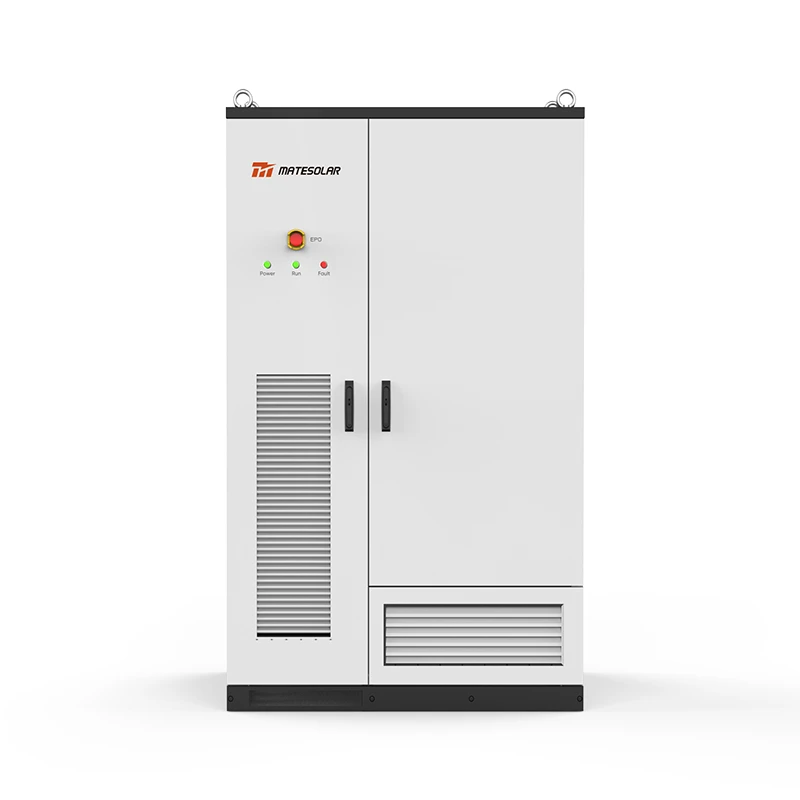
[For a turnkey solution tailored to this tender‘s technical and commercial requirements, explore the Système solaire hybride commercial de 500 kW - a proven platform for utility-scale integrated solar-plus-storage.]
4.5 Why Now?
The EOI launched in March, and pre-qualification and technical evaluation are now underway. Final award decisions are expected in the coming months. Developers who have not yet secured a qualified BESS partner risk missing this window. The combination of a 15-year revenue stream, a regulatory framework actively supporting independent BESS, and an estimated 11% IRR makes this the most consequential storage opportunity in the Caribbean today.
5. EDES-LPI-01-2024: The Overwhelming Market Response
5.1 Bidding Frenzy
International Public Tender EDES-LPI-01-2024, targeting 600 MW of renewable generation with mandatory BESS, received 20 project submissions — 19 solar PV and one wind — totalling 1,655.92 MWp of proposed capacity. That is nearly three times the contracted capacity, demonstrating overwhelming investor confidence.
5.2 Quality Over Quantity
Of the 20 proposals, 12 solar-plus-storage projects were disqualified on technical or qualification grounds. This highlights a critical lesson for the market: capacity alone is insufficient. Rigorous technical compliance, bankable equipment and documented operational experience are non-negotiable requirements for award.
5.3 Timeline
Final awards are expected between April 27 and May 25, 2026 — meaning that as of May 2026, the selection process is reaching its conclusion. The outcomes will set the benchmark for pricing, technology selection and performance expectations for all subsequent procurements.
6. The Curtailment Crisis: 12,000+MWh Lost in 2026
6.1 The Scale of Waste
Renewable curtailment in the Dominican Republic has reached crisis levels. More than 120,000 MWh of renewable energy has been curtailed year-to-date in 2026. In 2025, total curtailment reached 189,057 MWh, incurring economic losses exceeding USD 30 million. Monthly curtailment has ranged between 10,000 and 18,000 MWh, with peak months seeing curtailment exceed 50% of potential generation.
6.2 Why Is Curtailment Rising?
As solar PV capacity continues its rapid expansion — with 1,580.96 MW already connected to SENI and approaching the 2 GW target — the grid‘s ability to absorb variable generation without adequate flexibility resources is reaching its limits. The problem will not resolve itself without significant storage deployment.
6.3 The Financial Case for Retrofit Storage
For existing solar farm owners, curtailment represents direct revenue loss. A 100 MW solar farm experiencing 15% curtailment loses approximately USD 2.7 million annually at current wholesale electricity prices. Adding BESS to capture and time-shift that curtailed energy can recover 70–90% of those losses, delivering payback periods of 3–5 years depending on battery configuration and tariff structures.
For new projects, storage is now mandatory. But for existing assets, storage is increasingly becoming an economic imperative, not merely a voluntary upgrade.
[For existing solar farms seeking seamless retrofit solutions, the 100kW/232kWh and 125kW/261kWh Liquid-Cooled Outdoor Cabinet ESS offers modular, plug-and-play integration with minimal downtime.]
7. Foreign Capital Floods In: Project Pipeline Overview
International developers are accelerating their commitments to the Dominican Republic‘s solar-plus-storage market:
7.1 Major Announced Projects
| Developer | Localisation | Capacité | Status |
| Spanish Solartia | Isla Saona area | 6.34 MWp solar + 2.32 MW storage | Phase 2 award |
| Hong Kong Denashan Energy | Jomalut (Jomalut) | 300 MW solar + storage + industrial park | USD 400M investment; government expedited permitting |
| Vietnamese and other international players | Various | Multiple projects under evaluation | Active market entry |
7.2 Distributed & Off-Grid Storage
The domestic market is also demonstrating viable use cases: a local poultry processing plant has deployed a 60 kW solar + 200.7 kWh lithium battery off-grid storage system, achieving 24/7 uninterrupted power.
7.3 Near-Term Pipeline
Beyond awarded and announced projects, ETED is evaluating an additional 200 MW of storage capacity, and multiple private projects are advancing through development phases. The cumulative pipeline for the next 12–18 months comfortably exceeds 1 GW of storage capacity across various segments.
8. Technical Compliance Deep Dive: Grid-Forming, Black Start & Fast Frequency Response
SIE-178-2025-MEM‘s technical requirements are not optional checkboxes — they define the operational envelope within which BESS must perform. Here is what each requirement means in practice.
8.1 Grid-Forming (Grid-Forming)
Traditional grid-following inverters rely on an external voltage reference from the grid. When grid conditions become weak or unstable — as they increasingly do as renewable penetration rises — grid-following inverters can trip offline, exacerbating instability.
Grid-forming inverters, by contrast, synthesize their own voltage and frequency reference, actively establishing grid stability rather than merely following it. For the Dominican grid, which is experiencing rapid renewable growth and periodic blackout events (including a major outage on February 23, 2026), grid-forming capability is essential for reliable operation during contingency conditions.
8.2 Black Start Capability
Black start refers to a BESS’s ability to energize a dead grid segment without relying on external power. Following a system-wide outage, black-start-capable BESS can restore power to critical loads and facilitate the restart of conventional generation. This capability is explicitly required by SIE-178-2025-MEM.
8.3 Fast Frequency Response (FFR)
Frequency response time is measured from the moment a frequency deviation is detected to the moment the BESS adjusts its power output. For FFR compliance under Dominican regulations, response must occur within sub-100 milliseconds. Conventional thermal generation typically responds in seconds — too slow to arrest large frequency deviations in a high-renewable system.
8.4 Voltage Regulation and Ramp Rate Control
Voltage regulation ensures that BESS can inject or absorb reactive power to maintain voltage within statutory limits. Ramp rate control smooths the output variability of solar PV, preventing rapid power fluctuations that stress grid infrastructure.
8.5 Documentation & Compliance Package
For developers submitting bids to ETED or SIE, a complete compliance package must include:
- Technical specifications demonstrating each performance attribute
- Certification reports from accredited testing laboratories
- Grid-connection application templates aligned with SIE procedures
- Maintenance and performance guarantee schedules for the full 15-year contract term
8.6 Future-Proofing via OTA Updates
The regulatory landscape is evolving. Additional SIE measures are expected in 2026 and beyond. Systems equipped with over-the-air (OTA) remote software upgrade capability can adapt to new grid codes and market mechanisms without hardware replacement or costly site visits.
9. Product Solutions for Every Segment
9.1 Utility & Large-Scale IPP/EPC Projects — ETED Tender Participants
| Exigence | Solution Approach |
| 50% × 4h mandatory storage | System architecture engineered for C-rate = 0.25 (discharge over 4h) |
| Grid-forming, black start, FFR | Advanced PCS with grid-forming inverter control |
| 15-year performance guarantee | Tier-1 LiFePO4 cells with ≥6,000 cycles at 80% DoD |
| UL/IEC certification suite | UL 9540, IEC 62619, IEC 62933-5-2, NFPA 855 compliance |
| OTA upgradeability | Cloud-based EMS with remote firmware update capability |
| Full documentation package | Turnkey submission-ready compliance binder |
9.2 Existing Solar Farm Retrofit — Curtailment Recovery
| Pain Point | Solution |
| Curtailment losses >12,000 MWh YTD | Battery capture during over-generation, discharge during peak pricing |
| Minimal operational disruption | Pre-assembled outdoor cabinet or container that integrates at 400V/35kV bus |
| Policy uncertainty | OTA-capable EMS; anti-reverse power protection for net metering gaps |
| ROI uncertainty | Detailed revenue model using actual curtailment data and TOU tariffs |
| Retrofit payback period | 3–5 years depending on capacity factor and avoided curtailment |
Example retrofit model:
- 50 MW solar farm with 15% curtailment → 7.5 MW curtailed → 30 MWh/day lost
- Add 30 MWh storage (7.5 MW × 4h) costing ~USD 3–4 million
- Recover 80% of curtailed energy = 24 MWh/day × 365 = 8,760 MWh/year
- At USD 0.12/kWh wholesale value → ~USD 1.05 million/year recovered
- Payback period: 3–4 years
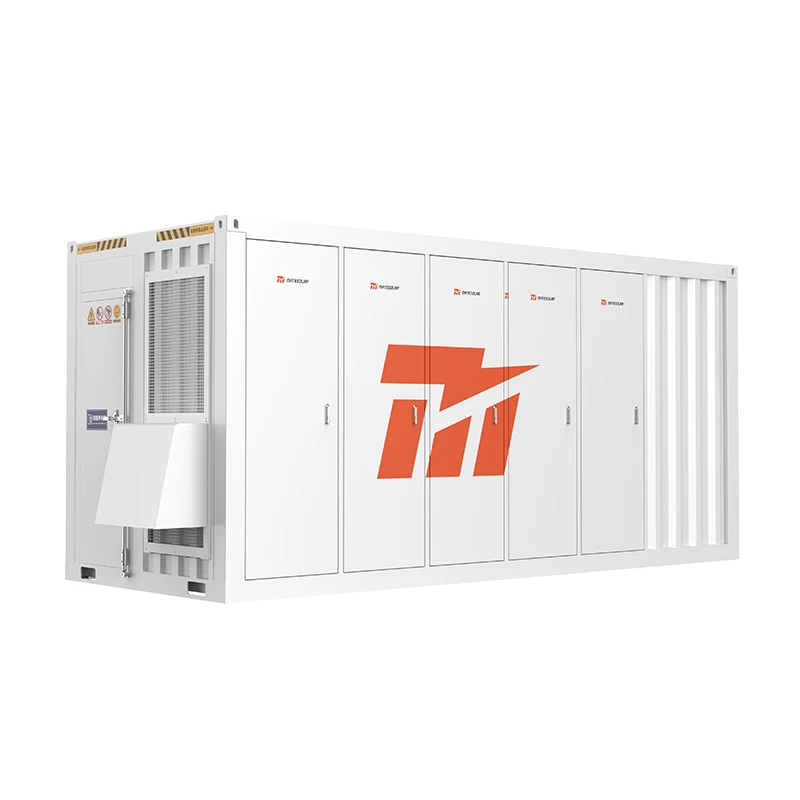
[For solar farm retrofits, the 40Ft 1MWh 2MWh Air-Cooled Container ESS provides factory-integrated, ready-to-deploy storage that connects directly to existing PV infrastructure.]
9.3 C&I and High-Energy-Intensive Businesses — Cold Storage, Food Processing, Data Centers
| Pain Point | Solution |
| Commercial tariffs USD 0.19–0.28/kWh | Peak shaving + load shifting to reduce consumption during high-rate periods |
| Demand charges (30–50% of bill) | Peak demand reduction via BESS discharge during peak load intervals |
| Power outages = product loss (e.g., cold storage) | UPS-mode backup for critical loads; seamless transition <20ms |
| Upfront capital constraints | Energy-as-a-Service (EaaS) zero-down financing; payments from energy savings |
| ROI timeline | 4–6 years; 6-month+ full off-grid operational experience in local market |
Case study reference: Local poultry processing facility running 60 kW solar + 200.7 kWh battery has operated 100% off-grid for over six months. This demonstrates the viability of storage-backed C&I energy independence in Dominican conditions.
9.4 Hospitality, Retail & Commercial Buildings — Hurricane Resilience
| Pain Point | Solution |
| Hurricane season (June–November) | BESS designed for islanded/off-grid operation during grid failure |
| Grid failure = loss of guest revenue | 12–24 hour backup capacity for critical hotel loads (lighting, elevators, kitchen refrigeration) |
| Tropical climate challenges | IP65+ outdoor cabinets with liquid cooling and anti-corrosion treatment |
| Wind vulnerability | Structural rating ≥250 km/h, designed to Exposure D hurricane standards |
| Deployment urgency (pre-season) | Deploy by late May to be operational before June hurricane onset |
9.5 Small-to-Medium C&I & Community Solar — Net Metering Uncertainty
| Concern | Solution |
| “What if I can’t sell excess power back to the grid?” | Smart EMS with anti-reverse power protection — prioritize self-consumption, zero export to grid |
| “What if net metering rates change?” | OTA-upgradeable system; future export and market mechanisms can be enabled via software |
| “What if the grid rejects my export?” | Battery captures all excess generation; usable on-site during evening peak consumption |
The Dominican Republic‘s distributed generation regulatory framework has advanced significantly with Resolution SIE-007-2026-REG, which establishes comprehensive net metering rules requiring 100% credit for renewable exports and mandating utility-provided bidirectional meters at no cost. However, policy evolution continues, and anti-reverse-power functionality provides investment protection against any future changes.
[For small-to-medium C&I and community storage requirements, the 20ft 3MWh 5MWh Liquid Cooling Container ESS delivers high-density, space-efficient storage with advanced thermal management.]
10. Safety & Environmental Resilience: IP65+, Hurricane Ratings & Fire Safety
10.1 The Dominican Environmental Challenge
The Dominican Republic‘s climate presents severe challenges for outdoor electrical equipment:
- High temperature (30–35°C+ ambient)
- High humidity (70–90% RH typical)
- Salt spray in coastal zones (most of the country)
- Hurricane-force winds (June–November season)
- Heavy rainfall and flooding risks
10.2 IP Ratings: What Is Required
For outdoor deployment in the Dominican Republic, a minimum IP65 ingress protection rating is strongly recommended. IP65 provides:
- Complete dust-tight sealing (6 = dust-tight)
- Protection against low-pressure water jets from any direction (5 = water jets)
For particularly exposed coastal or hurricane-prone locations, IP66 (powerful water jets) provides an additional margin of safety.
10.3 Structural Hurricane Resilience
The Dominican Republic‘s technical standards require BESS enclosures to be designed, installed and certified for safe operation under extreme wind conditions applicable to hurricane-exposed zones, with reference to Exposure D under applicable engineering standards. An anti-hurricane design rating ≥250 km/h (155 mph) is the industry benchmark.
10.4 Fire Safety and Thermal Management
| Standard | Relevance |
| UL 9540 | Complete energy storage system safety |
| UL 9540A | Thermal runaway fire propagation testing |
| IEC 62619 | Secondary lithium cell and battery safety |
| NFPA 855 | Installation and fire code for stationary storage |
Thermal management: In high-ambient-temperature environments, liquid cooling is strongly preferred over air cooling. Liquid-cooled systems maintain cell temperature differentials below 2–3°C, preserving cycle life and ensuring safe operation even at 40°C+ ambient conditions. Air-cooled systems may be adequate for smaller deployments in milder microclimates but require careful derating analysis for full-sun coastal installations.
10.5 Certification Readiness for Financing
International lenders (World Bank, IDB, commercial banks) increasingly require UL or IEC certification documentation as a condition of project financing. Systems lacking these certifications face higher cost of capital or outright disqualification from institutional funding.
11. Bankability & Financing: International Certifications & IRR Modelling
11.1 The Bankability Challenge
For large-scale projects (ETED tender, EDES-LPI-01-2024 awardees), bankability — the ability to secure project finance from international lenders — is the critical success factor. Banks and development finance institutions require:
| Documentation Requirement | Objectif |
| UL 9540 / IEC 62619 certificates | Verifies system safety under recognized standards |
| ISO 9001, 14001, 45001 | Quality, environmental and occupational health management |
| 15-year performance warranty | Longevity assurance for loan tenors |
| Tier-1 cell supplier documentation | Proven cell reliability and supply chain traceability |
| Third-party technical due diligence reports | Independent verification of performance claims |
11.2 IRR Drivers for Dominican BESS Projects
The estimated 11% IRR for the ETED tender project is driven by four primary factors:
1. Ancillary services revenue (frequency regulation, FFR, ramp rate control — all mandated under the service contract)
2. Curtailment capture (monetizing energy that would otherwise be wasted)
3. Transmission investment classification (BESS recognized as grid infrastructure, not merchant generation)
4. 15-year contract certainty (revenue predictability for financing)
For commercial and industrial projects, IRR is driven by:
- L'écrêtement des pointes savings at USD 0.19–0.28/kWh rates
- Réduction de la charge de la demande (30–50% of typical C&I bills)
- Backup power value (avoided outage losses)
11.3 Energy-as-a-Service (EaaS) Financing
For customers unwilling or unable to make upfront capital expenditures, EaaS models provide:
- Zero upfront payment — system installed immediately
- Monthly payments from energy savings — positive cash flow from month one
- Full performance guarantee — provider assumes technical and operational risk
- No balance sheet impact — operational expense treatment
12. Frequently Asked Questions (FAQ)
Q1: What is the mandatory storage requirement for new renewable projects in the Dominican Republic?
A: Under SIE Resolution 178-2025-MEM, effective January 2026, any renewable energy project between 20 MWac and 200 MWac must install BESS with a capacity equivalent to 50% of installed capacity and a minimum 4-hour discharge duration. The BESS must also provide grid-forming operation, black start capability, voltage regulation and fast frequency response.
Q2: Is the ETED 600MW/1.2GWh BESS tender still open for submissions?
A: The Expression of Interest (EOI) was launched on March 3, 2026. Interested developers should contact ETED directly for the current status of the procurement process. Even if the EOI window has closed, the success of this model strongly suggests future tenders will follow.
Q3: Can I add storage to my existing solar farm to reduce curtailment losses?
A: Yes. ETED is actively developing procurement mechanisms specifically for attaching BESS to existing renewable generation projects. The target for 2026 is at least 138 MW of such retrofit storage, with an aggregate of no less than 500 MW in the near term.
Q4: What is the payback period for C&I storage in the Dominican Republic?
A: Based on current commercial tariffs (USD 0.19–0.28/kWh) and demand charge structures (typically 30–50% of monthly bills), payback periods typically range from 4 to 6 years. For facilities with high demand charges or critical backup power requirements, payback can be shorter.
Q5: Does the Dominican Republic have net metering for solar+storage?
A: Yes. Resolution SIE-007-2026-REG (effective January 19, 2026) establishes a comprehensive distributed generation framework with 100% credit for renewable energy exports and requires utilities to provide bidirectional meters at no cost to users.
Q6: Can my BESS survive a Category 5 hurricane?
A: BESS systems designed for the Dominican market should be certified with structural rating ≥250 km/h (155 mph) , meeting Exposure D standards for hurricane-prone zones. Outdoor cabinets should carry IP65 or higher ingress protection and employ anti-corrosion treatment for coastal salt-spray exposure.
Q7: How do I ensure my BESS is compliant with all technical requirements for the ETED tender?
A: A complete compliance package must include: (1) performance data demonstrating grid-forming, black start and FFR capabilities; (2) UL 9540 / IEC 62619 certification; (3) grid-connection application templates aligned with SIE procedures; (4) OTA upgrade capability for future regulatory changes; and (5) 15-year performance guarantees.
Q8: What safety certifications should my BESS have for Dominican deployment?
A: The essential certification suite includes UL 9540 (system safety), IEC 62619 (cell and battery safety), NFPA 855 (installation fire code) and for coastal installations, confirmation of salt-spray corrosion resistance.
Q9: Do you have local installation and maintenance support in the Dominican Republic?
A: MateSolar provides comprehensive remote support for all BESS products, with technical teams available to guide on-site personnel through installation and maintenance procedures. For utility-scale projects, we can arrange specialist technical dispatch to site for commissioning and major troubleshooting when required. Hardware issues are resolved through part replacement with shipping of components or product exchange.
Q10: What is the forecast for electricity tariffs in the Dominican Republic?
A: With fuel oil prices remaining elevated and the renewable transition placing pressure on grid operating costs, upward pressure on tariffs persists. The Caribbean regional average commercial tariff is approximately USD 0.37/kWh, suggesting the Dominican Republic‘s current USD 0.19–0.28/kWh range has significant headroom. The energy storage value proposition strengthens as tariffs rise.
13. Summary Comparison Tables
Table 1: BESS Requirements by Segment
| Segment | Minimum Capacity | Durée de l'accord | Key Technical Mandates | Primary Revenue Driver |
| New solar 20–200 MW (mandate) | 50% of PV | 4h | Grid-forming, black start, FFR, voltage reg | Compliance + curtailment capture |
| ETED tender (600 MW) | N/A (standalone) | 2h | FFR, primary/secondary frequency, ramp control | Ancillary services contract (15 yrs) |
| Existing solar retrofit | Project-specific | 2–4h | Standard BESS (no black start required if not islanded) | Curtailment capture + price arbitrage |
| C&I peak shaving | Project-specific | 2–4h | Grid-following or grid-forming | Demand charge reduction + backup |
| Off-grid / microgrid | Project-specific | 6–24h | Grid-forming + black start | Energy independence + outage protection |
Table 2: Certification Requirements by Application
| Certification | Utility/ETED | C&I | Résidentiel | Relevance for Dominican Climate |
| UL 9540 (system) | Required | Recommended | / | Fire safety in high-temperature environment |
| IEC 62619 (cells) | Required | Required | Recommended | Cell-level safety |
| NFPA 855 (install) | Required | Required | Recommended | Installation fire code compliance |
| IP65 outdoor rating | Required | Required | Recommended | Protection against dust, water jets, humidity |
| Hurricane structural rating (≥250 km/h) | Required | Recommended | / | Wind resistance for hurricane season |
| OTA update capability | Required | Recommended | En option | Future regulatory adaptability |
14. Conclusion & Next Steps
The Dominican Republic‘s energy storage market has achieved critical mass in 2026. The regulatory framework is in place. The flagship ETED tender is active. The curtailment crisis is creating immediate economic incentives. International capital is flowing in. For developers, asset owners and commercial energy users, the question is no longer theoretical — it is operational.
For developers bidding on the ETED 600MW/1.2GWh tender: Your BESS solution must satisfy SIE-178-2025-MEM‘s full technical mandate, provide 15-year performance guarantees, and deliver full documentation for bankability. Grid-forming inverters, black start capability and sub-100ms frequency response are non-negotiable.
For existing solar farm owners: Every megawatt-hour curtailed is lost revenue. Retrofit storage can recover 70–90% of curtailment losses with payback periods of 3–5 years. The window to capture these economics is open now.
For C&I and high-energy users: Commercial tariffs at USD 0.19–0.28/kWh, combined with demand charges comprising 30–50% of bills, make storage a compelling investment with 4–6 year paybacks. EaaS financing removes upfront capital barriers.
For all customers: The tropical climate demands IP65+ outdoor cabinets with hurricane-rated structures (≥250 km/h). UL 9540 and IEC 62619 certifications are essential for safety and bankability. OTA upgrade capability insulates investments against regulatory evolution.
15. About MateSolar
MateSolar is a premier one-stop photovoltaic energy storage solution provider, dedicated to delivering integrated solar and battery storage systems for residential, commercial and utility-scale applications worldwide. With a comprehensive product portfolio spanning solar panels, lithium battery storage, hybrid inverters, outdoor cabinet ESS and containerized energy storage solutions, MateSolar combines technical excellence with bankable international certifications (UL, IEC, ISO) to serve clients across North America, Central America, Europe and beyond.
Our commitment to customer success extends beyond product delivery: we provide remote technical support, software-based troubleshooting and OTA updates, hardware replacement through component shipping, and dispatch technical specialists for major commissioning and troubleshooting on utility-scale projects when required.
As the Dominican Republic‘s energy storage market accelerates from policy to project execution, MateSolar is your trusted partner for compliant, bankable and climate-resilient storage solutions.
Contact MateSolar today to discuss your Dominican Republic project requirements.