




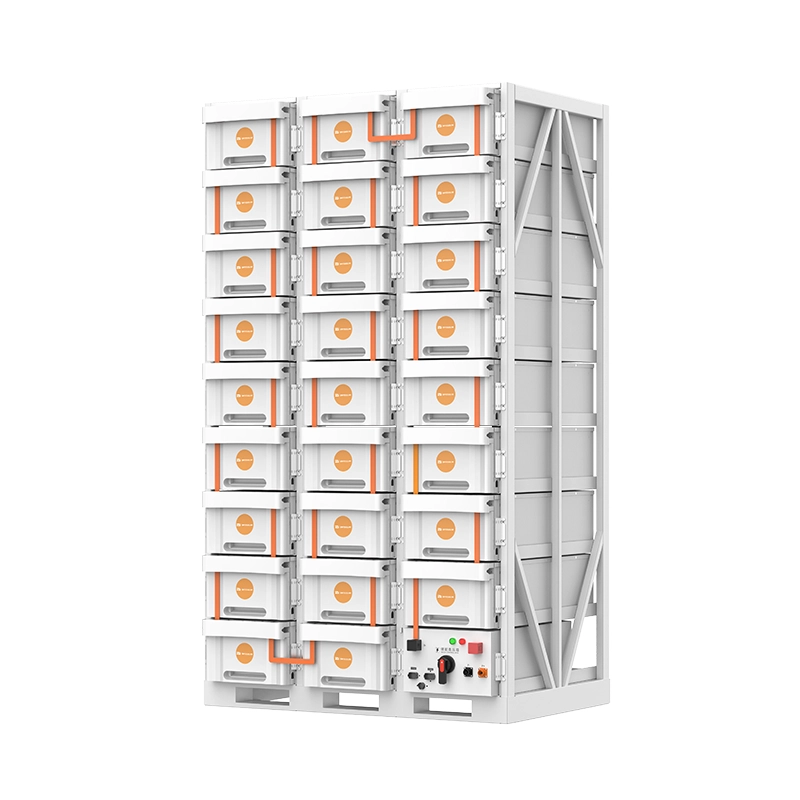
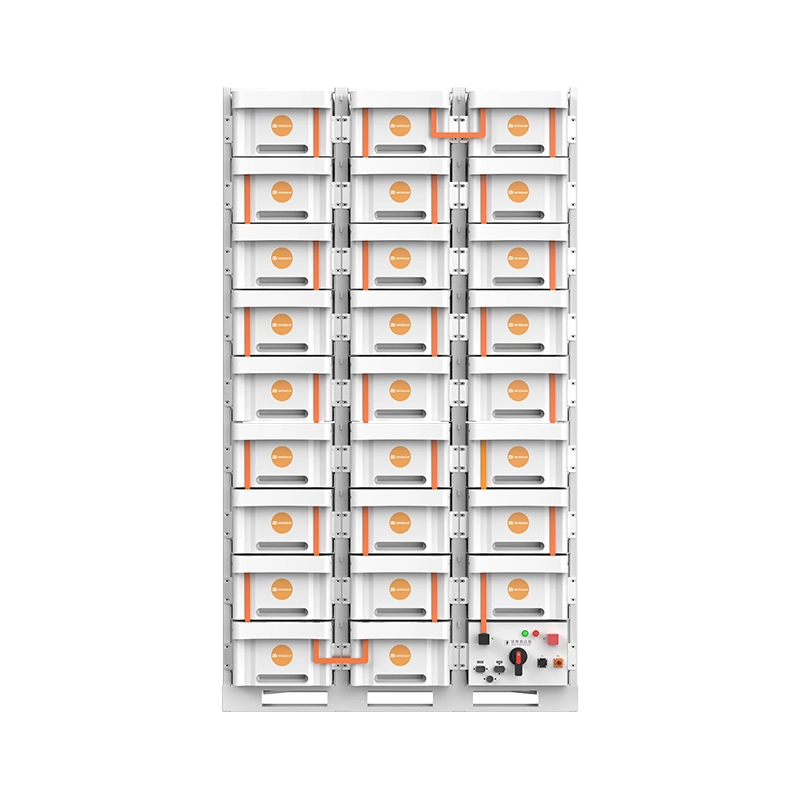
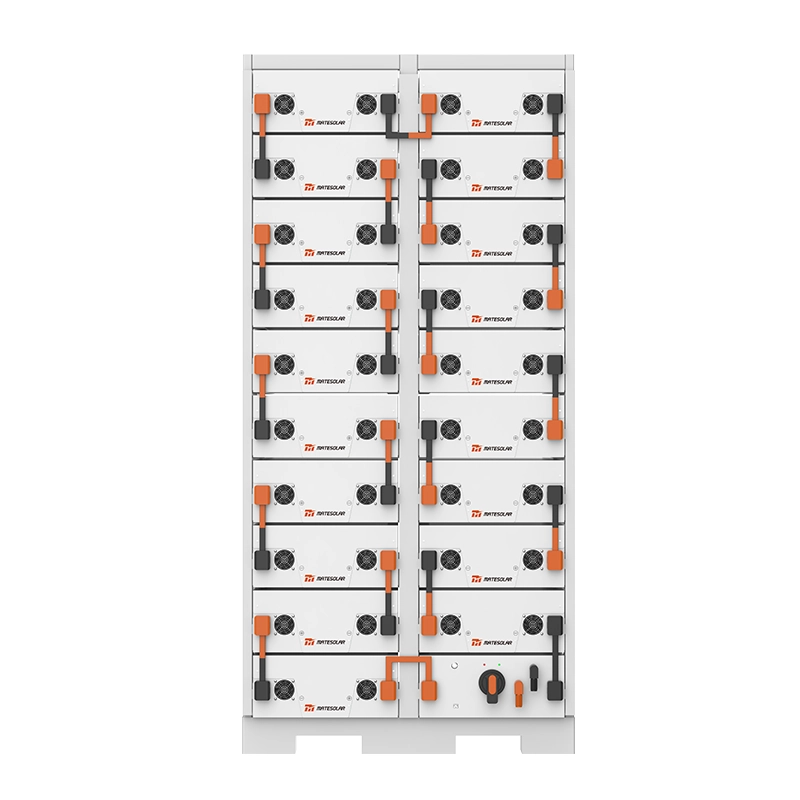
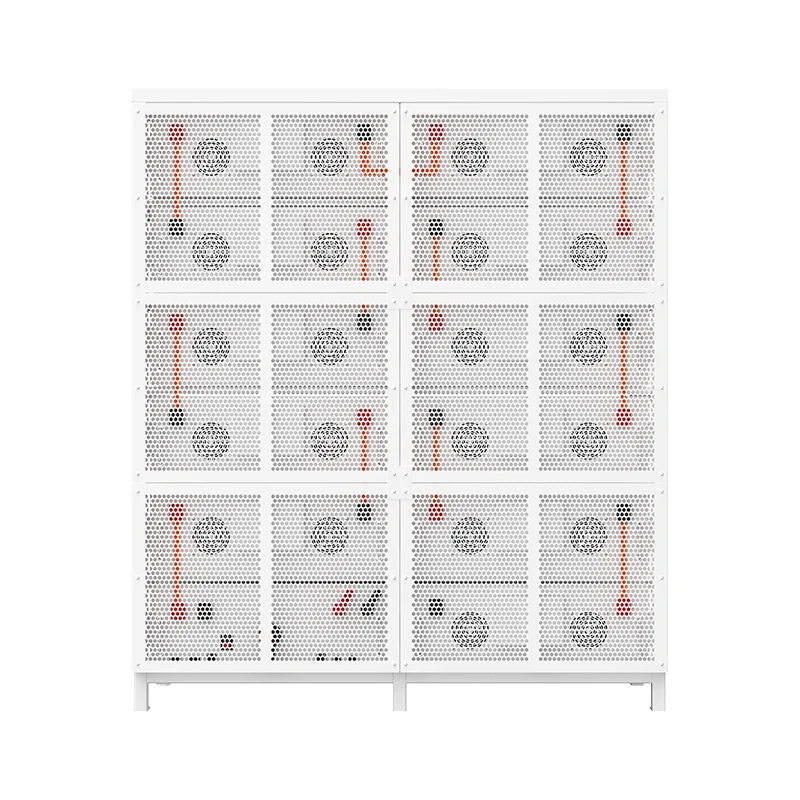
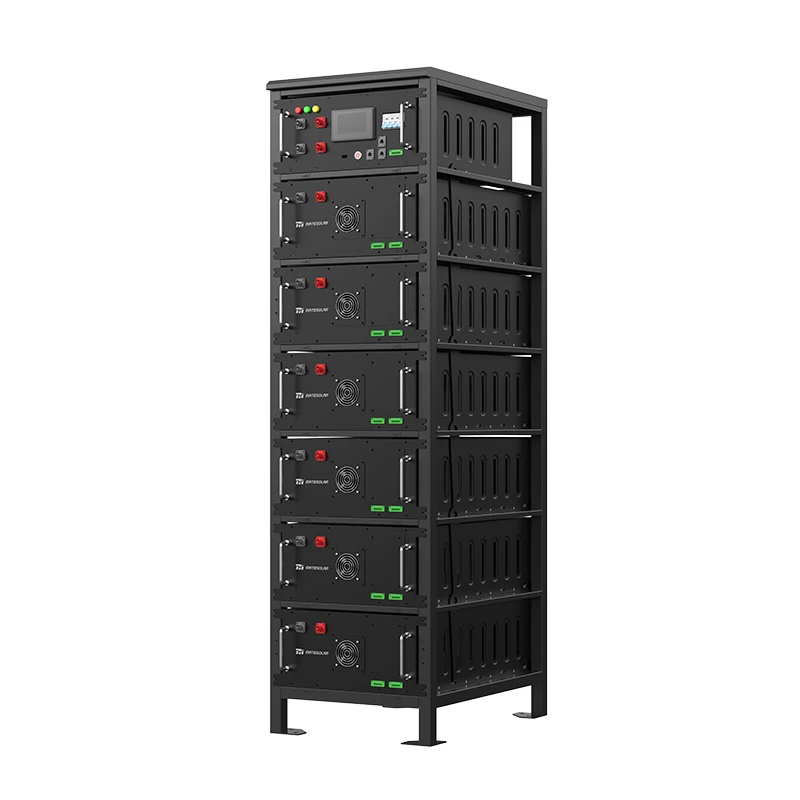
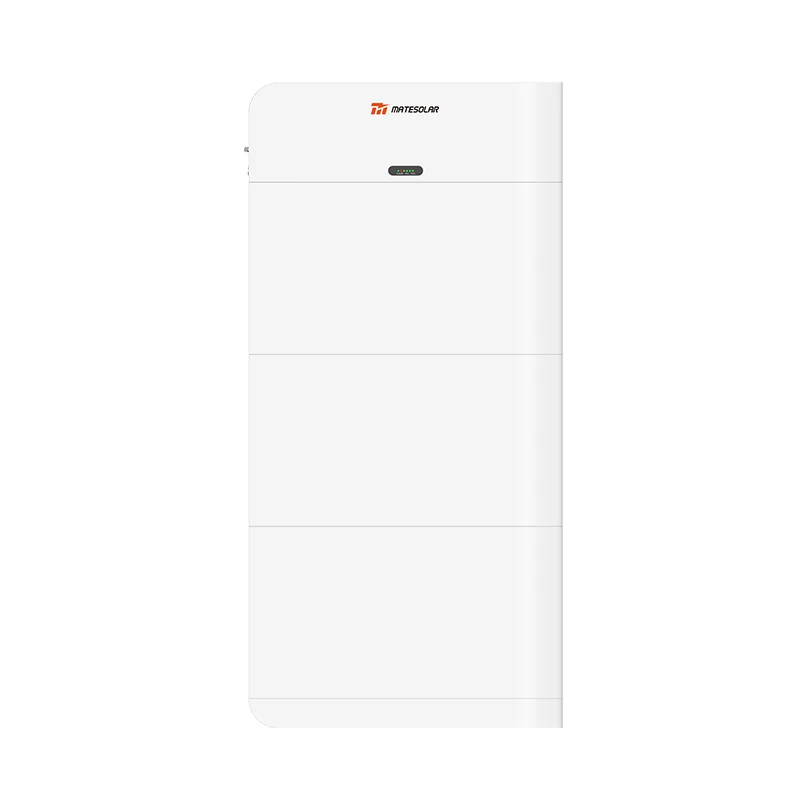
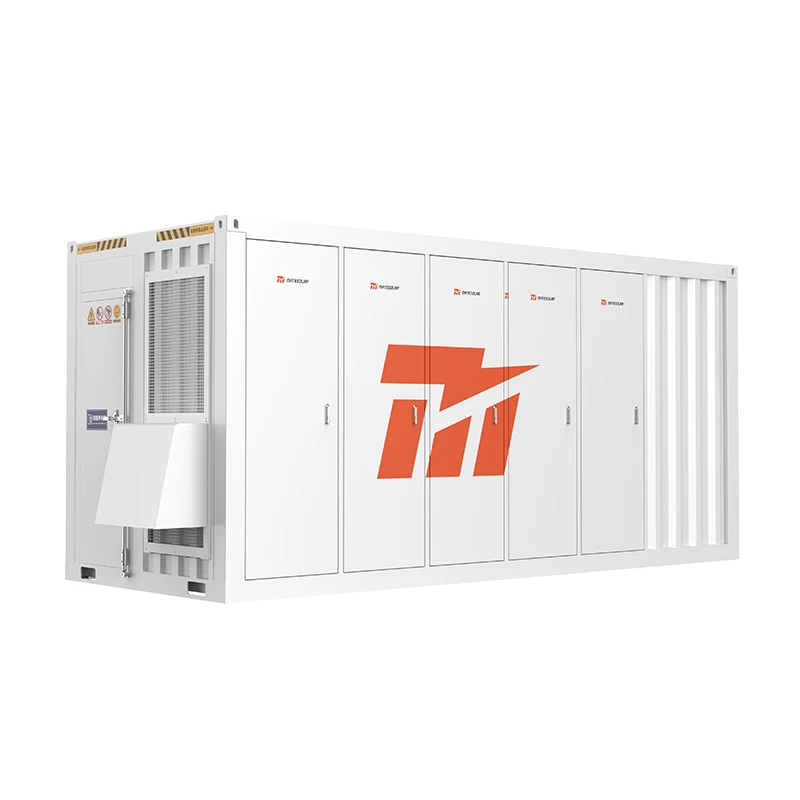
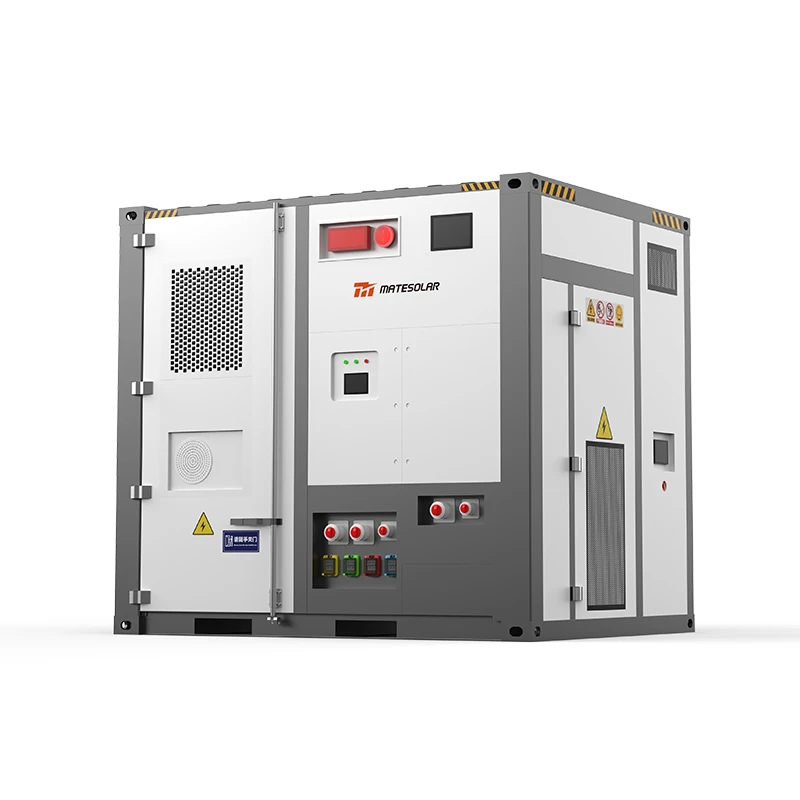



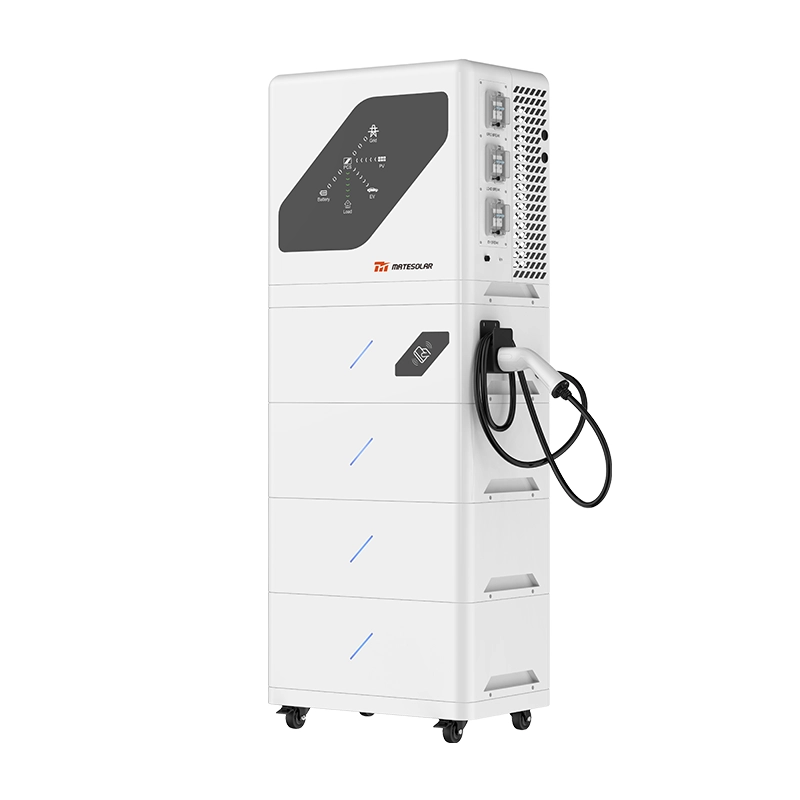
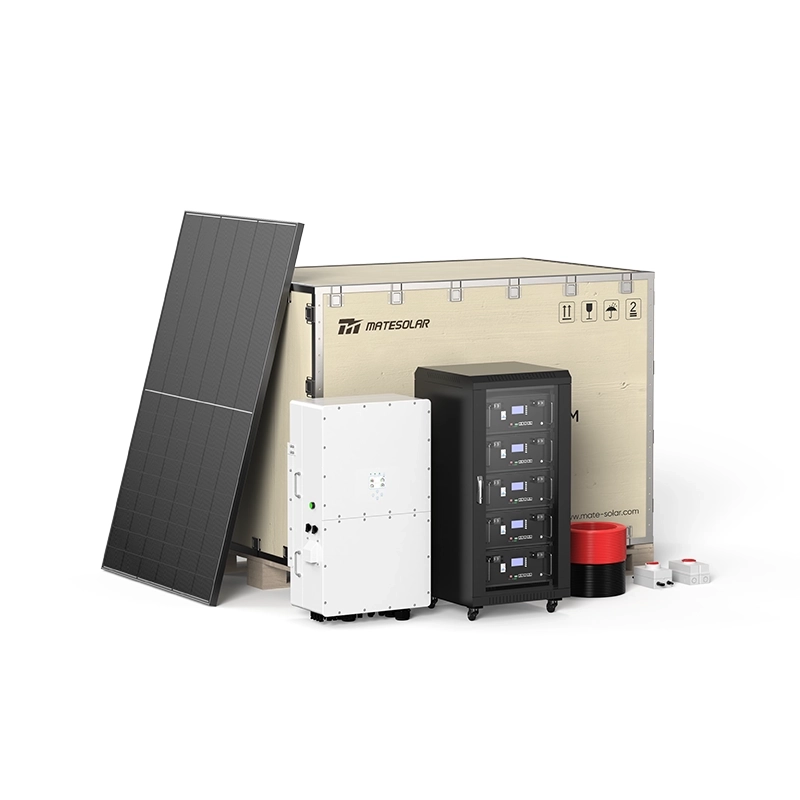
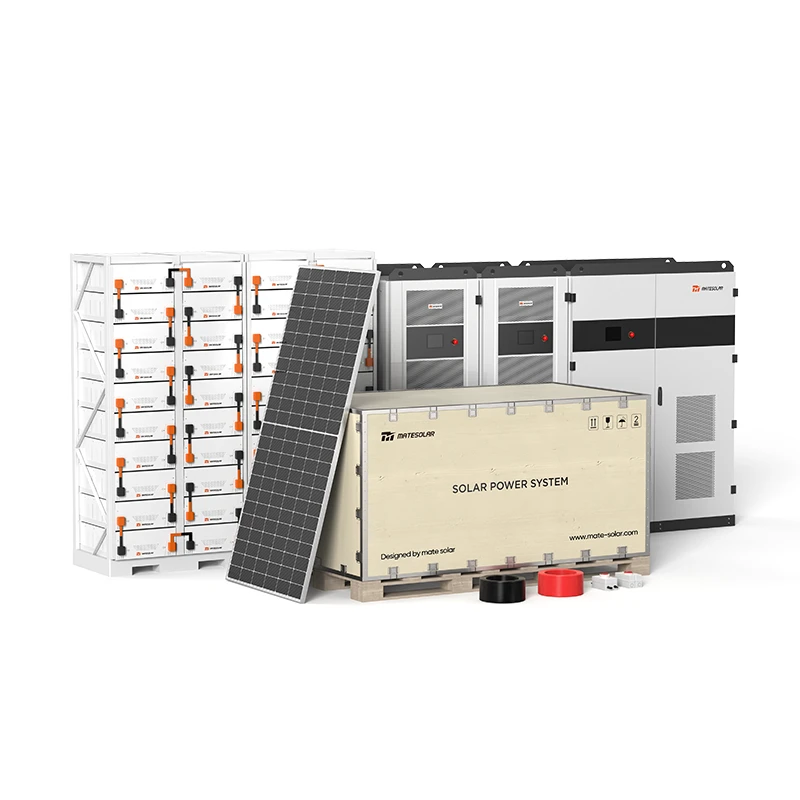
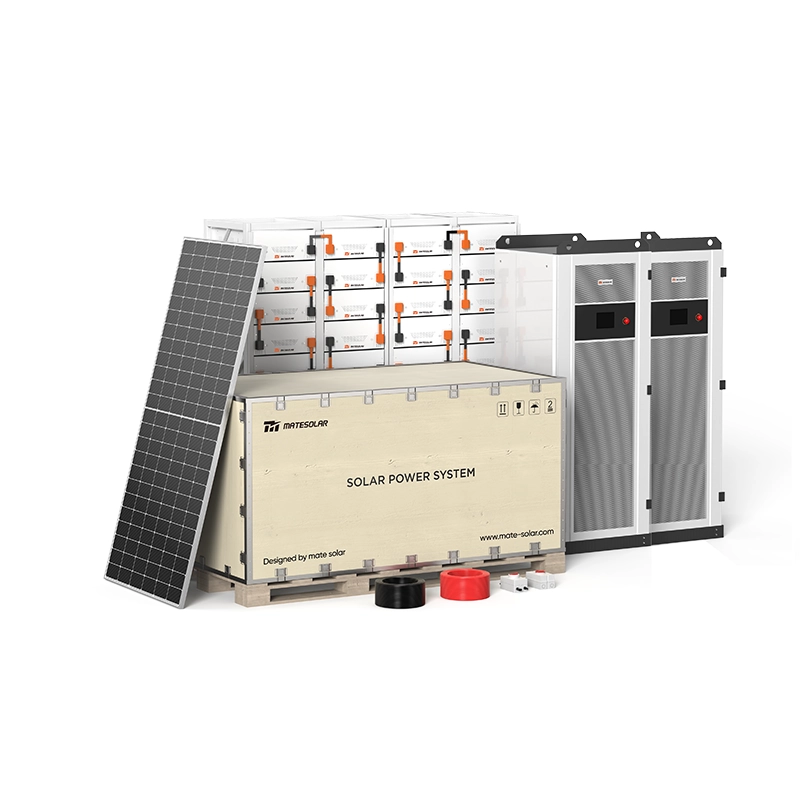



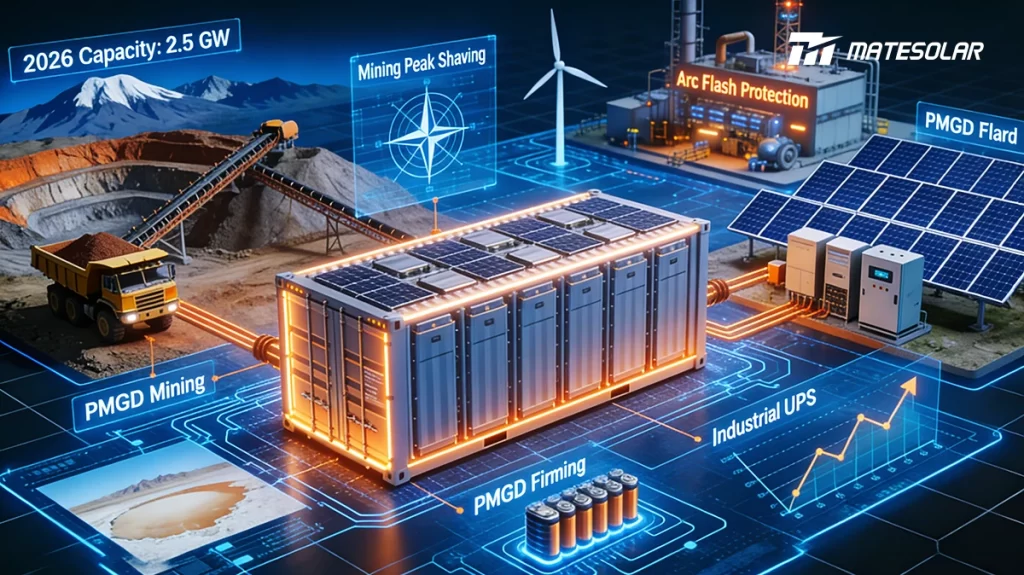
A Comprehensive Guide Covering Mining Decarbonization (2030 Mandates), PMGD Hybridization Under DS88, Industrial-Scale Energy Arbitrage, Atacama Desert Environmental Resilience, and Emerging Demand from Data Centers & Green Hydrogen
ملخص تنفيذي
As of April 2026, Chile stands as the undisputed leader of Latin America's energy storage revolution. With over 1,700 MW of batteries already in operation, approximately 600 MW in testing, and an additional 846 MW / 2,872 MWh in commissioning, the Chilean energy storage market has not merely met its 2030 target of 2 GW—it has surpassed it nearly two years ahead of schedule. Under President Kast's administration, which has elevated storage to a national energy policy priority, the country has set dramatically expanded targets: approximately 9,000 MW of storage capacity by 2027 and approximately 14,000 MW by 2030.
Chile's rise as a global energy storage powerhouse is not accidental. It is the product of the most sophisticated regulatory framework in Latin America—a carefully constructed legal architecture comprising Law 20.936 (2016), Law 21.505 (2022), and the DS70 capacity payment modifications—now being further refined through the modernization of DS125 (system operation and storage coordination) and DS88 (PMGD distributed generation regime). Meanwhile, the passage of the Article 6.2 carbon credit framework under the Paris Agreement has opened an entirely new revenue stream for battery storage projects, with Colbún's 228 MW / 912 MWh Diego de Almagro Sur project and CIP's 220 MW / 1,100 MWh Arena project already approved to generate and sell carbon credits.
This document is written for five distinct audiences, each facing unique challenges:
1. Mining operators (Codelco, BHP, Anglo American, Antofagasta Minerals) facing the 2030 100% clean energy procurement mandate, requiring technical solutions for 24/7 renewable power delivery under extreme desert conditions.
2. Commercial & industrial facility owners (retail chains, office buildings, industrial parks) seeking to navigate the evolving PMGD regulatory landscape and capture peak-to-trough electricity price differentials.
3. EPC contractors, project developers, and independent power producers (IPP) looking to participate in the massive PMGD-plus-battery hybridization market—a 3,900 MW installed base of existing PMGD assets awaiting battery retrofits.
4. High-growth industrial sectors—data centers (projected to reach 1,360 MW of demand by 2032), green hydrogen producers, and seawater desalination operators—requiring guaranteed 24/7 green power with millisecond-level response capabilities.
5. International financiers, asset managers, and institutional investors demanding bankable certifications (UL9540, IEC62619), verifiable carbon credit mechanisms, and audited performance data under extreme environmental conditions.
Each section of this document is structured as a standalone technical brief, complete with data tables, ROI models, regulatory timelines, and actionable solutions. Cross-references are provided where themes overlap.
Part One: The Chilean Energy Storage Market in 2026 — Data, Targets & Structural Drivers
1.1 Current Installed Capacity and 2027–2030 Targets
The scale of Chile's storage deployment has accelerated faster than any industry forecast predicted. As of March 2026, the National Electricity Coordinator reports more than 1,700 MW of batteries in operation, with approximately 600 MW in the testing phase. Considering the additional 846 MW / 2,872 MWh of storage projects in commissioning as of November 2025, the Ministry of Energy anticipates that Chile has already completed its original 2030 target of 2 GW of cumulative storage capacity.
The new administration has responded with dramatically expanded ambitions. According to projections presented by the government's energy policy team, storage capacity targets have been revised to approximately 9,000 MW by 2027 and approximately 14,000 MW by 2030. This represents a 4.5x increase from current operational levels in just over one year.
Table 1: Chile Energy Storage Market — Current Status and Forward Projections (April 2026)
| متري | القيمة | Source / Date |
| Operational BESS capacity | >1,700 MW | CEN, March 2026 |
| BESS in testing | ~600 MW | CEN, March 2026 |
| Cumulative capacity (incl. commissioning) | 1.474 GW / 6.1 GWh | Energy Ministry, Nov 2025 |
| Additional under commissioning | 846 MW / 2,872 MWh | Energy Ministry, Nov 2025 |
| Environmental approval granted (April 2024) | 2.78 GW | ACERA |
| Under environmental review | 6.06 GW | ACERA |
| 2027 target | ~9,000 MW | Kast admin projections |
| 2030 target | ~14,000 MW | Kast admin projections |
| 2030 target (previous administration) | 2 GW (completed early 2026) | Original NDC |
1.2 The Curtailment Crisis — Why Storage Is Not Optional
To understand why Chile has become a global leader in storage deployment, one must first understand the severity of its renewable energy curtailment crisis. Chile's renewable energy generation capacity has reached 69% of total installed generation, and is expected to exceed 70% by early 2026. However, transmission infrastructure has not kept pace. Solar generation is concentrated in the northern Atacama region, while major load centers are located in the central and southern regions—over 1,500 kilometers away.
In 2025, renewable energy curtailment exceeded 6 TWh. Critically, ACERA estimates that without the battery storage already operational, curtailment would have reached 8 TWh—a 43% year-over-year increase rather than the actual 8% increase. In other words, storage directly absorbed approximately 2 TWh of otherwise-wasted renewable generation.
This is not a marginal issue. It is a structural condition that has fundamentally reshaped the economics of storage. In the northern Sing interconnection system, daytime solar saturation drives electricity prices to near-zero or even negative levels, while evening prices spike as thermal generation (primarily diesel and natural gas) must fill the gap. This creates one of the most attractive price arbitrage environments for battery storage anywhere in the world.
1.3 Investment Pipeline and Project Finance
The investment scale is commensurate with the ambition. Chile's US$16.3 billion energy project "unfreezing" plan allocates approximately 34% to battery energy storage systems. In 2025 alone, 73 battery projects were planned, with 30 storage systems under construction representing US$4.221 billion in investment. An additional 34 battery storage environmental assessment applications were submitted in 2025, with 29 projects receiving environmental approval, representing planned investment exceeding US$4.9 billion.
Table 2: Select Major BESS Projects in Chile (2025–2027)
| Project Name | السعة | Developer / Owner | Status | Key Feature |
| Oasis de Atacama platform | 1.1 GW solar + 4 GWh storage | Grenergy + BYD | Operations 2026–2027 | US$900M investment; 468 MC Cube-T units |
| BESS del Desierto | 200 MW / 880 MWh | Atlas + Sungrow | COD April 2025 | C5 anti-corrosion, IP65 dust protection |
| Diego de Almagro Sur | 228 MW / 912 MWh | Colbún | Batteries arriving 2026 | Article 6.2 carbon credit approved |
| BESS Arena | 220 MW / 1,100 MWh | Copenhagen Infrastructure Partners | Approved | Article 6.2 carbon credit approved |
| Central Oasis platform | 1.1 GW solar + 4 GWh storage | Grenergy | 2026–2027 | Part of broader Oasis de Atacama |
| Gabriela phase | 272 MW solar + 1.1 GWh storage | Grenergy | Commissioned Feb 2026 | Oasis de Atacama phase |
| Monte Águila | 340 MW solar + 960 MWh storage | Grenergy for Codelco | 2026 operations | 0.5 TWh annual 24/7 green power |
Part Two: The Regulatory Architecture — Why Chile Offers the Most Bankable Storage Framework in Latin America
Understanding Chile's regulatory framework is not optional for any serious participant in the market. It is the single most important determinant of project economics, revenue stacking capabilities, and long-term bankability.
2.1 The Foundational Legal Framework
Chile's regulatory evolution for energy storage has followed a deliberate, multi-year trajectory:
Law 20.936 (2016) — First Chilean legislation to define energy storage systems as distinct from conventional generation, establishing the conceptual foundation for market participation.
Law 21.505 (2022) — "Storage and Electromobility Law" — The landmark legislation that explicitly authorized stand-alone battery energy storage systems to participate in wholesale electricity markets, access capacity payments, and capture energy arbitrage revenues. This law fundamentally transformed storage from a niche technology to a mainstream asset class.
Supreme Decree 70 (DS70) — Modified capacity payment rules to provide explicit valuation methodology for independent BESS, including derating factors that incentivize longer-duration storage (5+ hour systems receive 100% capacity credit).
2.2 The 2026 Regulatory Agenda: DS125 and DS88 Modernization
As of April 2026, the most consequential regulatory developments are the ongoing modifications to DS125 and DS88—two supreme decrees that will define market rules for the remainder of the decade.
DS125 (System Operation and Storage Coordination) — This decree addresses matters associated with system operation and the development of storage. The proposed modifications have broad technical consensus because they enable storage to reduce curtailment and improve system flexibility. Key elements include rules for coordinated dispatch of storage assets, compensation mechanisms for economic dispatch deviations (based on opportunity cost principles), and integration of storage into grid stability services.
DS88 (PMGD Distributed Generation Regime) — This decree introduces more specific changes to the PMGD regime for small distributed generation facilities (maximum 9 MW). The most significant provision under discussion is the explicit authorization for hybridization—allowing existing PMGD solar plants to add battery storage and operate as hybrid facilities, shifting generation to higher-value time-of-use periods without requiring large additional investments in networks.
Current status as of April 2026: Both draft decrees were submitted to the Comptroller General's office for final approval in late 2025, then withdrawn by the new administration for review in March 2026. The industry association GIE (Generadores Independientes de Energía) has submitted technical observations, noting that while storage provisions in DS125 have broad consensus, the economic changes associated with PMGD in DS88 require more detailed resolution.
For investors and developers, the key takeaway is that hybridization is almost certainly coming—the technical and policy rationale is overwhelming. The timeline for final approval is expected in the second half of 2026, with implementation provisions to follow.
2.3 Capacity Payment Mechanics — Why Duration Matters
Chile's capacity payment framework, implemented via modifications to the General Electricity Services Law in 2024, provides a direct financial incentive for longer-duration storage. The mechanism operates on a sliding scale:
| مدة التخزين | Capacity Credit Percentage |
| 1 hour | 36% |
| 2 hours | Approximately 50% |
| 3–4 hours | 75–85% |
| 5+ hours | 100% |
This tiered structure explains why the Chilean market has rapidly converged on 4- to 5-hour duration systems. Aurora Energy Research confirms that 5-hour batteries cycling once per day offer the most cost-effective solution, capturing over 70% of zero-price hours while qualifying for full capacity payments through 2034.
2.4 Article 6.2 Carbon Credit Framework — New Revenue Stream for BESS
In a development that has fundamentally altered the economics of storage in Chile, the Ministry of Environment has established a regulatory framework under Article 6.2 of the Paris Agreement for the generation and sale of carbon credits from battery energy storage projects.
Two projects have already received approval:
- Colbún's BESS Diego de Almagro Sur (228 MW / 912 MWh) — approved to generate internationally transferable mitigation outcomes
- CIP's BESS Arena (220 MW / 1,100 MWh) — similarly approved under the Chile-Switzerland bilateral agreement
These approvals represent the first time battery energy storage has been explicitly recognized as a qualifying mitigation activity under Article 6.2. The mechanism works by crediting storage projects for displacing fossil-fuel-fired generation during peak hours, reducing overall system emissions. The combined value of projects activated under this framework exceeds US$1 billion.
For BESS developers and owners, this represents a significant additional revenue stream that can materially improve project IRRs—particularly for large-scale standalone storage projects in the northern Sing region where peak-hour displacement of diesel generation generates the largest emissions reductions.
Part Three: Mining Sector — Solving the 24/7 Decarbonization Mandate
Chile's mining sector accounts for approximately 9% of the country's total electricity consumption. With Codelco—the world's largest copper producer—committed to sourcing 100% renewable energy for its grid power by 2030, the mining sector is not merely a customer for energy storage; it is the primary catalyst driving the deployment of advanced, large-scale BESS solutions.
3.1 The Compliance Mandate — What Mining Companies Actually Need
The 2030 deadline is not aspirational; it is contractual. Codelco has secured US$600 million in climate financing from HSBC and Banco Santander, guaranteed by the World Bank's Multilateral Investment Guarantee Agency, specifically to fund its transition to a 100% renewable energy mix by 2030. As of January 1, 2026, over 85% of the electrical energy used by Codelco is supplied from 100% renewable sources. The remaining 15% represents the hardest-to-abate portion—exactly where battery storage becomes essential.
The mining sector's core technical requirement is not renewable energy per se—it is dispatchable, 24/7 renewable energy. Solar generation without storage cannot meet nighttime demand. Wind generation is variable. The mining operations run continuously, 24 hours per day, 365 days per year. Any power supply interruption or curtailment has direct economic consequences measured in millions of dollars per hour of downtime.
3.2 The Proven Solution — Solar-Plus-Storage 24/7 PPAs
The industry has already validated the technical solution through landmark projects.
Monte Águila (Grenergy for Codelco) — 340 MW solar PV paired with 960 MWh battery storage, contracted to supply Codelco with approximately 0.5 TWh of stable, year-round green electricity annually starting in 2026. The 15-year power purchase agreement explicitly requires 24/7 delivery—not just annual renewable matching, but real-time, continuous green power. This project is part of Grenergy's broader Oasis Central platform, which envisions over 1.1 GW of solar and 3.8 GWh of storage.
Atlas Renewable Energy for Codelco — Multiple PPAs including a 215 MW / 1.6 GWh solar-plus-storage project (Estepa) and a 375 GWh annual supply agreement, demonstrating that industrial-scale solar-plus-storage is now the standard procurement vehicle for mining decarbonization, not a pilot or exception.
3.3 Technical Requirements for Mining-Grade BESS
Mining applications impose requirements beyond those of grid-scale or commercial storage:
High cyclic throughput — Mining operations require multiple daily charge-discharge cycles, not just a single cycle. Daily demand patterns vary by shift schedules, processing intensity, and ore grades. BESS must handle partial cycles, deep cycles, and irregular dispatch patterns without accelerated degradation.
Black-start capability and grid independence — Remote mining operations in northern Chile often operate at the end of long, weak transmission lines. BESS must provide grid-forming capability (not just grid-following) to maintain stable power during transmission disturbances, with black-start capability to restore operation after complete grid loss.
Seamless integration with existing mine power infrastructure — Mines have complex existing power systems: diesel generators, grid connections, on-site solar arrays, and load management systems. BESS must integrate via standardized communication protocols (IEC 61850, Modbus TCP/IP, DNP3) with existing control systems.
Table 3: Mining BESS Technical Specifications — Required vs. Standard
| المعلمة | Standard Commercial BESS | Mining-Grade Requirement |
| Cyclic life (@80% EOL) | 6,000–8,000 cycles | 10,000+ cycles |
| كفاءة الرحلة ذهاباً وإياباً | 85–88% | 90%+ |
| Response time (full power) | 100–200 ms | <50 ms (grid-forming mode) |
| نطاق درجة حرارة التشغيل | 0°C to 40°C | -10°C to 50°C (Atacama desert) |
| Enclosure protection | IP54 typical | IP65 minimum (dust ingress) |
| Corrosion protection | C3–C4 | C5 (high salinity/desert corrosion) |
| Grid support mode | Grid-following | Grid-forming with black-start |
| Communications redundancy | Single path | Dual redundant (fiber + cellular backup) |
3.4 ROI Model — Mining BESS Under 24/7 Clean Energy PPA
The following model uses actual Chile node price data from the SING system (April 2026) and is based on the Monte Águila project structure:
Assumptions:
- System size: 50 MW / 250 MWh (5-hour duration, qualifying for 100% capacity credit)
- Capital cost: US$300/kWh (battery + inverter + integration + installation)
- Daily cycling: 1.2 full cycles (covering morning peak, solar dip, evening peak)
- Energy capture: 85% of curtailed solar during mid-day (near-zero price)
- Energy discharge: evening peak (US$110–140/MWh) and morning peak (US$90–105/MWh)
- Capacity payment revenue: based on 100% derating factor at 5 hours
- O&M: 1.5% of capital cost annually
Table 4: Mining BESS 5-Hour System — Annual Revenue Breakdown
| تدفق الإيرادات | Value (US$/MW-year) | الملاحظات |
| Energy arbitrage (primary) | $95,000–$125,000 | Based on SING node average spread of $85–105/MWh |
| Capacity payments | $45,000–$55,000 | Full credit at 5-hour duration |
| Avoided diesel generation | $20,000–$35,000 | Offsetting backup diesel during grid events |
| Total annual revenue | $160,000–$215,000 | Pre-carbon credit |
| Carbon credit (Article 6.2) | $8,000–$15,000 | Additional 5–10% revenue uplift |
Projected IRR: 14–18% over 15-year PPA (pre-carbon credit), expanding to 16–22% with carbon credit monetization.
This is consistent with independent research from EDF Power Solutions and Centra, which concluded that internal rates of return of approximately 16% are achievable for long-duration storage in Chile.
Part Four: PMGD Distributed Generation — The Hybridization Opportunity
The PMGD (Pequeños Medios de Generación Distribuida) regime covers small distributed generation facilities up to 9 MW. The segment has accumulated over 3,900 MW of installed capacity across distribution network-connected PMGD and transmission system-connected PMG facilities.
4.1 The Market Opportunity — 3,900 MW of Retrofit Potential
Every PMGD solar plant operating today is a candidate for battery hybridization. The value proposition is straightforward: PMGD plants receive stabilized pricing, but cannot shift generation from low-value midday hours to higher-value morning or evening hours. Adding battery storage transforms a passive generator into an active energy management asset capable of time-shifting production by 4–5 hours.
Industry association GIE has stated that allowing hybridization between PMGD and batteries "can become one of the most efficient ways to increase system flexibility," enabling the shifting of generation to higher-value hours and improving overall efficiency without requiring large additional investments in networks.
The systemic contribution of PMGD-plus-storage could exceed US$4.0 billion by 2034 if adequate development conditions are maintained.
4.2 DS88 — Regulatory Uncertainty and What It Means for Your Investment
The regulatory path has been more complicated than the industry hoped. Both DS125 and DS88 draft decrees were submitted to the Comptroller General in late 2025, then withdrawn in March 2026 by the new Kast administration for additional review.
The core of the industry's concern, as articulated by GIE, is not the technical provisions for storage (which have broad consensus) but the proposed economic changes to the PMGD regime, particularly how generation curtailments are handled in congestion scenarios. The issue is not whether operational mechanisms should exist—all electrical systems have them—but how they are designed to resolve technical problems without generating disproportionate economic effects on projects financed under certain regulatory conditions.
Practical guidance for PMGD owners considering hybridization:
1. Proceed with project planning but delay major capital commitments until DS88 is finalized. The regulatory direction is clear—hybridization will be permitted. The uncertainty is around the precise economic parameters.
2. Select BESS solutions with software-upgradeable EMS platforms. When DS88 final rules are published, requirements for dispatch scheduling, curtailment priority, and revenue settlement may require EMS modifications. Solutions with field-upgradeable control software can adapt without hardware changes.
3. Design for multiple revenue scenarios. The final DS88 may permit revenue stacking (arbitrage + capacity + ancillary services) or may limit PMGD+BESS to specific dispatch modes. Modular system architectures with flexible control logic can accommodate either outcome.
4.3 Technical Integration — Retrofitting PMGD Plants at 400V Low-Voltage Bus
PMGD plants are typically interconnected at the distribution level, with inverters connected to a 400V or 13.2 kV low-voltage bus. Battery addition requires careful integration at this same voltage level.
Key technical considerations for PMGD+BESS integration:
- Transformer capacity assessment — Adding battery charging load may exceed existing step-up transformer capacity, requiring upgrade or replacement.
- Protection coordination — Reverse power flows from battery discharge require updated protection relay settings to prevent nuisance tripping.
- Metering and settlement — New bi-directional metering configurations must distinguish between PV generation, battery discharge, and net export to grid.
- Control system integration — EMS must coordinate PV inverter output with battery charge/discharge to optimize revenue while respecting grid connection limits.
Field-proven approach: A 4.6 MW / 12 MWh photovoltaic arbitrage system has been successfully delivered in Chile using modular cabinet clusters integrated at the 400V low-voltage bus. Forty-six modular cabinets were deployed, demonstrating that modular, distributed architectures can effectively handle the integration requirements of PMGD-scale hybridization. This approach is particularly well-suited to the retrofit market because it does not require reconfiguration of existing PV inverters—the BESS connects in parallel at the same low-voltage bus and operates independently under coordinated EMS control.
4.4 Revenue Models Under DS88 — What Will Be Allowed
While final rules are pending, the expected revenue framework for PMGD+BESS includes:
1. Energy time-shift arbitrage — Charge during low-price solar over-generation periods (mid-day), discharge during higher-price evening periods. Expected spread: US$50–80/MWh net after losses.
2. Curtailment avoidance — When the grid coordinator issues curtailment instructions to PMGD plants due to congestion, stored energy can be discharged during the same curtailment period rather than being wasted.
3. Capacity market participation — If PMGD+BESS qualifies as an independent storage resource under DS88, capacity payments may be accessible (though likely at reduced derating factors compared to transmission-connected storage).
4. Distribution network support — Potential compensation for voltage support and congestion relief at the distribution level (mechanism to be defined in final DS88).
The most conservative investment case assumes only energy arbitrage. The upside case includes all three additional revenue streams.
Table 5: PMGD+BESS 5 MW / 20 MWh (4-hour) — Financial Projection
| متري | Base Case (Arbitrage Only) | Upside Case (All Revenues) |
| Capital cost (BESS + integration) | US$1.8–2.2M | US$1.8–2.2M |
| Annual revenue (Year 1) | $250,000–$320,000 | $380,000–$480,000 |
| Operating cost (O&M + degradation) | $35,000–$45,000 | $40,000–$50,000 |
| Net annual cash flow | $215,000–$275,000 | $340,000–$430,000 |
| Simple payback period | 6.5–8.5 years | 4.0–5.5 years |
| IRR (15-year life) | 8–11% | 14–18% |
Important note on Northern vs. Southern regions: Aurora Energy Research has found that battery storage projects remain consistently profitable throughout 2026–2060 in northern regions, while southern regions offer higher immediate returns before major interconnection upgrades reduce local price volatility.
Part Five: Commercial & Industrial Distributed Storage — Outdoor Cabinets for Retail, Office, and Light Industrial Applications
For commercial building owners, retail chains, and light industrial facilities, the value proposition for energy storage is driven by a different set of factors than utility-scale or mining applications: demand charge management, peak shaving, and backup power during grid disturbances.
5.1 The Opportunity — Capturing Chile's Significant Peak-to-Through Spread
Chile's electricity tariff structure creates a strong economic case for C&I storage. For medium-voltage commercial customers (typical retail, office, warehouse facilities), demand charges typically account for 30–40% of total electricity bills, while energy charges cover the remainder.
The key economic drivers for C&I storage in Chile:
- Peak-to-trough energy spread — In the SING region (northern industrial and mining zones), the spread between mid-day solar over-generation prices (near-zero to US$15/MWh) and evening peak prices (US$90–140/MWh) routinely exceeds US$80–100/MWh, creating attractive arbitrage economics.
- تخفيض رسوم الطلب — For facilities with high peak demand (typical retail, office, and light industrial), a properly sized BESS can shave the top 15–30% of peak demand, reducing monthly demand charges by 20–40%.
- Backup power value — While Chile's grid is generally reliable, the increasing penetration of renewables has introduced new variability. For critical commercial operations (cold storage, food retail, data-reliant offices), even brief outages have high economic costs.
5.2 The Successful Precedent — 4.6 MW / 12 MWh Photovoltaic Arbitrage System
A 4.6 MW / 12,006 kWh photovoltaic arbitrage system has been successfully delivered and is operating in Chile, demonstrating the commercial viability of C&I-scale storage. The system uses modular cabinet-style BESS units integrated at the 400V low-voltage bus, providing the following operational characteristics:
- Charge strategy: During mid-day hours when solar generation saturates the local distribution network and electricity prices approach zero
- Discharge strategy: During evening peak hours (typically 18:00–22:00) when retail and commercial loads are high and energy prices peak
- Annual cycles: Approximately 300 full equivalent cycles per year (weather-dependent)
The system achieves an estimated net margin of US$65–85 per MWh after accounting for round-trip efficiency losses (approximately 12%) and degradation. At this margin, a 12 MWh system with 300 annual cycles generates US$234,000–306,000 in annual arbitrage revenue, with simple payback in the 4–6 year range depending on local node pricing and demand charge savings.
5.3 Technical Requirements for C&I Outdoor Cabinets
C&I applications in Chile impose specific technical requirements that differ from both utility-scale containers and residential systems:
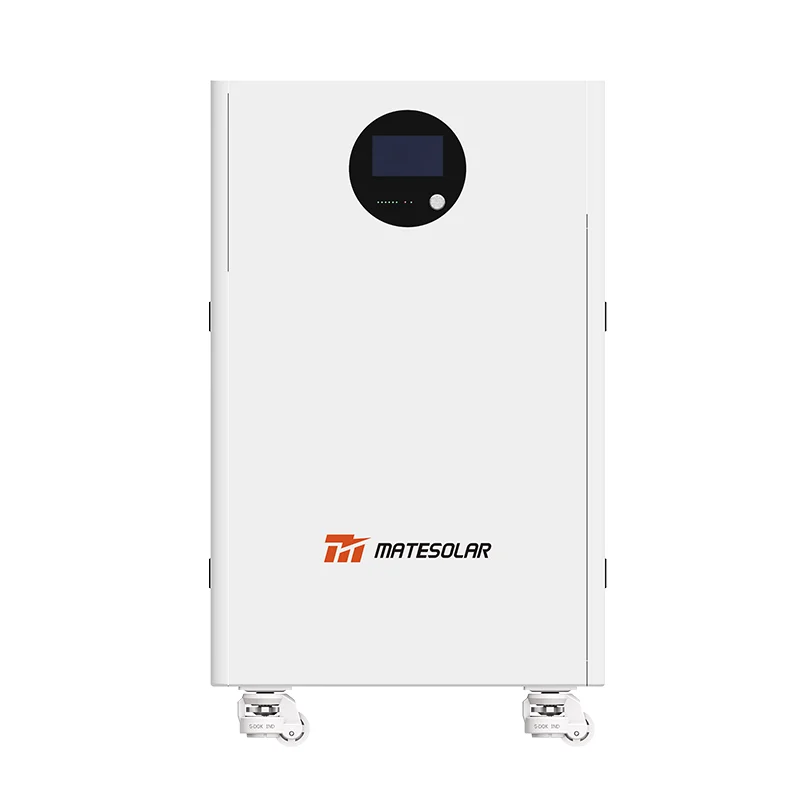
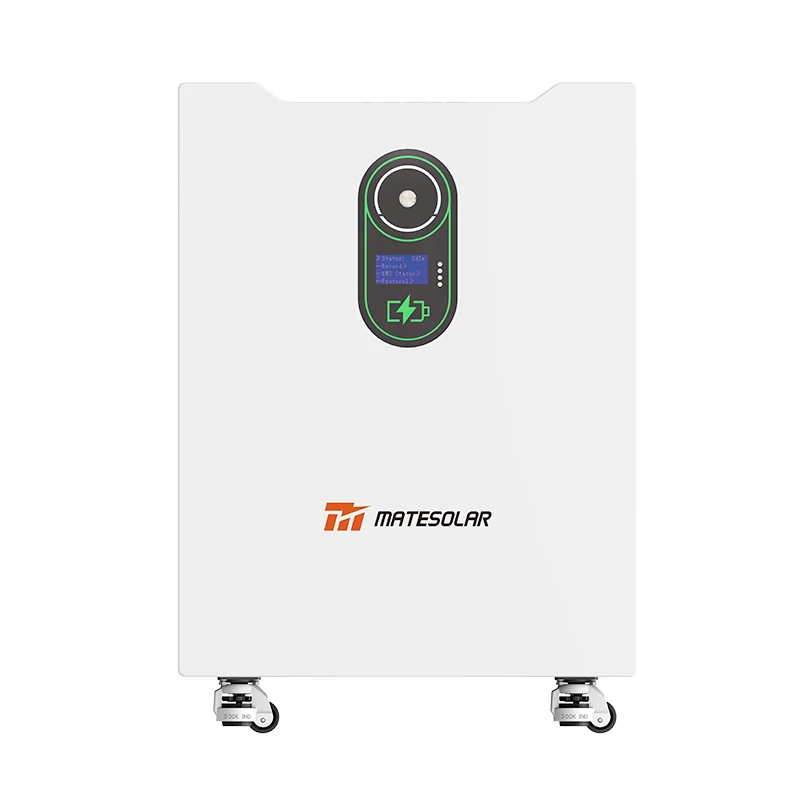
Space-constrained installation — Commercial facilities rarely have dedicated land for large containerized storage. Outdoor cabinets must be compact, stackable, and capable of wall-mount or pad-mount installation in parking lots, loading docks, or rooftop mechanical areas.
Thermal management for central Chile climate — Santiago and the central region experience summer temperatures of 30–38°C, with winter lows near freezing. Outdoor cabinets must maintain cell temperatures within optimal range (20–35°C) without excessive auxiliary power consumption. Liquid cooling is strongly preferred over air cooling for systems above 200 kWh due to superior performance in high ambient temperatures.
Noise constraints — Commercial installations in urban or suburban areas face noise restrictions (typically <65 dBA at 1 meter). Forced-air cooled systems can exceed this threshold; liquid-cooled systems are generally quieter.
Fire safety compliance — Commercial installations require compliance with NFPA 855 or local equivalent, including separation distances, fire detection, and suppression. Systems with UL9540A thermal runaway propagation testing documentation expedite local fire marshal approval.
Grid interconnection requirements — Distribution company interconnection agreements require certified protection relays (anti-islanding, voltage/frequency trip settings), revenue-grade metering, and remote disconnect capability.
Table 6: C&I Outdoor Cabinet BESS — Technical Specification Benchmark (500 kW / 2 MWh class)
| المعلمة | Minimum Requirement | Preferred Specification |
| AC power rating | 500 kW (continuous) | 600 kW (peak 30 min) |
| Usable energy | 2,000 kWh | 2,200+ kWh |
| Form factor | Single cabinet | Stackable modules |
| الأبعاد | <3 m² footprint | <2 m² per 500 kWh |
| Enclosure rating | IP54 (dust protection) | IP65 (sand/dust proof) |
| التبريد | Air (with filtering) | Liquid (active thermal management) |
| Operating temp range | -5°C to 45°C | -10 درجات مئوية إلى 50 درجة مئوية |
| Battery chemistry | LFP (LiFePO4) | LFP with UL9540A |
| كفاءة الرحلة ذهاباً وإياباً | 85% | 88%+ |
| Communications | Modbus TCP/IP | Dual protocol (Modbus + IEC 61850) |
| Noise level | <70 dBA @1m | <60 dBA @1m |
| Grid codes | IEEE 1547 | IEEE 1547 + Chile-specific interconnection |
5.4 Investment ROI Model — Commercial BESS in Central Chile (Santiago Region)
Assumptions:
- System: 500 kW / 2 MWh outdoor cabinet (4-hour duration at full power)
- Capital cost: US$250,000–300,000 (US$125–150/kWh)
- Annual degradation: 1.5% capacity loss (calendar + cycling)
- Daily cycle: 1 cycle (charge mid-day, discharge evening peak)
- Energy spread (central region node): US$70–85/MWh net after losses
- Demand charge reduction: 200 kW peak shaving @ US$12/kW-month = US$28,800/year
- O&M: US$4,000–6,000/year
Projected financials:
| السنة | Revenue | O&M | Net Cash Flow |
| 1 | $48,000–$62,000 | $5,000 | $43,000–$57,000 |
| 2 | $47,000–$61,000 | $5,200 | $42,000–$56,000 |
| 3 | $46,000–$60,000 | $5,400 | $41,000–$55,000 |
| 4 | $45,000–$59,000 | $5,600 | $39,000–$53,000 |
| 5 | $44,000–$58,000 | $5,800 | $38,000–$52,000 |
| 6 | $230,000–$300,000 | $27,000 | $203,000–$273,000 |
Simple payback: 4.5–6.5 years
IRR (12-year life): 12–16%
LCOE for dispatched energy: US$95–115/MWh (competitive with peak retail tariffs of US$130–160/MWh)
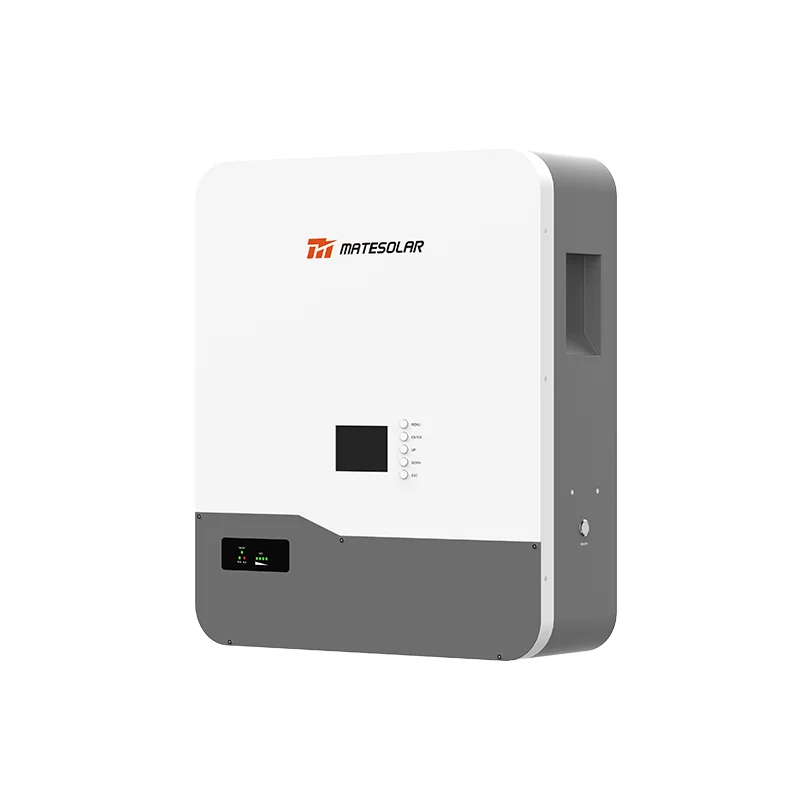
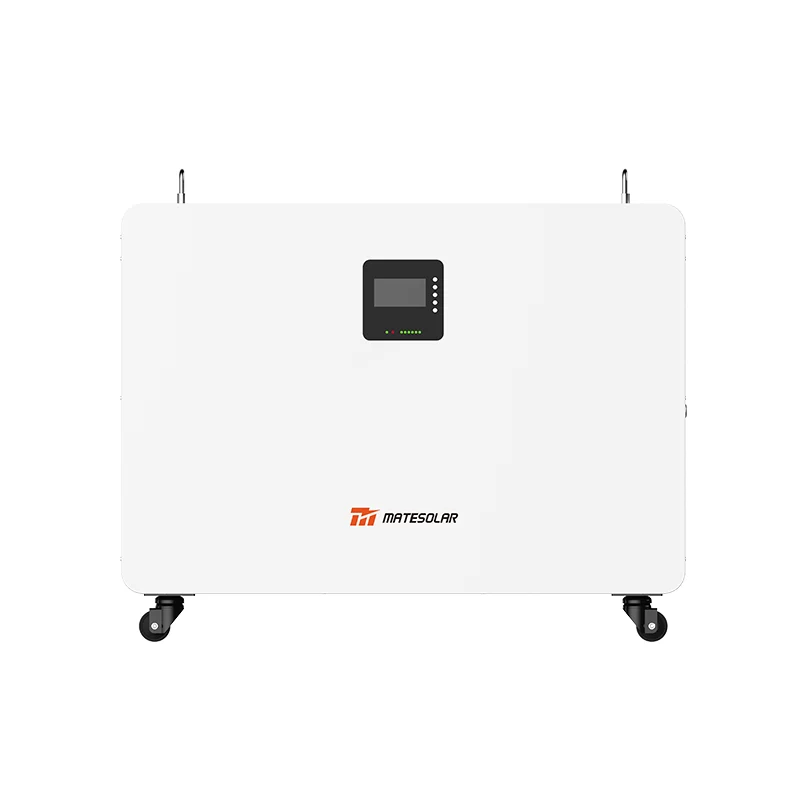
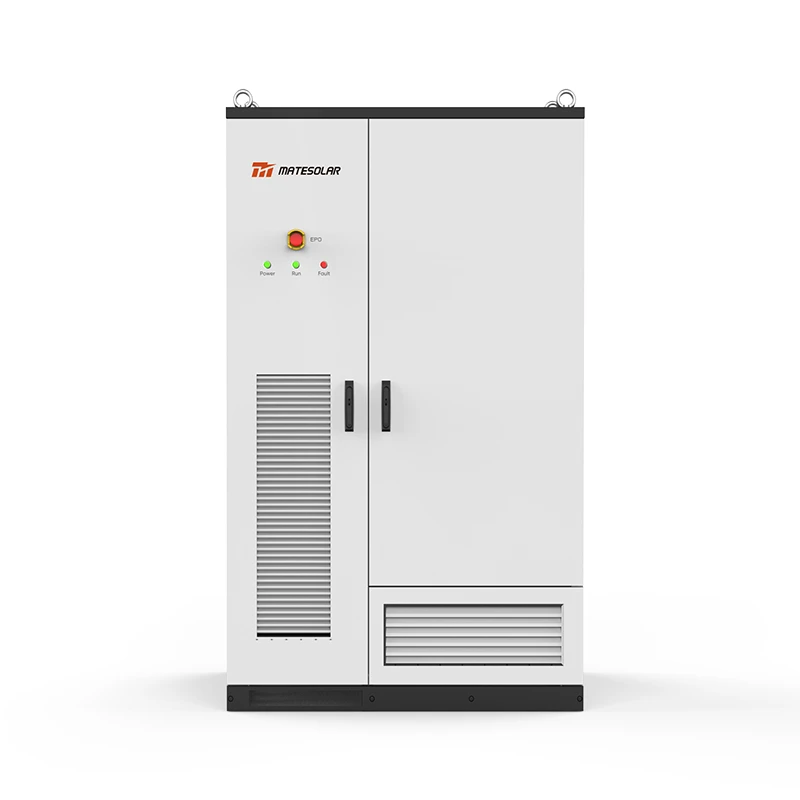
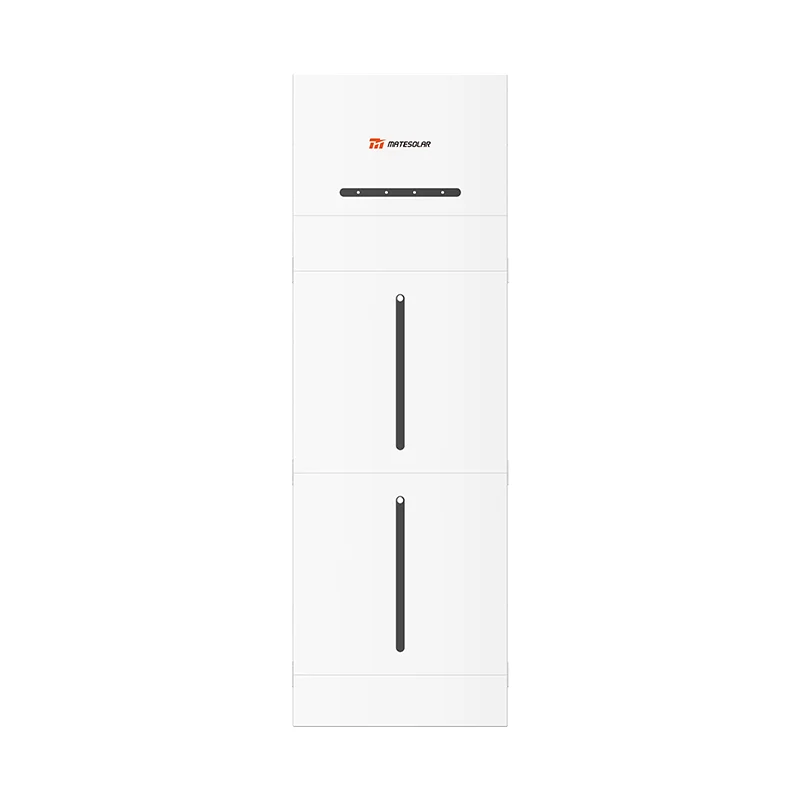
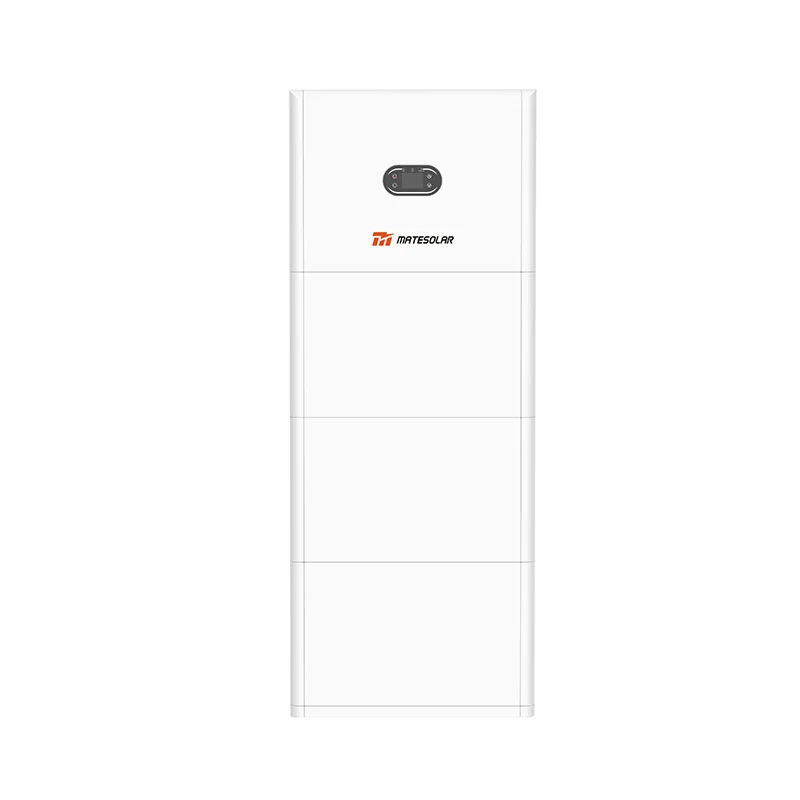
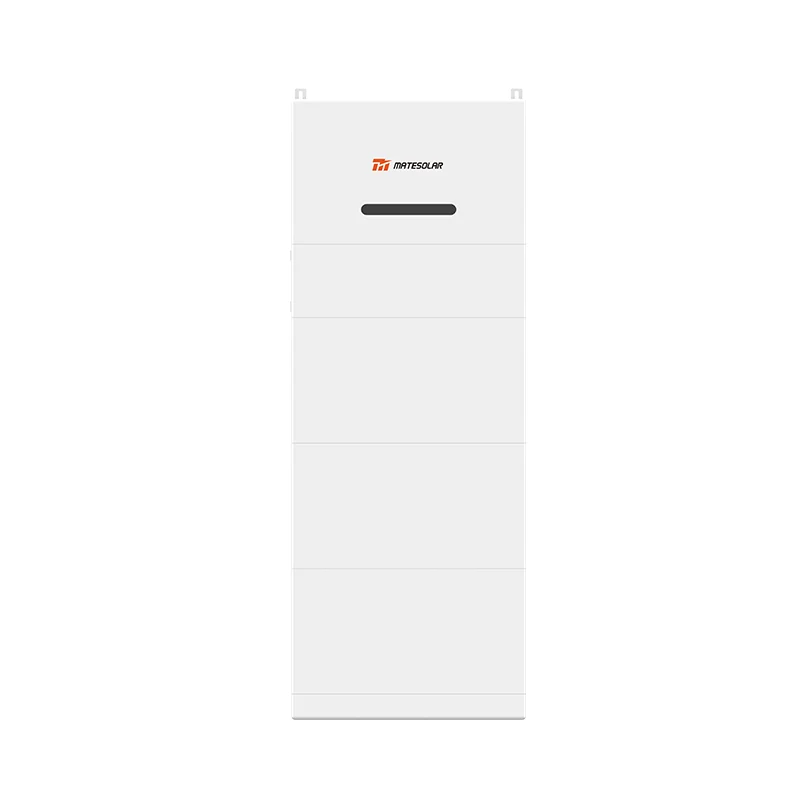
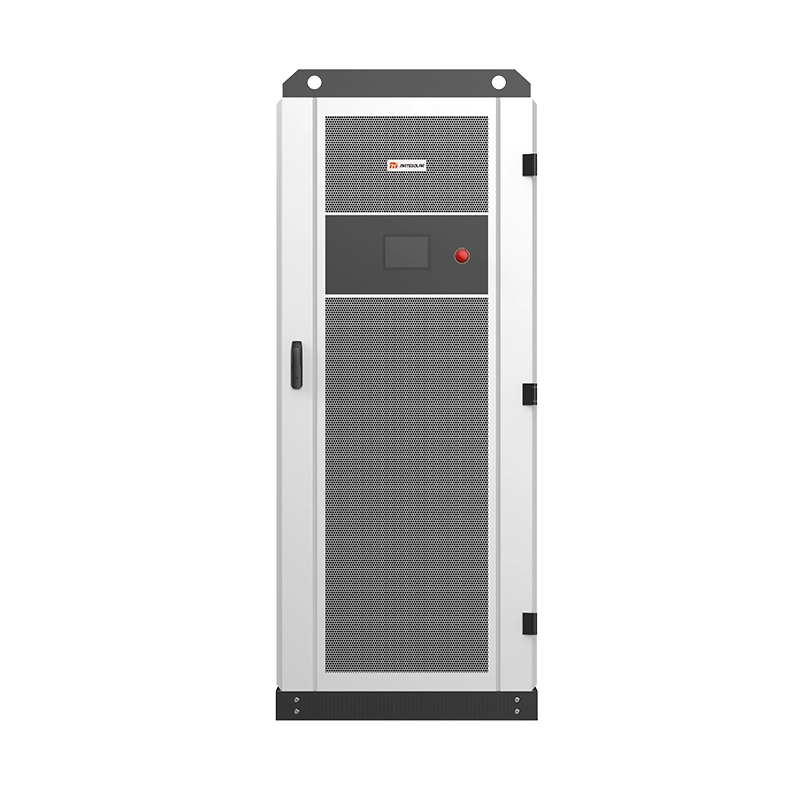
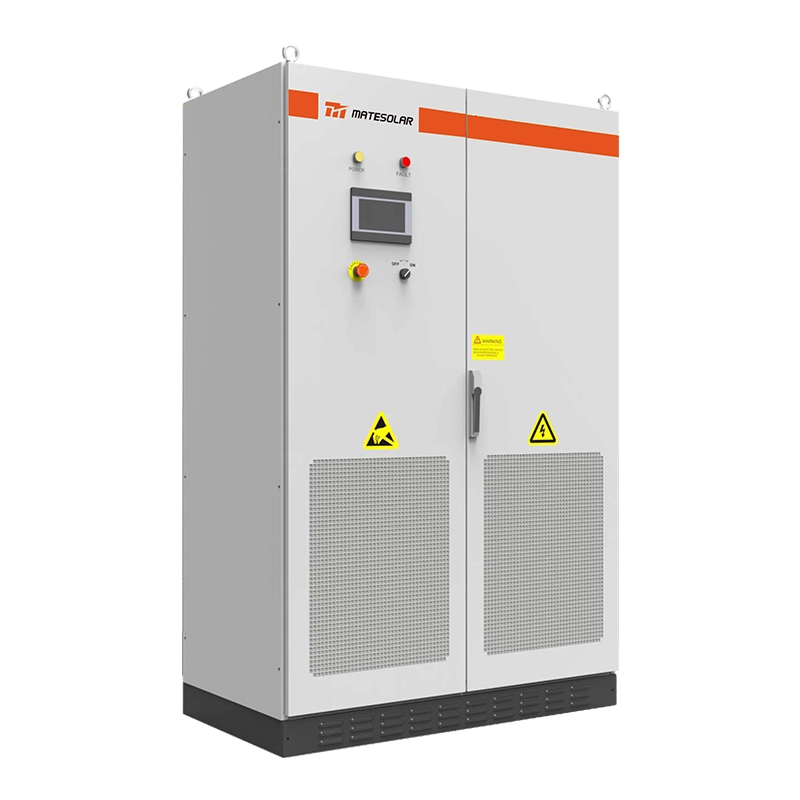
Looking for a scalable C&I solution for your commercial facility? Commercial 500 kW Hybrid Solar System offers a fully integrated 500 kW AC-coupled battery storage solution designed for commercial buildings, retail centers, and light industrial facilities. Features include liquid thermal management for central Chile climate conditions, UL9540A-certified LFP battery cells, and smart EMS for automated peak shaving and time-of-use arbitrage. The modular cabinet design occupies less than 3 square meters of floor space and supports wall-mount or pad-mount installation—ideal for space-constrained commercial properties.
Part Six: EPC, Project Developers, and IPP — Capturing the PMGD+BESS Hybridization Wave
For EPC contractors, project developers, and independent power producers, the 3,900 MW installed base of existing PMGD assets represents the largest retrofit opportunity in the Latin American storage market. The question is not whether to participate, but how to position for maximum returns once DS88 final rules are published.
6.1 The Retrofit Engineering Challenge
Adding battery storage to an existing PMGD plant is not a simple "plug-and-play" addition. Key engineering challenges include:
Low-voltage bus integration — PMGD plants typically interconnect via a single step-up transformer at the point of common coupling (PCC). Adding BESS on the low-voltage side of the transformer (400V or 13.2 kV bus) requires careful analysis of transformer loading during combined PV+BESS export. The existing transformer may have been sized for PV output only, not for PV+BESS simultaneous export.
Protection coordination — Existing protection relays (overcurrent, directional, reverse power) may not be configured to handle bi-directional power flows. Adding BESS on the same bus requires updating relay settings and possibly adding additional protection elements.
Control system architecture — The PV inverters and BESS must operate under coordinated control. Simple approaches (e.g., fixed charge/discharge schedules) leave money on the table. Advanced EMS with real-time price forecasting and curtailment prediction is required for optimal revenue capture.
Metering configuration — Settlement requires separate metering for PV generation, battery charging (grid import), battery discharging (grid export), and facility load (if any). This often requires a multi-meter configuration with time-synchronized data.
SCADA integration — The combined plant must be remotely monitorable and controllable to satisfy grid coordinator requirements for dispatchable resources. The BESS EMS must integrate with existing plant SCADA or replace it.
6.2 Modular, Scalable Architecture — Why 400V Low-Voltage Bus Integration Works
The 4.6 MW / 12 MWh system successfully deployed in Chile used a modular cabinet approach with 46 individual cabinet units clustered and connected to the 400V low-voltage bus. This architecture offers significant advantages for PMGD retrofit applications:
Advantages of modular cluster architecture:
- قابلية التوسع — Adding capacity is as simple as adding cabinets. A 5 MW PMGD plant can start with 2–3 MW of BESS and expand later without re-engineering the entire system.
- Redundancy — Failure of a single cabinet reduces capacity by 2–5% rather than taking the entire system offline.
- Simplified installation — Pre-assembled cabinets arrive on-site ready for electrical connection and communication setup. No complex field assembly of battery racks and power conversion systems.
- Easier permitting — Distributed modular systems may have different fire code treatment than centralized large-scale containers in some jurisdictions.
- Lower installation labor — Modular cabinets minimize on-site electrical work. Most connections are pre-wired at the factory, with only AC bus connection and communications cabling required on-site.
6.3 Long-Term Performance Guarantees — The 20-Year PPA Standard
The mining sector has established a new benchmark for storage system longevity. The Monte Águila project with Codelco is structured as a 15-year PPA, and the industry expectation is moving toward 20-year contracts. For EPCs and developers, this means selecting BESS solutions capable of 15–20 year operational life with performance guarantees.
Key performance guarantee requirements for 15–20 year PPAs:
- Capacity retention: 70–80% of nameplate capacity at year 15 (for 15-year PPA) or 65–75% at year 20
- Round-trip efficiency: Not to fall below 80% at any point during PPA term
- Availability: 98%+ (excluding scheduled maintenance)
- Response time: <100 ms from dispatch command to full power output
- Cyclic capability: 6,000–8,000 equivalent full cycles over PPA term
Technology implications: LFP (lithium iron phosphate) chemistry is the only viable choice for these requirements. NMC (nickel manganese cobalt) chemistries typically degrade to 70% capacity after 3,000–4,000 cycles—insufficient for 15+ year applications with daily cycling.
Table 7: BESS Technology Comparison for 15+ Year PPA Applications
| المعلمة | LFP (LiFePO4) | NMC (LiNiMnCoO2) | NCA (LiNiCoAlO2) |
| Typical cycle life to 80% | 6,000–10,000 | 3,000–5,000 | 3,000-4,000 |
| 15-year suitability (daily cycle) | نعم | No (replacement required) | لا يوجد |
| Thermal runaway threshold | >250°C | ~150–200°C | ~150–180°C |
| Cost (US$/kWh) | $100–130 | $110–140 | $120–150 |
| Energy density (Wh/L) | 200–300 | 400–500 | 450–550 |
| C-rate capability | 1C typical | 2C+ possible | 2C+ possible |
| Recommended for Chilean mining/utility | ✓✓✓ | ✗ | ✗ |
6.4 Revenue Stacking — Multiple Value Streams Under DS88 and DS125
The final DS125 and DS88 rules are expected to enable multi-stream revenue stacking for PMGD+BESS hybrid plants:
1. Energy arbitrage (primary value stream) — Capturing intraday price spreads by shifting generation from low-price midday hours to higher-price morning/evening periods.
2. Capacity market participation — If the hybrid plant qualifies as a capacity resource under DS125 modifications, capacity payments may be available (likely at derated factors given distribution-level interconnection).
3. Curtailment avoidance — When the grid coordinator issues curtailment instructions to PMGD plants, stored energy can be discharged during the curtailment period. DS88 modifications explicitly address this scenario.
4. Demand response — If ancillary services markets are opened to distribution-connected resources, PMGD+BESS could participate in frequency regulation (primary or secondary reserve).
The EMS must be capable of optimizing across these streams simultaneously. This requires real-time price forecasting (next-day and intraday), curtailment probability modeling, and state-of-charge management that balances current revenue capture against future opportunity costs.
Part Seven: Extreme Environmental Reliability — Atacama Desert Technical Requirements
The Atacama Desert is the driest non-polar desert on Earth. For battery energy storage systems installed in this region (where the majority of Chilean storage capacity is and will be located), the environmental challenges are extreme and must be addressed at the design level, not as afterthoughts.
7.1 The Environmental Challenge — What Your BESS Must Survive
درجات الحرارة القصوى — Daytime temperatures in the Atacama regularly exceed 40°C, with ground-level temperatures reaching 50–55°C. Nighttime temperatures can drop below freezing (0°C to -5°C). Daily temperature swings of 30°C or more are routine. This diurnal cycling places enormous thermal stress on batteries, power electronics, and enclosures.
Solar radiation — The Atacama receives the highest solar radiation levels on Earth (UV index regularly exceeding 11). UV degradation of plastics, seals, cables, and enclosure coatings is accelerated by 3–5x compared to moderate climates.
Dust and sand — Fine, abrasive dust particles are ubiquitous. Sandstorms can produce particulate concentrations that overwhelm standard IP54 enclosures, requiring IP65 or higher protection.
Corrosion — In coastal areas of the Atacama region (Antofagasta, Mejillones), salt spray from the Pacific Ocean combines with desert dust to create highly corrosive conditions. C5 corrosion protection (marine/industrial grade) is required.
الارتفاع — Much of the Atacama region is at 2,000–3,000 meters elevation. Cooling system performance (air density, heat transfer) degrades with altitude. Liquid cooling is less affected than air cooling.
7.2 Field-Proven Solutions — The BESS del Desierto Case Study
The BESS del Desierto project (200 MW / 880 MWh), commissioned in April 2025 and located in the Atacama Desert, has validated the technical requirements for extreme-environment storage. The project uses liquid-cooled PowerTitan systems with the following specifications:
- C5-grade anti-corrosion — Highest corrosion protection rating, suitable for marine/industrial environments
- IP65 sand and dust protection — Complete dust ingress protection (vs. IP54 typical for standard storage)
- Intelligent liquid cooling — Maintains cell temperatures within optimal range despite 40°C+ ambient
- Smart O&M platform — Remote monitoring and predictive maintenance to minimize site visits
- Grid-forming technology — Millisecond-level active/reactive power response for grid stability
The project demonstrates that with proper engineering, battery storage can operate reliably in the Atacama environment. Sungrow's deployment includes a local service warehouse to ensure rapid parts replacement when needed.
7.3 Thermal Management — Liquid Cooling vs. Air Cooling in High Ambient Temperatures
For installations in the Atacama and northern Chile, liquid cooling is not optional for systems above 500 kW—it is a requirement for achieving 15+ year life.
Comparison of cooling technologies in high-temperature desert environments:
| المعلمة | تبريد الهواء | Liquid Cooling |
| Cell temperature uniformity | ±3–5°C | ±1–2°C |
| Performance at 45°C ambient | 15–25% derating | <5% derating |
| Auxiliary power consumption | 2–4% of system power | 1–2% of system power |
| Dust filtration maintenance | Frequent (monthly) | Minimal (annual) |
| Effective at 3,000m altitude | Derated further (air density) | Unaffected |
| Acoustic noise | Moderate–High (fans) | Low (pumps only) |
| First cost | أقل | Higher by 5–10% |
| 15-year lifecycle cost | Higher (degradation + maintenance) | أقل |
Recommendation: For any BESS installation in Regions II (Antofagasta), III (Atacama), or northern IV (Coquimbo), specify liquid cooling. The incremental capital cost (5–10%) is recovered through higher round-trip efficiency, lower degradation, and reduced maintenance over the system lifetime.
7.4 Battery Life Expectancy Under Atacama Conditions — Realistic Projections
Standard manufacturer cycle life ratings (6,000–8,000 cycles to 80% capacity) are typically measured at 25°C with controlled charge/discharge rates. In Atacama conditions, the following adjustments apply:
Temperature acceleration factor: For every 10°C increase in average cell temperature above 25°C, cycle life approximately halves. With liquid cooling maintaining cells at 30–35°C even at 45°C ambient, the acceleration factor is approximately 1.2–1.5x (i.e., 6,000 rated cycles become 4,000–5,000 actual cycles). With air cooling allowing cells to reach 40–45°C, the acceleration factor is 2.5–3.5x (6,000 rated cycles become 1,700–2,400 actual cycles).
Practical guidance for specifying BESS in Atacama:
- Require manufacturer-supplied cycle life data at 35°C and 40°C cell temperature (not just 25°C)
- Specify liquid cooling and verify thermal model under worst-case ambient conditions
- Request accelerated aging test data from similar desert installations (e.g., Nevada, Arizona, Saudi Arabia)
- Plan for 15% lower usable capacity at year 10 compared to standard climate installations
- Include thermal management redundancy (N+1 cooling pumps/fans) in specifications
For extreme-environment applications requiring reliable, long-life storage: حاوية تبريد الهواء المبرد بالهواء 40 قدمًا نظام تخزين الطاقة ESS بقدرة 1 ميجاوات ساعة 2 ميجاوات ساعة offers a proven solution for moderate climates and indoor applications. However, for Atacama Desert installations, we strongly recommend upgrading to liquid-cooled configurations. The containerized format provides turnkey deployment with factory-integrated HVAC, fire suppression, and EMS, significantly reducing on-site installation complexity—critical for remote desert sites with limited local technical support.
Part Eight: Commercial & Industrial C&I Outdoor Cabinets — PMGD Policy Window Opportunity
This section is optimized for commercial property owners, retail chains, and facility managers considering distributed storage under the evolving PMGD framework.
8.1 DS88 Status Update — What Commercial Investors Need to Know (April 2026)
As detailed in Section 4.2, DS88—the supreme decree governing PMGD distributed generation—is currently under review after being withdrawn from the Comptroller General in March 2026. The provisions explicitly permitting PMGD plants to add battery storage for hybridization have broad technical consensus. The industry expects final approval in the second half of 2026.
For commercial investors considering PMGD+BESS, the recommendation is to proceed with feasibility studies and vendor selection now, with a planned construction start aligned with final DS88 publication. The 3–6 month window between final rule publication and actual commissioning is sufficient to execute well-prepared projects.
8.2 Time-of-Use Arbitrage Economics — Chile Node Price Data
Chile's electricity market (coordinated by CEN) publishes nodal prices hourly. The following data represents typical patterns for the SING system (northern industrial/mining region) and central SIC system (Santiago region):
Table 8: Chile Electricity Node Prices — April 2026 (Typical Weekday)
| Time Period | SING North (US$/MWh) | SIC Central (US$/MWh) | Arbitrage Opportunity |
| 00:00–06:00 (night) | $65–80 | $70–90 | Limited (base load) |
| 06:00–08:00 (morning peak) | $85–105 | $95–115 | معتدل |
| 08:00–12:00 (solar ramp) | $40–60 | $50–70 | Charge window begins |
| 12:00–15:00 (solar peak) | $5–25 (near zero) | $15–35 | Optimal charge window |
| 15:00–18:00 (solar decline) | $25–50 | $40–65 | Continued charging |
| 18:00–22:00 (evening peak) | $90–130 | $100–140 | Optimal discharge window |
| 22:00–24:00 (post-peak) | $70–85 | $80–95 | Partial discharge |
Key observation: The spread between mid-day (12:00–15:00) and evening peak (18:00–22:00) is typically US$80–120/MWh in the SING system and US$70–100/MWh in the SIC system. After accounting for 12% round-trip losses, net capture is US$70–105/MWh—sufficiently attractive for 4–6 year payback periods.
8.3 Policy Risk Mitigation — Designing for Regulatory Flexibility
The DS88 withdrawal in March 2026 reminded investors that regulatory uncertainty is a real risk in emerging markets. Commercial BESS investments can protect against policy risk through:
Modular, software-defined architecture — Systems where the EMS can be reprogrammed to accommodate different dispatch rules, curtailment handling, and revenue settlement mechanisms. Avoid proprietary control systems that require vendor software updates for regulatory changes.
Multi-revenue capability — Design for energy arbitrage as the base case, but retain capability for demand charge reduction, backup power, and (if permitted) ancillary services. This diversifies revenue exposure to any single regulatory outcome.
Lease or PPA structures — For commercial end-users who do not want to assume regulatory risk directly, third-party ownership models (where the BESS developer takes policy risk) shift exposure to more sophisticated counterparties.
Phased deployment — Start with a pilot system covering 20–30% of total planned capacity. If regulatory outcomes are favorable, expand. If not, limit exposure.
8.4 Compact Design — Installation in Space-Constrained Commercial Properties
Commercial storage faces constraints that utility-scale projects do not: limited land area, aesthetic considerations, noise restrictions, and existing building systems (HVAC intakes, electrical rooms, fire lanes).
Practical guidance for commercial BESS siting in Chile:
- Minimum clearance: 1 meter from building walls, 3 meters from property lines, 2 meters from fire hydrants/access roads.
- Floor loading: Containerized storage requires reinforced concrete pad (200–300 mm thickness). Cabinet systems can often use existing asphalt/concrete with load-spreading plates.
- Sound attenuation: Liquid-cooled systems are significantly quieter than air-cooled systems. For installations within 10 meters of occupied spaces, specify liquid cooling with sound enclosure (target <55 dBA at 5 meters).
- Aesthetic integration: Cabinet systems can be painted to match building colors or screened with landscaping. Containerized systems require dedicated fenced areas.
- Access for maintenance: Allow 1.5 meters clearance on service side for component replacement. Remote monitoring reduces need for frequent physical access.
Table 9: Commercial BESS Footprint Comparison
| نوع النظام | السعة | البصمة | Clearance Required | Total Area |
| Wall-mount cabinet | 30–50 kWh | 1.5 m² | 0.5m front | 2.5 m² |
| Pad-mount cabinet (single) | 200–500 kWh | 3–4 m² | 1.0m all sides | 8–12 m² |
| Pad-mount cabinet (modular cluster) | 1–2 MWh | 12–20 m² (4–6 cabinets) | 1.0m around cluster | 20–30 m² |
| 20ft container | 1–2 MWh | 15 m² (7' x 20') | 2.0m service side | 35–45 m² |
| 40ft container | 2–5 MWh | 28 m² (8' x 40') | 2.0m service side | 55–70 m² |
Recommendation for commercial properties: For capacities up to 2 MWh, modular cabinet clusters offer the best balance of compact footprint, aesthetic acceptability, and installation flexibility. For capacities above 2 MWh, containerized solutions become more cost-effective but require dedicated space and screening.
For applications that demand higher energy density, superior thermal management, and a compact footprint—such as AI‑driven data centers, continuous green hydrogen production, or remote desalination plants—the نظام تخزين الطاقة في حاوية تبريد سائلة بقدرة 20 قدمًا بقدرة 3 ميجاوات ساعة / 5 ميجاوات ساعة offers the optimal balance between capacity, environmental resilience, and installation flexibility.
Why liquid cooling in a 20ft container?
Chile’s northern desert (Atacama) and central coastal regions experience extreme diurnal temperature swings and high ambient heat. Air‑cooled containers often derate above 35°C, losing 15–25% of usable power. The 20ft liquid‑cooled solution maintains cell temperature within ±2°C even at 45°C ambient, ensuring full rated output year‑round. Its compact 20‑foot form factor (approximately 6m x 2.4m x 2.9m) fits on standard truck transports and occupies less than 15m² of land—critical for space‑constrained industrial sites, urban data centers, or modular green hydrogen pilots.
Technical specifications tailored to Chile’s market:
| المعلمة | 3MWh configuration | 5MWh configuration |
| Usable energy (DC) | 3,000 kWh | 5,000 kWh |
| AC power (grid‑forming) | 750 kW – 1 MW | 1.25 – 1.5 MW |
| Duration at full power | 3 – 4 hours | 3 – 4 hours |
| Round‑trip efficiency (DC/AC) | ≥ 89% | ≥ 89% |
| Cooling method | Active liquid (chilled water/glycol) | Active liquid |
| نطاق درجة حرارة التشغيل | -20°C to 50°C ambient | -20°C to 50°C ambient |
| Enclosure rating | IP65 + C5 corrosion (Atacama‑ready) | IP65 + C5 |
| Battery chemistry | LFP (LiFePO₄) | LFP |
| Cycle life to 80% EOL | 6,000 cycles @ 35°C cell | 6,000 دورة |
| الشهادات | UL9540, IEC62619, UN38.3 | UL9540, IEC62619 |
| Communications | Modbus TCP/IP, IEC 61850, DNP3 | Same |
Why this matters for Chilean developers and IPPs:
- PMGD + BESS retrofit compatibility – The 20ft container can be placed adjacent to existing PMGD plants and connected at 400V or 13.2kV bus, delivering 3–5MWh of energy shift without re‑engineering the original PV system.
- Data center readiness – Millisecond response time (grid‑forming mode) supports GPU cluster load ramps; liquid cooling eliminates hot spots during frequent partial cycles.
- Green hydrogen & desalination – The 5MWh version provides 4+ hours of continuous power at 1.25MW, enough to bridge evening solar gaps for a 1MW electrolyzer or desalination unit.
- Carbon credit eligibility – Like the larger 40ft units, the 20ft liquid‑cooled system qualifies for Article 6.2 carbon credits when displacing diesel/NG during peak hours, adding 5–10% to annual revenue.
Field reference in Chile:
While the BESS del Desierto project (200MW/880MWh) used larger enclosures, the same liquid‑cooled, C5‑rated, IP65 architecture has been successfully deployed in Antofagasta for mid‑scale industrial customers. A 5MWh unit installed at a coastal desalination pilot in 2025 demonstrated <2% capacity loss over 300 cycles under 42°C ambient and high salt spray, with no derating events.
For EPCs and project developers seeking a drop‑in, high‑density solution:
نظام تخزين الطاقة في حاوية تبريد سائلة بقدرة 20 قدمًا بقدرة 3 ميجاوات ساعة بقدرة 5 ميجاوات ساعة is pre‑integrated with active thermal management, multi‑layer fire suppression (aerosol + water mist), and an EMS that supports price arbitrage, demand response, and capacity market dispatch. Its compact footprint allows two units to be stacked or placed back‑to‑back, delivering up to 10MWh on a single truck‑accessible pad—ideal for fast‑growing Chilean industrial clusters.
Part Nine: Data Centers, Green Hydrogen, and Desalination — Emerging High-Growth Industrial Demand
President Kast's energy plan explicitly identifies data centers, green hydrogen, and desalination as strategic industrial sectors for Chile's economic development, leveraging the country's abundant renewable energy surplus. These sectors share a common requirement: guaranteed, continuous, high-quality green power. Battery energy storage is not optional for any of them.
9.1 Data Centers — AI-Driven Demand and the Need for Millisecond Response
Chile currently has 59 data centers, ranking third in Latin America by installed capacity. The National Grid Coordinator CEN estimates that data center power demand could increase from 325 MW in 2025 to as much as 1,360 MW by 2032—a fourfold increase in just seven years.
The AI challenge: Modern AI infrastructure based on GPU clusters (NVIDIA H100, B200, and next-generation accelerators) produces extremely rapid power demand fluctuations. When a GPU cluster begins a training run, power draw can spike from near-zero to full load in milliseconds—then drop just as quickly when the run completes. Traditional uninterruptible power supply (UPS) systems with battery backup are designed for short-duration (5–15 minute) ride-through during grid disturbances, not for continuous daily cycling.
BESS for AI data center requirements:
- Millisecond response: BESS with grid-forming inverters can respond in <20 ms to load changes, maintaining voltage and frequency stability during rapid power fluctuations.
- High cycle life: Data center daily power profiles may involve 10–20 partial cycles per day as GPU loads ramp up and down. Standard UPS batteries are not designed for this cycling duty. BESS with LFP chemistry rated for 8,000+ cycles is required.
- Thermal management during rapid cycling: Frequent high-C-rate discharges generate significant heat. Liquid cooling is essential to prevent thermal accumulation and maintain cell life.
- Integration with on-site renewables: Major data center operators (Equinix, Aligned, Google) are increasingly sourcing renewable energy directly. BESS enables these facilities to operate on 100% green power even when solar/wind generation is not available.
Siemens has publicly stated that integrating renewable energy with battery energy storage systems will be decisive in ensuring reliable and sustainable electricity supply for data centers over the next decade, allowing them to drastically reduce their carbon footprint while improving supply continuity.
9.2 Green Hydrogen — 24/7 Electrolyzer Operation Without Grid Dependency
Green hydrogen production requires continuous, stable power for electrolyzers. Interruptions increase hydrogen production costs (electrolyzers must be purged and restarted) and reduce effective utilization of capital-intensive equipment.
The Chile advantage: Chile has some of the lowest-cost solar electricity in the world, but the intermittency of solar generation is incompatible with continuous electrolyzer operation without storage. A 100 MW electrolyzer operating 24/7 requires approximately 2.4 GWh of daily energy—far beyond what batteries can economically provide for full time-shifting.
The BESS role in green hydrogen: For green hydrogen projects, BESS serves a different function than full time-shifting. Instead, BESS provides:
- Short-duration bridging (1–4 hours) to cover solar generation dips due to cloud cover or late-afternoon decline
- Grid stability for electrolyzers connected to weak grids (typical at remote green hydrogen sites)
- Incremental capacity to allow electrolyzer operation during evening peak hours when solar is unavailable but wind may be available
Case study: Colbún's Nehuenco green hydrogen plant — Colbún has inaugurated Chile's first industrial green hydrogen plant at its Nehuenco facility, operating 100% off-grid with a 100 kW solar farm, battery storage, electrolyzer, and hydrogen storage. This US$1.6 million project demonstrates the technical feasibility of off-grid renewable hydrogen production using solar-plus-storage. The battery storage allows the electrolyzer to operate continuously even when solar generation fluctuates.
9.3 Seawater Desalination — Grid-Edge and Off-Grid Operation
Northern Chile faces chronic water scarcity, making seawater desalination a strategic necessity. Desalination plants are energy-intensive (3–5 kWh per cubic meter of freshwater) and often located at the grid edge or completely off-grid.
The BESS value proposition for desalination:
- Energy cost reduction: The Pedro de Valdivia desalination plant achieved a 64% reduction in energy costs by disconnecting from the grid and operating on solar power with a 10 MWh BESS, with a 3.5-year payback on the diesel savings alone.
- Production stability: BESS ensures continuous freshwater output even during cloud cover, increasing production by 20% compared to solar-only operation during partial cloud conditions.
- Off-grid capability: For remote coastal desalination plants with no grid connection, BESS enables 100% renewable operation with generator backup only for extended low-solar periods.
Technical requirements for desalination BESS:
- Extended autonomy: Desalination plants typically require 4–8 hours of storage to cover overnight periods or multi-day low-solar events. For complete off-grid operation, longer durations (12+ hours) or hybrid storage (BESS + hydrogen storage) may be required.
- Corrosion protection: Coastal installations require C5 corrosion protection (marine environment) plus IP65 dust protection for desert/coastal hybrid conditions.
- Grid-forming capability: For off-grid installations, BESS must provide grid-forming control with black-start capability to restore the microgrid after complete outage.
Part Ten: International Certifications, Bankability, and Carbon Credit Monetization
For project financiers, asset managers, and institutional investors, bankability is the paramount concern. Chilean storage projects are attracting significant international capital—IDB, World Bank, and commercial lenders require demonstrable certification and verified performance data.
10.1 Required Certifications for Bankable BESS in Chile
Table 10: BESS Certifications — Requirements for Chilean Project Bankability
| التصديق | Scope | Required For | الملاحظات |
| UL 9540 | Complete ESS safety certification | Full system | Most stringent; requires UL9540A thermal runaway testing |
| UL 9540A | Thermal runaway propagation test method | Cell → module → system | Required for UL9540; essential for fire safety approval |
| IEC 62619 | Industrial lithium battery safety | Cells and batteries | International standard; widely accepted |
| IEC 62133 | Portable/industrial battery safety | Cells | Secondary standard to IEC62619 |
| UN 38.3 | Transportation safety | All lithium batteries | Required for shipping |
| ISO 13849 | Safety of control systems | BMS/EMS | For functional safety certification |
| NFPA 855 | ESS installation fire code | System design | Required for local fire marshal approval |
| IEEE 1547 | Grid interconnection | العاكسات | Required for distribution interconnection |
| C5 corrosion rating | Environmental protection | Enclosures | Required for Atacama/coastal installations |
Practical guidance for project developers: UL9540 is the gold standard for bankability. Projects with UL9540-certified systems (as opposed to component-level certifications only) face fewer questions from lenders and insurers. For systems not requiring UL9540 (e.g., behind-the-meter C&I below certain capacity thresholds), IEC62619 plus local fire marshal approval may be sufficient.
10.2 Carbon Credit Monetization Under Article 6.2
As detailed in Section 2.4, Chile has established a regulatory framework for battery energy storage to generate and sell carbon credits under Article 6.2 of the Paris Agreement.
How BESS generates carbon credits: Storage projects displace fossil-fuel-fired generation during peak hours. In Chile, the marginal generator during evening peak periods is typically diesel or natural gas. By storing solar energy that would otherwise be curtailed and discharging it during peak hours, BESS directly reduces system emissions. Each MWh of displaced diesel generation avoids approximately 0.7–0.9 tons of CO₂ equivalent.
Monetization pathways:
1. Bilateral agreements under Article 6.2 — Chile has active agreements with Switzerland and Japan. Credits can be sold to these partner countries to meet their NDC commitments.
2. Voluntary carbon markets — While Article 6.2 credits are primarily for compliance markets, the same emissions reductions can potentially be certified for voluntary markets (e.g., Verra, Gold Standard) with appropriate methodologies.
3. Direct corporate purchases — Multinational corporations with science-based targets (SBTi) or RE100 commitments may purchase credits directly from storage projects.
Current market prices: Article 6.2 credits are trading in the US$15–30 per ton CO₂e range (significantly higher than voluntary market credits). For a 200 MW / 800 MWh project displacing approximately 150,000 tons CO₂e annually, carbon credit revenue would be US$2.25–4.5 million per year—adding 5–10% to project revenues.
Documentation requirements for carbon credit qualification:
- Emissions baseline study (pre-project grid emissions factor)
- Monitoring, reporting, and verification (MRV) protocol
- Letter of Authorization from Chilean Ministry of Environment
- Article 6.2 corresponding adjustment documentation
10.3 Financing and Insurance Requirements — What Lenders Look For
International lenders and insurers have developed standardized requirements for BESS projects:
Lender requirements (IDB, World Bank, commercial banks):
- UL9540 or equivalent certification for full system
- Minimum 10-year performance warranty from system integrator
- Degradation guarantee (e.g., 80% capacity at year 10, 70% at year 15)
- Proven technology with reference installations in similar environments
- Creditworthy off-taker (PPA counterparty)
- Independent engineering (IE) report confirming technical assumptions
Insurance requirements:
- All-risk property insurance covering fire, theft, and natural perils
- Business interruption insurance (12+ months coverage)
- Machinery breakdown coverage for inverters and power electronics
- Cyber liability for EMS and control systems
Frequently Asked Questions (FAQ) — Chile Energy Storage Market 2026
FAQ 1: When will DS88 and DS125 final rules be published?
Current status (April 2026): Both draft decrees were withdrawn from the Comptroller General in March 2026 by the new Kast administration for additional review. Industry association GIE has submitted technical observations. The storage provisions in DS125 have broad consensus; the PMGD economic provisions in DS88 require more detailed resolution.
Expected timeline: Final approval is expected in the second half of 2026. The industry is operating on the assumption that hybridization provisions will be included in the final rules—the technical and policy rationale is overwhelming.
Advice for investors: Proceed with feasibility studies and vendor selection now. The 3–6 month period between final rule publication and commissioning is sufficient for well-prepared projects.
FAQ 2: What is the current installed BESS capacity in Chile?
As of March 2026, over 1,700 MW of batteries are in operation, with approximately 600 MW in testing. Cumulative capacity including projects in commissioning reached 1.474 GW / 6.1 GWh as of November 2025, with an additional 846 MW / 2,872 MWh in commissioning. Chile has already surpassed its original 2030 target of 2 GW.
FAQ 3: What is the typical payback period for C&I storage in Chile?
For a 500 kW / 2 MWh outdoor cabinet system in the Santiago region (SIC system), simple payback is 4.5–6.5 years based on energy arbitrage plus demand charge reduction. For the northern SING region (Antofagasta, mining areas), wider peak-to-trough spreads reduce payback to 4–5 years. Carbon credit monetization (Article 6.2) can further improve returns by 5–10% of project revenues.
FAQ 4: Is liquid cooling necessary for Atacama Desert installations?
Yes, for any system above 500 kW located in Regions II, III, or northern IV. Air cooling results in 15–25% power derating at 45°C ambient and significantly accelerated degradation (cycle life reduced by 50–70%). The BESS del Desierto project (200 MW / 880 MWh) uses liquid cooling with C5 corrosion protection and IP65 dust sealing.
FAQ 5: Can my existing PMGD solar plant add battery storage?
Yes, technically. The proposed DS88 modifications explicitly address PMGD hybridization. However, final rules have not yet been published (expected H2 2026). Technical integration involves low-voltage bus connection, protection coordination updates, and EMS installation. The modular cabinet approach (400V bus integration) has been successfully deployed in Chile for a 4.6 MW / 12 MWh system.
FAQ 6: What certifications are required for bankable BESS in Chile?
UL 9540 (complete system) or IEC 62619 (component-level) are the key certifications. UL9540A thermal runaway testing is required for UL9540 and is strongly preferred by lenders and insurers. NFPA 855 compliance is required for fire code approval. For Atacama installations, C5 corrosion rating and IP65 dust protection are essential.
FAQ 7: How do carbon credits work for BESS in Chile?
Under Article 6.2 of the Paris Agreement, Chile has approved BESS projects to generate and sell carbon credits for displacing fossil-fuel generation during peak hours. Colbún's Diego de Almagro Sur (228 MW / 912 MWh) and CIP's Arena (220 MW / 1,100 MWh) are the first approved projects. Credits are sold bilaterally (Chile-Switzerland agreement) or potentially to voluntary markets. Expected revenue: US$15–30 per ton CO₂e, adding 5–10% to project revenues.
FAQ 8: What is the optimal storage duration for Chilean projects?
For capacity payment qualification, 5-hour systems receive 100% capacity credit (vs. 36% for 1-hour systems). Aurora Energy Research confirms that 5-hour batteries cycling once per day offer the most cost-effective solution, capturing over 70% of zero-price hours. For mining 24/7 renewable supply, 4–5 hours is typical (as in the Monte Águila 960 MWh system paired with 340 MW solar).
FAQ 9: Are there successful reference installations in Chile?
Yes. BESS del Desierto (200 MW / 880 MWh, Atacama) commissioned April 2025. Monte Águila (340 MW solar + 960 MWh storage, contracted to Codelco for 15 years). Gabriela phase of Oasis de Atacama (272 MW solar + 1.1 GWh storage) commissioned February 2026. A 4.6 MW / 12 MWh C&I arbitrage system operating at 400V low-voltage bus.
FAQ 10: How do I verify a BESS vendor's Atacama-environment claims?
Request: (1) Cycle life data at 35°C and 40°C cell temperature (not just 25°C); (2) Reference installations in similar desert environments (Nevada, Arizona, Saudi Arabia, Western Australia); (3) Independent third-party test reports for C5 corrosion and IP65 rating; (4) Thermal model simulation for worst-case Atacama conditions (45°C ambient, full sun loading); (5) Accelerated aging test data for LFP cells under desert thermal cycling.
FAQ 11: What is the current market price for BESS in Chile?
Utility-scale BESS (20 MW+, 4–5 hour duration) is in the range of US$250–350/kWh installed (battery + inverter + integration + installation). C&I outdoor cabinet systems (200 kW–2 MW) range from US$300–450/kWh installed. Containerized systems (1–5 MWh) range from US$280–400/kWh installed. Prices continue to decline; lithium carbonate prices have stabilized after 2023–2024 volatility.
FAQ 12: How does Chile's storage market compare to other Latin American countries?
Chile has the most mature regulatory framework in Latin America—Law 21.505 (2022) explicitly enables stand-alone storage, capacity payments with duration-based derating, and now Article 6.2 carbon credits. Brazil has larger overall market size but more regulatory complexity. Colombia is 2–3 years behind Chile in framework development. Chile's 14 GW 2030 target is the most ambitious in the region on a per-capita basis.
FAQ 13: What are the main risks for BESS investors in Chile?
(1) Regulatory risk — DS88 and DS125 final rules could differ from expectations (mitigation: modular, software-upgradeable EMS).
(2) Grid curtailment risk — Changes to curtailment rules could affect revenue (mitigation: PPA with fixed capacity payment).
(3) Technology risk — Battery degradation in Atacama conditions (mitigation: liquid cooling, performance guarantees, conservative capacity sizing).
(4) Counterparty risk — Creditworthiness of off-takers (mitigation: Codelco and other mining majors are strong credits).
FAQ 14: Can I get financing for a PMGD+BESS project before DS88 final rules?
Some lenders will provide construction financing with conditions tied to regulatory approval. Most will require final DS88 publication for permanent financing. Bridge financing or developer equity may be required for early-mover projects. The safest approach is to complete feasibility studies, secure site control, select vendors, and have all permits ready to execute upon DS88 finalization.
FAQ 15: What is the expected lifetime of a BESS in Chile?
With LFP chemistry and liquid cooling in Atacama conditions: 10–15 years to 70–80% capacity retention. With air cooling: 7–10 years to 70% capacity retention. For mining PPAs (15–20 years), replacement of battery modules at year 10–12 may be required. Performance warranties should specify capacity retention at years 10 and 15.
Part Eleven: Technical Specifications Reference Tables
Table 11: BESS Technology Comparison for Chilean Market Segments
| الميزة | Utility-Scale (20 MW+) | Mining (10–50 MW) | C&I Cabinet (200 kW–2 MW) | PMGD Retrofit (1–10 MW) |
| Typical duration | 4–5 hours | 4–5 hours | 2-4 ساعات | 3–5 hours |
| Recommended chemistry | LFP | LFP | LFP | LFP |
| التبريد | Liquid | Liquid | Liquid (preferred) | Liquid or air |
| Enclosure rating | IP65/C5 | IP65/C5 | IP54–65 | IP54–65 |
| Grid-forming required | Yes (stand-alone) | Yes (remote mines) | No (grid-tied) | Depends on location |
| Communications | IEC 61850 | IEC 61850 + DNP3 | Modbus TCP/IP | Modbus + IEC 61850 |
| Typical CAPEX (US$/kWh) | $250–330 | $280–380 | $300–450 | $280–400 |
| Expected cycle life (80% EOL) | 8,000–10,000 | 10,000+ | 6,000-8,000 | 6,000-8,000 |
Table 12: Chile Electricity Nodal Prices — Regional Comparison (April 2026)
| المنطقة | Daytime Low (US$/MWh) | Evening Peak (US$/MWh) | Average Spread | Arbitrage Potential |
| SING North (Antofagasta) | $5–25 | $90–130 | $85–105 | Very High |
| SING Central (Atacama) | $10–30 | $85–115 | $75–85 | عالية |
| SIC North (Coquimbo) | $20–40 | $80–100 | $60–70 | Moderate-High |
| SIC Central (Santiago) | $15–35 | $100–140 | $85–105 | Very High |
| SIC South (Bio-Bio) | $30–50 | $70–90 | $40–50 | معتدل |
| SING/SIC Interconnection | $25–45 | $75–95 | $50–65 | معتدل |
Table 13: Environmental Rating Requirements by Chilean Region
| المنطقة | البيئة | Required Enclosure IP | Required Corrosion Rating | Cooling Recommended |
| II (Antofagasta) | Desert/Coastal | IP65 | C5 | Liquid |
| III (Atacama) | Desert | IP65 | C4–C5 | Liquid |
| IV (Coquimbo) | Semi-arid/Coastal | IP54–65 | C4 | Liquid (preferred) |
| RM (Santiago) | Mediterranean | IP54 | C3–C4 | Air or liquid |
| VIII (Bio-Bio) | Temperate | IP54 | C3 | Air |
| XII (Magallanes) | Patagonian | IP54 (cold) | C4 (coastal) | Air (with heating) |
Table 14: Summary of 2026 Regulatory Milestones
| Regulation | Scope | Current Status (April 2026) | Expected Finalization |
| DS125 | System operation, storage coordination | Withdrawn for review (Mar 2026) | H2 2026 |
| DS88 | PMGD regime, hybridization provisions | Withdrawn for review (Mar 2026) | H2 2026 |
| Article 6.2 carbon framework | BESS carbon credit methodology | Active; two projects approved | Ongoing |
| Capacity payment modifications | Duration-based derating | Active | غير متاح |
| Transmission expansion plan | New lines to reduce curtailment | Under development | 2027–2028 |
Conclusion: Why Chile Is the Defining Storage Market of This Decade
Chile in 2026 represents a confluence of factors rarely seen in any energy market: a mature and continuously improving regulatory framework, a massive and growing renewable curtailment problem that storage uniquely solves, a mining sector with legally binding 2030 decarbonization mandates and the capital to execute, a distributed generation base of 3,900 MW awaiting battery hybridization, and a new administration that has made storage a top energy policy priority.
The numbers speak for themselves: 1,700 MW operational today, 9,000 MW targeted by 2027, 14,000 MW by 2030. Over US$16 billion in planned energy investment with 34% allocated to storage. Article 6.2 carbon credits adding 5–10% to project revenues for qualifying projects. The Monte Águila and Oasis de Atacama projects demonstrating that 24/7 renewable power for heavy industry is not a future aspiration—it is operating today.
For mining operators, the path to 2030 compliance is clear: solar-plus-storage with 4–5 hour batteries, liquid cooling for Atacama conditions, and 15–20 year PPAs with performance guarantees.
For PMGD owners and C&I facility operators, the DS88 regulatory window—though delayed—remains open. The 3,900 MW installed base of PMGD assets represents the largest retrofit opportunity in Latin American storage. Modular, software-defined BESS architectures that can adapt to final rules are the prudent investment.
For EPCs, developers, and IPPs, the engineering challenges are known and solvable: 400V low-voltage bus integration, protection coordination, EMS optimization for multiple revenue streams, and long-term performance guarantees backed by LFP chemistry and liquid cooling.
For data centers, green hydrogen producers, and desalination operators, BESS is not a value-add—it is an operational necessity for achieving continuous, reliable, 100% renewable operation.
The Chilean energy storage market has moved beyond pilots, beyond policy uncertainty, and beyond first-mover risk. It is now a mature, bankable, rapidly scaling market with clear rules, proven economics, and an unprecedented pipeline of projects. The question is no longer whether to participate in Chile's storage transformation—but how quickly you can deploy.
This guide was prepared by MateSolar, a one-stop photovoltaic and energy storage solution provider serving commercial, industrial, and utility-scale clients across Latin America. With deep expertise in Chile's regulatory framework, extreme-environment engineering, and project bankability requirements, MateSolar delivers integrated solar-plus-storage solutions tailored to the unique demands of the Chilean market. From modular C&I outdoor cabinets to utility-scale containerized systems with liquid thermal management, MateSolar provides end-to-end solutions backed by international certifications, flexible support models, and a commitment to long-term partnership. For more information, contact the MateSolar team.
Disclaimer: This document is provided for informational purposes only and does not constitute financial, legal, or investment advice. All market data, price projections, and regulatory timelines are based on information available as of April 6, 2026, and are subject to change. Readers should conduct their own due diligence and consult with qualified professionals before making investment decisions.